

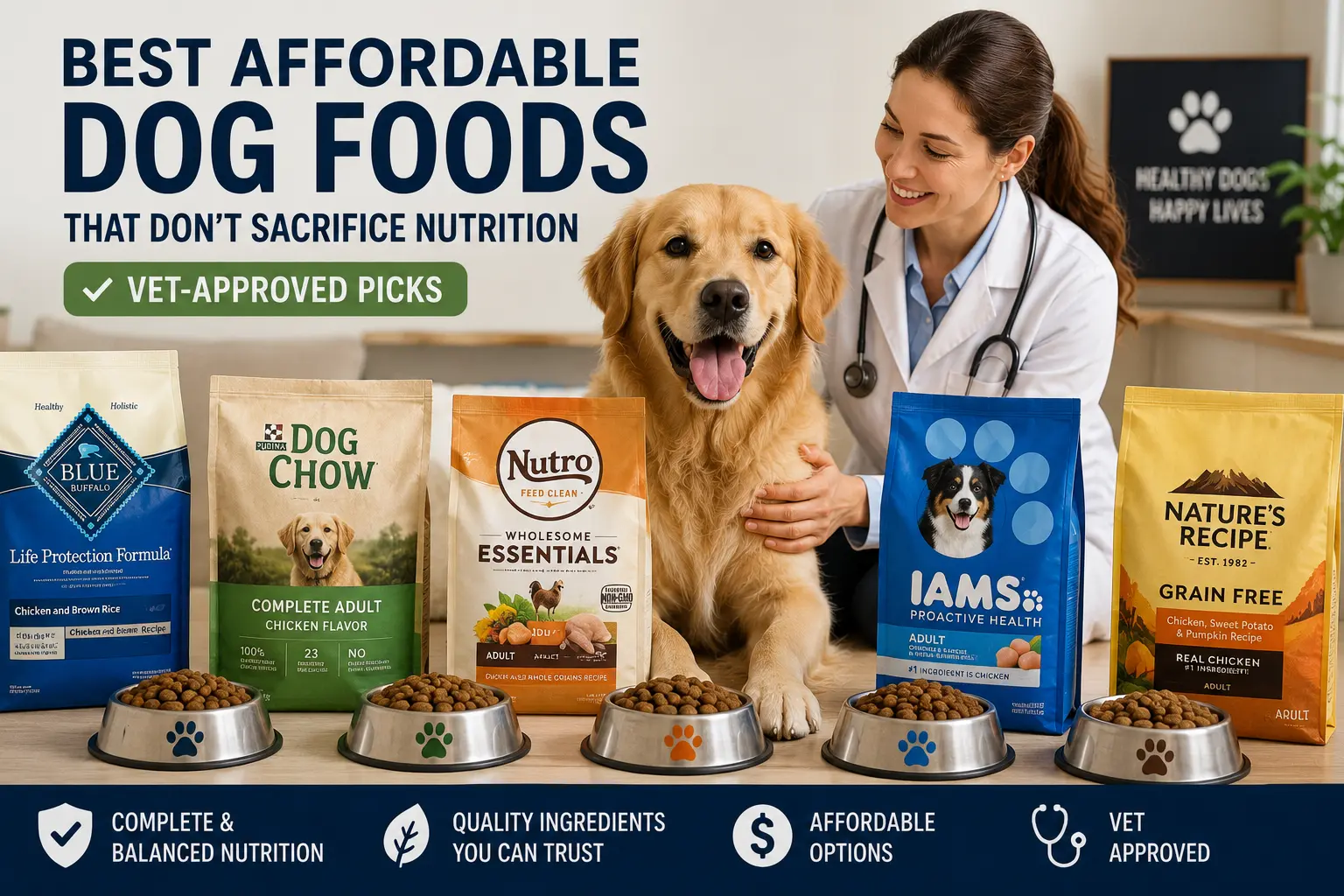
Walk down any pet store aisle or scroll through an online pet retailer and you’ll encounter dozens of dog food brands, all competing for your attention with premium packaging, celebrity endorsements, and ingredient lists that read like a gourmet restaurant menu. The implicit message is clear: the more you spend, the better you’re feeding your dog.
But is that actually true?
The answer — backed by veterinary nutritionists and pet food researchers — is a firm no. Price is not a reliable indicator of nutritional quality in dog food. Some of the most expensive brands on the market have faced serious nutritional controversies, while several budget-friendly options consistently meet or exceed the nutritional standards recommended by veterinary professionals.
This guide cuts through the marketing noise to help you identify genuinely nutritious, affordable dog foods — the ones that give your dog everything they need to thrive without draining your budget in the process.
Why Dog Food Marketing Misleads Budget-Conscious Buyers
Before we get to specific recommendations, it helps to understand why so many pet owners end up overpaying for dog food without realizing it. The pet food industry is a multi-billion dollar market, and marketing teams are extraordinarily skilled at creating the perception of premium quality through:
- Ingredient glamorization: Terms like “human-grade,” “ancestral diet,” “wild-caught,” and “small-batch” sound impressive but have no standardized regulatory definitions in pet food labeling and don’t necessarily indicate superior nutrition.
- Grain-free fear marketing: The grain-free trend exploded based on a perception that grains are unhealthy fillers. In reality, grains like brown rice, oats, and barley are excellent sources of energy and fiber — and the FDA has investigated a potential link between grain-free diets and dilated cardiomyopathy (DCM) in dogs.
- Protein-first positioning: While protein quality matters, the first ingredient being a named meat doesn’t tell the whole story. Ingredient splitting — listing multiple forms of a less nutritious ingredient separately so a protein appears first — is a common industry tactic.
- Premium packaging at premium prices: Boutique packaging, influencer partnerships, and elaborate branding add to cost without adding to nutrition.
The result is that many dog owners spend $80–$120 per month on food that offers no measurable nutritional advantage over options costing $30–$50 per month.
What Actually Makes a Dog Food Nutritionally Sound?
Rather than being swayed by marketing language, focus on these evidence-based markers of nutritional quality:
AAFCO Nutritional Adequacy Statement
Every reputable dog food carries an Association of American Feed Control Officials (AAFCO) nutritional adequacy statement on the label. This statement confirms the food meets established nutritional profiles for a specific life stage — either through formulation or feeding trials. Look for one of these two statements:
- “[Product] is formulated to meet the nutritional levels established by the AAFCO Dog Food Nutrient Profiles for [life stage].”
- “Animal feeding tests using AAFCO procedures substantiate that [Product] provides complete and balanced nutrition for [life stage].”
The feeding trial statement is generally considered the stronger of the two, as it requires the food to be tested in actual animals rather than simply calculated on paper.
Named Protein Sources
Quality dog foods list specific protein sources — chicken, beef, salmon, lamb — rather than vague terms like “meat” or “poultry.” Named proteins are more traceable and consistent in quality.
Balanced Macronutrient Profile
A nutritionally complete adult dog food typically provides:
- Protein: Minimum 18% on a dry matter basis (most quality foods provide 22–30%)
- Fat: Minimum 5% on a dry matter basis (most quality foods provide 10–15%)
- Fiber: 2–5% for digestive health
Manufacturer Transparency
Reputable dog food companies employ qualified nutritionists, conduct feeding trials, and are willing to share detailed nutritional analysis. The World Small Animal Veterinary Association (WSAVA) publishes guidelines recommending that pet owners ask food manufacturers specific questions about their quality control and nutritional expertise — and good companies answer them.
How to Calculate the True Cost of Dog Food
One of the most common mistakes budget-conscious dog owners make is comparing the sticker price of dog food bags without accounting for feeding quantities. A $25 bag of a calorie-dense, nutritionally optimized food may actually cost less per day than a $20 bag of a lower-quality food that requires feeding larger portions to meet your dog’s caloric needs.
The correct comparison metric is cost per day, not cost per bag.
To calculate:
- Find the caloric content on the bag (listed as kcal/cup or kcal/kg)
- Determine how many cups per day your dog needs based on their weight and activity level
- Calculate: (price per bag) ÷ (number of cups per bag) × (cups per day) = daily cost
This simple calculation often reveals that premium-looking mid-range foods are actually more economical than they appear, while some “value” brands cost more per day than their sticker price suggests.
What to Look for in an Affordable Dog Food: A Checklist
Before purchasing any dog food — regardless of price — run through this quick checklist:
✅ AAFCO nutritional adequacy statement for the correct life stage ✅ Named animal protein in the first one or two ingredients ✅ No artificial colors, flavors, or preservatives (BHA, BHT, ethoxyquin) ✅ Manufactured by a company with a dedicated nutritionist on staff ✅ Made in facilities that undergo regular third-party audits ✅ No history of major FDA recalls in recent years (check the FDA’s pet food recall database) ✅ Appropriate for your dog’s size, age, and health status
Affordable Dog Food Categories Worth Considering
Rather than recommending specific brands that may change their formulations or pricing over time, this guide focuses on the categories and characteristics of dog foods that consistently offer strong nutritional value at accessible price points. Always verify current formulations and pricing, and consult your veterinarian for breed- or health-specific recommendations.
Category 1: Established Mid-Range Dry Kibble Brands
Several long-established dog food brands occupy the mid-range price segment — typically $30–$60 for a 30–40 pound bag — and have decades of nutritional research and quality control behind them. These brands tend to:
- Employ board-certified veterinary nutritionists
- Conduct AAFCO feeding trials rather than just formulation testing
- Have robust quality control and manufacturing standards
- Offer life-stage specific formulations (puppy, adult, senior, large breed)
Brands frequently cited by veterinary nutritionists as offering strong nutritional value at accessible prices include those with long track records, transparent manufacturing, and WSAVA-compliant quality assurance practices. When evaluating these brands, verify their current formulations meet AAFCO standards and check for any recent recall history.
Typical monthly cost for a medium dog (30–50 lbs): $30–$55
Category 2: Store-Brand and Retailer-Owned Labels
Major pet retailers and some grocery chains now produce their own private-label dog foods that meet AAFCO standards at prices below comparable branded products. These options have improved significantly in quality over the past decade and represent genuinely good value for budget-conscious owners.
Key things to verify with store-brand foods:
- AAFCO adequacy statement is present and specific to your dog’s life stage
- Named protein is listed prominently in the ingredient list
- The manufacturer (which may be a contract facility) has a good safety record
Typical monthly cost for a medium dog: $20–$40
Category 3: Large-Bag Buying at Warehouse Retailers
Purchasing larger quantities of mid-range dog food from warehouse retailers like Costco (Kirkland Signature brand) or Sam’s Club consistently delivers strong nutritional value at some of the lowest per-pound prices available. Kirkland Signature dog food, for example, is manufactured by Diamond Pet Foods and meets AAFCO standards — and has been recommended by some veterinary professionals as a cost-effective option for healthy adult dogs.
The trade-off is storage: large bags of dry kibble should be stored in airtight containers and used within 4–6 weeks of opening to maintain freshness and prevent oxidation of fats.
Typical monthly cost for a medium dog: $18–$35
Category 4: Canned Food Used Strategically
Wet or canned food is generally more expensive per calorie than dry kibble, but using it strategically — as a topper or partial meal supplement — can improve palatability, increase moisture intake (beneficial for urinary health), and encourage eating in picky dogs without dramatically increasing overall food costs.
Look for canned foods with named protein sources, no artificial additives, and AAFCO adequacy statements. Mixing a small amount of affordable canned food with a quality dry kibble delivers the benefits of both formats at a moderate combined cost.
Typical cost for occasional topping use: $10–$20 per month additional
Category 5: Freeze-Dried and Raw — When Budget Allows
Freeze-dried and raw diets are at the premium end of the dog food market and are generally not the most budget-friendly option. However, for owners interested in these formats, freeze-dried toppers — used in small amounts over a base kibble diet — can provide the perceived benefits of raw feeding at a fraction of the cost of a full raw diet. This approach has limited scientific evidence behind it but is popular among owners seeking a middle ground.
Typical cost as a topper: $15–$40 per month additional
Life-Stage Considerations That Affect Cost
Your dog’s age and life stage significantly influence which food is appropriate and what you should expect to spend:
Puppies
Puppies require food specifically formulated for growth — higher in protein, calcium, and caloric density than adult maintenance food. Large breed puppies have particularly specific calcium and phosphorus requirements to support healthy bone development. Look for AAFCO statements specifying “growth” or “all life stages.”
Budget tip: Puppy food tends to be slightly more expensive per bag than adult food, but the feeding period is finite. Invest in quality during this critical developmental window.
Typical monthly puppy food cost: $35–$70
Adult Dogs
Healthy adult dogs (typically 1–7 years, varying by breed size) have the most flexibility in food choices. This is the life stage where affordable mid-range options shine — nutritional requirements are well-established and many budget-friendly foods meet them admirably.
Typical monthly adult food cost: $25–$55
Senior Dogs
Senior dogs (typically 7+ years for small/medium breeds, 5+ years for large breeds) may benefit from lower-calorie formulations and added joint support ingredients like glucosamine and chondroitin. Some mid-range brands offer senior-specific formulas at comparable prices to their adult lines.
Typical monthly senior food cost: $30–$60
Ingredients to Avoid Regardless of Price
Regardless of budget, these ingredients warrant caution in any dog food:
- Artificial preservatives (BHA, BHT, ethoxyquin): Associated with potential health concerns in research studies; natural preservatives like mixed tocopherols (vitamin E) are preferred
- Artificial colors: Serve no nutritional purpose and exist purely for human appeal
- Propylene glycol: Used in some semi-moist foods; can be harmful to cats and is best avoided in dogs as well
- Generic animal fats: “Animal fat” without species specification is a lower-quality ingredient; “chicken fat” or “salmon oil” are preferable
- Corn syrup or added sugars: Unnecessary in a balanced dog diet and associated with weight gain
The Role of Your Veterinarian in Food Selection
No online article — including this one — can replace the guidance of your veterinarian or a board-certified veterinary nutritionist when it comes to selecting the right food for your specific dog. Individual factors including breed, body condition score, health status, activity level, and any existing medical conditions can all influence which food is most appropriate.
What your vet can help you with:
- Assessing whether your dog’s current food is meeting their needs
- Recommending alternatives if your dog has allergies, sensitivities, or a health condition requiring dietary management
- Evaluating body condition and recommending caloric intake adjustments
- Referring you to a veterinary nutritionist if your dog has complex dietary needs
A simple question — “Are there any affordable alternatives to what I’m currently feeding that you’d feel comfortable recommending?” — opens a productive conversation that can save you money while keeping your vet in the loop.
Smart Shopping Strategies to Reduce Dog Food Costs
Once you’ve identified a quality food that works for your dog, these strategies help you get it at the lowest possible price:
Use auto-ship subscriptions. Chewy’s Autoship program and Amazon Subscribe & Save both offer meaningful discounts — often 15–35% — on recurring dog food orders. The savings over a year on a $50 bag of food can easily reach $100–$200.
Buy in bulk when sales occur. Most pet retailers run periodic sales of 15–20% off. Purchasing 2–3 bags during a sale and storing them properly (in a sealed container in a cool, dry location) can yield significant savings.
Accumulate loyalty rewards. Major pet retailers offer rewards programs that generate credits toward future purchases. Applying these consistently adds up to meaningful savings over the course of a year.
Check manufacturer websites for coupons. Many established dog food brands offer coupons, rebates, and introductory offers directly through their websites or email newsletters.
Compare price per pound, not price per bag. A larger bag almost always offers a lower per-pound price than a smaller bag of the same food. If storage allows, buying larger sizes consistently delivers better value.
Frequently Asked Questions
Is expensive dog food always better than affordable options? No. Price is not a reliable indicator of nutritional quality in dog food. Some premium-priced brands have faced nutritional concerns and recalls, while many mid-range options with long track records consistently meet high nutritional standards. Focus on AAFCO compliance, named protein sources, and manufacturer transparency rather than price alone.
How do I know if my dog’s affordable food is working for them? Signs of a nutritionally adequate diet include a healthy weight, shiny coat, firm stools, consistent energy levels, and clear eyes. Annual wellness exams with your vet provide objective confirmation through body condition scoring and any relevant bloodwork.
Is grain-free dog food worth the extra cost? For most dogs, no. Whole grains like brown rice, oats, and barley are nutritious ingredients — not fillers. The FDA has investigated a potential link between grain-free diets and dilated cardiomyopathy (DCM) in dogs. Unless your dog has a diagnosed grain allergy (which is uncommon), grain-inclusive foods are generally the recommended choice by veterinary nutritionists.
Can I mix affordable dry food with higher-quality wet food to balance cost and nutrition? Yes — this is a widely used and nutritionally sound approach. Ensuring the primary dry food is AAFCO-compliant and nutritionally complete means the wet food serves as a palatable, moisture-rich supplement rather than the sole source of nutrition. Both components should carry AAFCO adequacy statements.
How often should I change my dog’s food? If your dog is thriving on their current food, there is no nutritional reason to switch regularly. Frequent changes can cause digestive upset. If you do need to change foods — due to a life stage transition or health condition — do so gradually over 7–10 days, mixing increasing proportions of the new food with decreasing proportions of the old.
Final Thoughts
Feeding your dog well doesn’t require a premium budget. It requires informed decision-making — knowing how to evaluate nutritional labels, understanding what marketing language to ignore, calculating true cost per day rather than cost per bag, and working with your veterinarian to confirm your choices are meeting your individual dog’s needs.
The most expensive dog food on the shelf is not necessarily the healthiest. The most affordable option isn’t automatically inferior. Somewhere in the evidence-based middle ground — AAFCO-compliant, protein-rich, manufactured by transparent companies with qualified nutritionists — lies the sweet spot where your dog’s health and your household budget both win.
Disclaimer: This article is intended for general informational and educational purposes only. It does not constitute veterinary or nutritional advice. Always consult your licensed veterinarian or a board-certified veterinary nutritionist before making significant changes to your dog’s diet, particularly if your dog has existing health conditions, allergies, or special dietary needs. Product formulations, pricing, and recall histories are subject to change — always verify current information before purchasing.
