

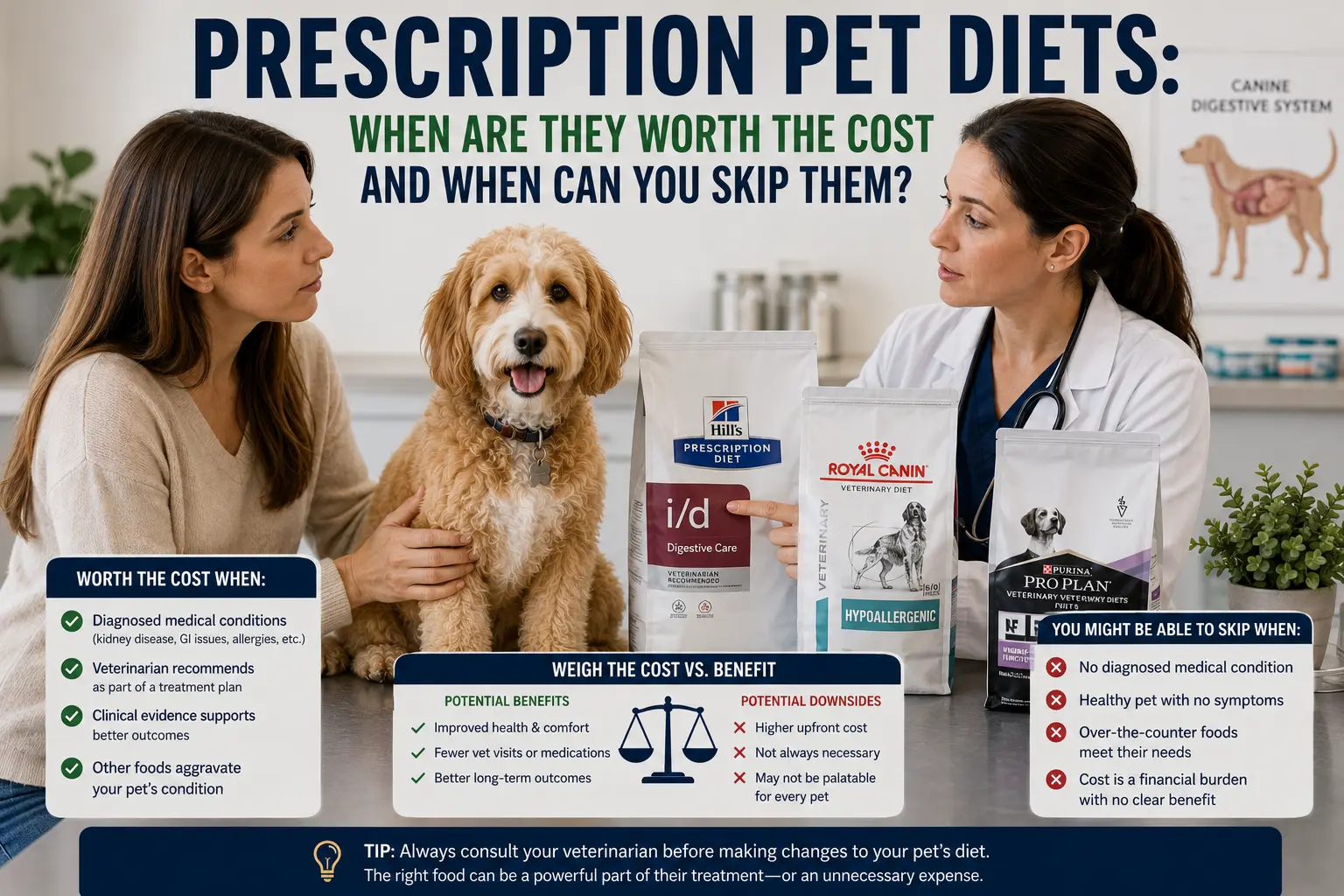
Your veterinarian just recommended switching your dog or cat to a prescription diet. You glance at the price tag — $80, $100, sometimes $150 or more per month — and immediately wonder: is this really necessary? Could I feed a quality over-the-counter food and get the same results? Is my vet upselling me, or is this genuinely what my pet needs?
These are completely legitimate questions, and asking them doesn’t make you a bad pet owner. It makes you a financially responsible one. Prescription pet diets represent one of the most significant ongoing expenses in pet ownership — and the decision to use them (or not) deserves honest, evidence-based consideration rather than automatic acceptance or reflexive skepticism.
This comprehensive guide explains what prescription pet diets actually are, which conditions genuinely require them, where over-the-counter alternatives can work just as well, how to have a productive cost conversation with your vet, and practical strategies for managing the cost when a prescription diet is medically necessary.
What Is a Prescription Pet Diet — and Why Does It Require a Prescription?
The term “prescription diet” can be misleading. Unlike prescription medications, prescription pet foods are not regulated by the FDA as drugs. They are regulated as pet food — but they are sold exclusively through veterinarians and require veterinary authorization to purchase.
The prescription requirement exists not because these foods contain controlled substances, but because:
- They are formulated to manage specific medical conditions and are not appropriate for all pets
- Feeding the wrong therapeutic diet to a healthy pet — or to a pet with a different condition — can cause harm
- Appropriate use requires a veterinary diagnosis and monitoring
Major prescription diet manufacturers include Hill’s Prescription Diet, Royal Canin Veterinary Diet, and Purina Pro Plan Veterinary Diets. These companies invest heavily in clinical research and feeding trials, and their therapeutic formulas are generally among the most rigorously tested pet foods available.
However — and this is important — the prescription requirement does not automatically mean every pet that gets one truly needs it, or that there are no viable alternatives for every condition.
How Much Do Prescription Pet Diets Cost?
The cost difference between prescription and standard commercial diets is significant. Here are typical monthly cost comparisons for a medium-sized dog (approximately 40 pounds):
| Diet Type | Monthly Cost (Medium Dog) | Annual Cost |
|---|---|---|
| Quality mid-range commercial kibble | $40–$65 | $480–$780 |
| Premium commercial kibble | $65–$100 | $780–$1,200 |
| Prescription dry diet (e.g., renal, hydrolyzed) | $80–$150 | $960–$1,800 |
| Prescription wet diet | $120–$200+ | $1,440–$2,400+ |
| Prescription wet + dry combination | $150–$250 | $1,800–$3,000 |
For cats, prescription diet costs are somewhat lower due to smaller portion sizes but still represent a meaningful premium:
| Diet Type | Monthly Cost (Average Cat) | Annual Cost |
|---|---|---|
| Quality mid-range commercial food | $20–$40 | $240–$480 |
| Prescription dry cat diet | $35–$70 | $420–$840 |
| Prescription wet cat diet | $60–$120 | $720–$1,440 |
For a pet managing a chronic condition for the remainder of their life, the cumulative cost of a prescription diet can run into thousands of dollars. Understanding whether that investment is genuinely necessary is a reasonable and responsible financial question.
Conditions Where Prescription Diets Are Genuinely Worth the Cost
For certain medical conditions, prescription diets are not just helpful — they are a cornerstone of treatment. In these cases, the cost is justified by the direct, measurable impact the diet has on disease management and quality of life.
1. Chronic Kidney Disease (CKD)
Chronic kidney disease is one of the most common conditions in senior cats and is also prevalent in dogs. Prescription renal diets are specifically formulated with:
- Restricted phosphorus: Reducing dietary phosphorus slows the progression of kidney disease by decreasing the workload on damaged kidneys. This is one of the most well-supported dietary interventions in veterinary medicine.
- Controlled protein: Reducing protein quantity while maintaining quality reduces the buildup of metabolic waste products that damaged kidneys struggle to filter.
- Enhanced palatability: Pets with CKD often have reduced appetite; prescription renal diets are carefully formulated for palatability to encourage adequate caloric intake.
Multiple peer-reviewed studies have demonstrated that cats with CKD fed prescription renal diets live significantly longer than those fed standard commercial food. For this condition, the prescription diet is worth every dollar — and the cost of not feeding it is measured in disease progression and shortened lifespan.
Verdict: Strongly worth the cost. The evidence base is robust and the impact on disease progression is clinically significant.
2. Urinary Tract Disease and Urinary Crystals
Cats (and some dogs) are prone to urinary tract disease, including the formation of struvite or calcium oxalate crystals and stones. Prescription urinary diets manage this through:
- Controlled mineral levels (magnesium, phosphorus, calcium) to reduce crystal formation
- Urine acidification or alkalinization depending on crystal type
- Increased moisture content in wet formulations to dilute urine and reduce crystal concentration
For cats with a history of urinary blockages — a potentially life-threatening emergency — a prescription urinary diet can genuinely prevent recurrence. Male cats are particularly at risk, and a blocked urethra requires emergency veterinary care costing $1,000–$3,000. The math strongly favors the prescription diet.
Verdict: Worth the cost, particularly for cats with recurrent urinary issues or prior blockages. For a first-time, uncomplicated urinary issue, your vet may recommend a prescription diet initially with the option to transition to a high-quality over-the-counter wet food for long-term management.
3. Severe Food Allergies and Hydrolyzed Protein Diets
Pets with genuine food allergies — an immune-mediated reaction to a specific protein — require an elimination diet to identify triggers and manage symptoms. Prescription hydrolyzed protein diets break proteins down into fragments too small to trigger an immune response, or use novel proteins the pet has never been exposed to.
These diets are the gold standard for food allergy diagnosis and management because they are produced in controlled facilities that minimize cross-contamination with common allergens — something over-the-counter foods, even those labeled “limited ingredient,” cannot guarantee with the same rigor.
Verdict: Worth the cost for diagnosis (the elimination trial period of 8–12 weeks). For long-term management after the allergen is identified, some pets can transition to a carefully selected over-the-counter novel protein diet. Discuss this transition with your vet after the elimination trial is complete.
4. Liver Disease
Prescription hepatic diets are formulated with highly digestible, moderate-protein ingredients and reduced copper levels (copper accumulates in damaged livers and worsens disease in certain breeds). For dogs with copper-associated hepatopathy or other hepatic conditions, the controlled copper content of prescription hepatic diets is difficult to replicate with standard commercial food.
Verdict: Worth the cost for diagnosed hepatic conditions, particularly those involving copper metabolism.
5. Pancreatitis
Dogs and cats with pancreatitis require an ultra-low-fat diet to reduce pancreatic stimulation during flares and for long-term management in chronic cases. Prescription gastrointestinal/low-fat diets are formulated to extremely low fat percentages that are genuinely difficult to achieve with standard commercial foods.
For pets with recurrent or chronic pancreatitis, the prescription diet can prevent painful flares that require hospitalization costing $500–$2,000 per episode.
Verdict: Worth the cost for chronic pancreatitis management. For a single acute episode with full recovery, your vet may clear the pet to return to a low-fat commercial diet after the acute phase resolves.
6. Diabetes Management
Diabetic cats benefit significantly from high-protein, low-carbohydrate diets that reduce glycemic response and improve insulin sensitivity. Diabetic dogs, by contrast, benefit from consistent high-fiber diets that slow glucose absorption. Prescription diabetic diets are formulated to meet these specific macronutrient targets.
Importantly, many quality over-the-counter wet foods for cats are already high in protein and low in carbohydrates — making them functionally similar to prescription diabetic formulas for some cats. Discuss with your veterinarian whether a high-quality over-the-counter wet food could serve as an appropriate alternative.
Verdict: Often worth the cost for dogs. For cats, over-the-counter alternatives may work — discuss with your vet.
Conditions Where You May Be Able to Skip the Prescription Diet
Not every veterinary recommendation for a prescription diet is equally necessary. Some conditions can be managed with carefully selected over-the-counter alternatives — potentially saving hundreds of dollars per year without compromising your pet’s health.
1. Weight Management
Prescription weight management diets are among the most commonly recommended — and most frequently unnecessary — therapeutic diets. These foods are formulated to be low in calories and high in fiber to promote satiety.
The reality is that weight management in most pets can be achieved by:
- Feeding less of a maintenance diet: Simply reducing portion size of your current food is often the most effective weight management strategy
- Switching to a high-quality, lower-calorie over-the-counter option: Many commercial foods offer “light” or “healthy weight” formulations that are nutritionally comparable to prescription weight management diets at a fraction of the cost
- Increasing exercise: Activity level plays a critical role in weight management that no diet alone can fully compensate for
Verdict: Often skippable. Ask your vet to help you calculate a reduced caloric target using your current food before investing in a prescription weight management diet.
2. Dental Disease Prevention
Prescription dental diets (such as Hill’s Prescription Diet t/d) are designed with a specific kibble texture and size that mechanically reduces tartar. The Veterinary Oral Health Council (VOHC) has accepted these products for tartar control.
However, consistent home dental care — daily tooth brushing with enzymatic toothpaste and VOHC-accepted dental chews — provides comparable plaque and tartar reduction at a far lower cost than a prescription dental diet. The prescription diet is designed partly for pets whose owners cannot or will not brush their teeth daily.
Verdict: Often skippable if you commit to a consistent home dental care routine. The dental diet is a useful alternative for owners who genuinely cannot brush their pet’s teeth.
3. Hairball Management in Cats
Prescription hairball diets for cats are formulated with elevated fiber content to help move hair through the digestive tract. However, high-fiber over-the-counter foods and simple interventions — regular brushing, over-the-counter hairball remedies — typically manage routine hairball issues at far lower cost.
Verdict: Generally skippable. Unless your cat has an underlying gastrointestinal condition contributing to hairball issues, an over-the-counter high-fiber food or standard hairball supplement is adequate for most cats.
4. Joint Support Diets for Mild Arthritis
Prescription joint support diets are enriched with omega-3 fatty acids and glucosamine/chondroitin to support joint health in arthritic pets. These are beneficial ingredients — but they are also available as over-the-counter supplements that can be added to any quality commercial food at a significantly lower combined cost.
Verdict: Often skippable. Adding a high-quality fish oil supplement and, if recommended by your vet, a glucosamine/chondroitin supplement to a standard quality diet typically provides comparable joint support at lower cost. Confirm appropriate dosing with your veterinarian.
5. Sensitive Stomach and Digestive Support
“Sensitive stomach” is one of the vaguest and most broadly applied categories in prescription pet food. Many pets recommended for prescription gastrointestinal diets have non-specific digestive upset — occasional loose stools, mild vomiting, or gassiness — that responds just as well to a highly digestible over-the-counter food with a simple ingredient list.
Verdict: Frequently skippable for mild, non-specific digestive sensitivity. Reserve prescription GI diets for diagnosed conditions like inflammatory bowel disease or protein-losing enteropathy, where the clinical need is specific and evidence-based.
How to Have a Productive Cost Conversation With Your Vet
Raising the subject of prescription diet cost with your veterinarian doesn’t need to feel awkward. A good veterinarian understands financial constraints and will work with you to find the best solution within your budget. Here are effective ways to start that conversation:
“Is this diet medically necessary, or is it recommended as an improvement?” Some prescription diet recommendations are clear medical necessities (renal diet for a cat with CKD). Others are helpful but not essential (joint diet for mild stiffness in an otherwise healthy dog). Knowing which category your pet’s recommendation falls into helps you make an informed decision.
“Are there over-the-counter alternatives that might work for my pet’s condition?” Many veterinarians will candidly tell you whether a well-chosen commercial food could serve as an appropriate alternative — particularly for conditions like weight management, mild digestive sensitivity, or early-stage joint issues.
“Could we try this diet short-term and evaluate whether it’s making a measurable difference?” For some conditions, a defined trial period (8–12 weeks) allows objective evaluation of the diet’s impact before committing to lifelong feeding.
“Are there ways to reduce the cost if this diet is genuinely necessary?” Ask about manufacturer rebates, veterinary discount programs, and whether purchasing through online pharmacies (with a prescription) might be less expensive than buying from the clinic.
Cost-Reduction Strategies When a Prescription Diet Is Genuinely Necessary
When a prescription diet is medically indicated and there’s no appropriate alternative, these strategies can meaningfully reduce the financial burden:
Buy online with a written prescription. Prescription pet foods purchased online through authorized retailers like Chewy or 1800PetMeds are typically 10–25% less expensive than the same products purchased directly from veterinary clinics. Ask your vet for a written prescription and purchase online.
Use manufacturer rebate programs. Hill’s, Royal Canin, and Purina all offer loyalty and rebate programs for their prescription diet lines. Enrolling and consistently claiming rebates can save $50–$150 per year.
Ask about veterinary school clinic pricing. Teaching hospital pharmacies and clinics sometimes offer prescription diets at reduced prices as part of their mission to make veterinary care accessible.
Combine wet and dry strategically. If your pet is on a prescription diet, using primarily dry prescription food with a smaller amount of prescription wet food as a topper — rather than feeding exclusively wet food — significantly reduces monthly cost while maintaining the therapeutic benefits of both formats.
Reassess need at regular intervals. Some pets require prescription diets temporarily — during recovery or acute disease management — and can transition back to quality commercial food once stable. Have an explicit conversation with your veterinarian about whether your pet’s prescription diet is temporary or lifelong, and establish clear criteria for reassessment.
Frequently Asked Questions
Can I buy prescription pet food without a vet prescription? No — not through legitimate channels. Prescription diets require veterinary authorization to purchase. Any retailer selling prescription pet food without a prescription is operating outside regulatory guidelines and should be avoided. The prescription requirement exists to protect your pet from being fed an inappropriate therapeutic diet.
Are prescription pet diets regulated differently than regular pet food? They are subject to the same FDA pet food safety regulations as commercial foods, but they are additionally required to be sold only through veterinary channels due to their intended use in managing medical conditions. They are not regulated as drugs, despite the “prescription” terminology.
My vet sells prescription food in their clinic — should I buy it there? Veterinary clinic pricing for prescription food is typically the highest available. It is entirely appropriate to ask your vet for a written prescription and purchase the food at a lower price through an authorized online retailer. Most veterinarians understand and support this.
How do I know if the prescription diet is actually working? Work with your veterinarian to establish clear, measurable markers of improvement specific to your pet’s condition — bloodwork values for kidney disease, urinalysis results for urinary issues, body weight changes for obesity management, stool quality for digestive conditions. Re-evaluate these markers at scheduled intervals to confirm the diet is delivering results.
What if I simply cannot afford the recommended prescription diet? Be honest with your veterinarian about the financial constraint. In most cases, your vet can work with you to find an alternative approach — whether that’s a carefully selected over-the-counter alternative, a combination strategy, or a reduced prescription diet quantity supplemented with a compatible commercial food. Financial transparency enables better medical planning.
Final Thoughts
Prescription pet diets occupy a legitimate and valuable space in veterinary medicine. For conditions like chronic kidney disease, recurrent urinary blockages, confirmed food allergies, pancreatitis, and hepatic disease, they are evidence-based tools that genuinely extend and improve pets’ lives. The cost is real — but so is the benefit.
For other conditions — weight management, mild digestive sensitivity, hairball control, and basic joint support — over-the-counter alternatives combined with behavioral management and targeted supplementation frequently deliver comparable results at significantly lower cost.
The key is not to accept or reject a prescription diet recommendation automatically — but to ask the right questions, understand where the evidence is strong and where it’s weaker, and make an informed decision in partnership with a veterinarian who respects both your pet’s medical needs and your financial reality.
Your pet’s health and your financial wellbeing are not opposing priorities. With the right information, you can honor both.
Disclaimer: This article is intended for general informational and educational purposes only and does not constitute veterinary or nutritional advice. Never discontinue or substitute a veterinarian-prescribed diet without first consulting your veterinarian. Individual pet health conditions vary significantly and require personalized veterinary assessment. Always work with a licensed veterinarian to determine the most appropriate dietary management for your pet’s specific medical needs.
