

Updated: August 2026
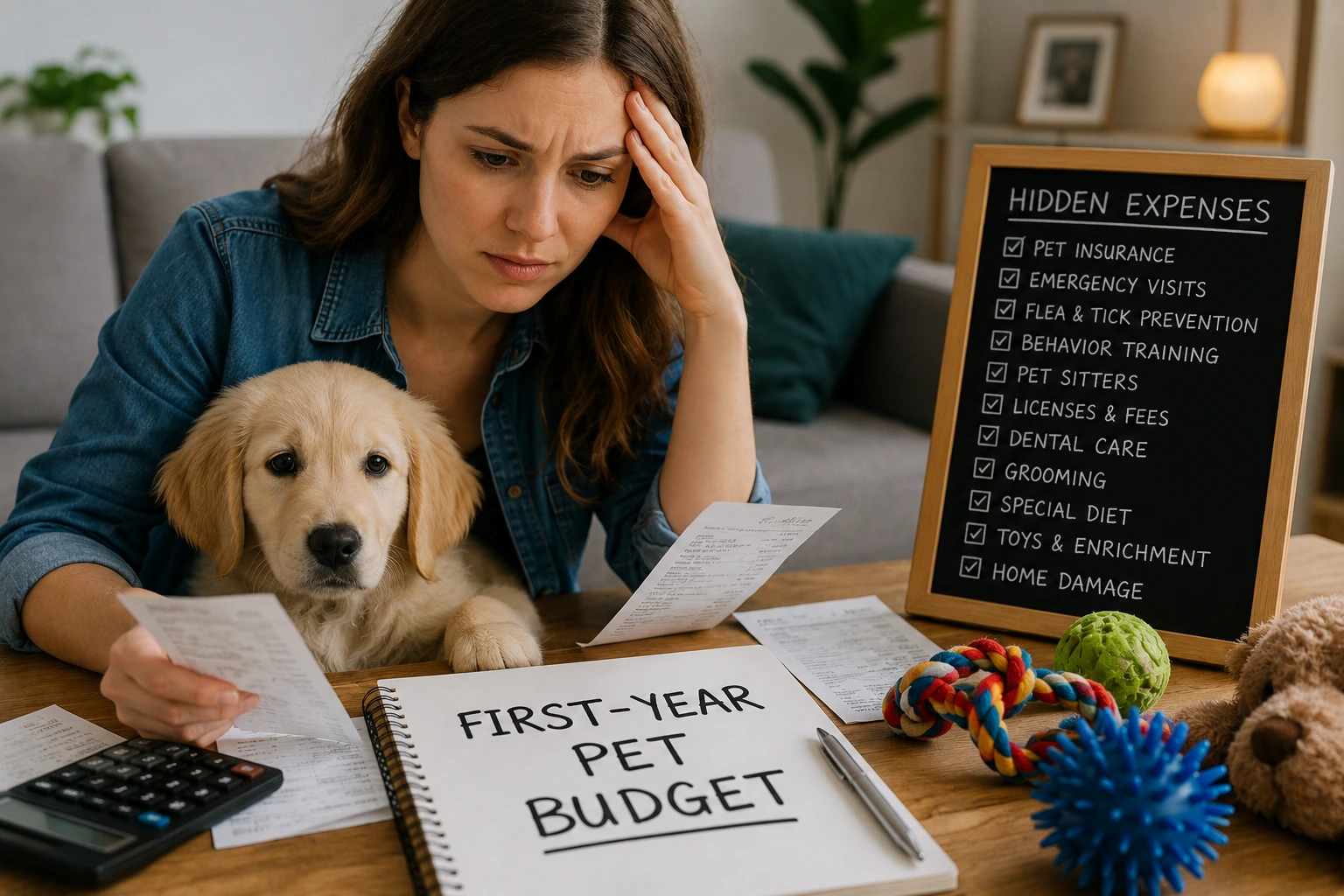
Bringing a new pet home can feel like a simple financial decision: pay the adoption or purchase fee, buy some food, and start enjoying life together.
In reality, the first year of pet ownership often includes many smaller expenses that are easy to overlook.
A carrier or crate, replacement tags, training classes, grooming appointments, routine veterinary visits, medication, boarding during travel, and unexpected replacement purchases can gradually add hundreds of dollars to your annual budget.
The problem is not necessarily that these expenses are unusually expensive individually.
It is that many of them are irregular.
You may spend nothing on a particular category for several months and then receive a large bill in a single week.
This guide explains the first-year expenses new pet owners commonly overlook and shows how to turn them into a realistic budget.
Important: The amounts used in this article are illustrative budgeting examples, not guaranteed prices. Actual costs vary by pet species, breed, age, location, health, household choices, and service provider. Veterinary decisions should be made with a licensed veterinarian.
Quick Answer: What Hidden Costs Should New Pet Owners Expect?
Beyond the adoption or purchase price, first-year pet expenses may include:
- Initial veterinary follow-up
- Vaccinations or booster care
- Spay/neuter if not already completed
- Microchip registration
- Carrier or crate
- Replacement collar, harness, or tags
- Grooming equipment or professional grooming
- Training
- Additional food or dietary changes
- Medication
- Boarding or pet sitting
- Pet deposits or housing fees
- Replacement toys and supplies
- Emergency veterinary expenses
- Insurance deductibles or other out-of-pocket costs
Not every owner will have all of these expenses.
The important lesson is:
Don’t create a first-year budget using only food and the adoption fee.
Why the First Year Can Cost More
The first year is different from later years because you are setting up your pet’s entire household environment.
You may need to purchase equipment that you won’t need again for several years.
For example:
Carrier + crate + bowls + bedding + litter equipment + leash + toys + grooming tools
These purchases can happen within the first few weeks.
Then you have ongoing expenses such as food and routine care.
Finally, there are irregular costs such as veterinary visits or boarding.
This creates three different financial layers:
One-time setup costs
Paid primarily when your pet comes home.
Recurring costs
Paid regularly throughout the year.
Irregular costs
Paid occasionally but still need to be planned for.
A realistic first-year budget includes all three.
1. The Initial Veterinary Follow-Up Visit
One expense new owners sometimes overlook is a veterinary appointment shortly after bringing the pet home.
The shelter, rescue, or breeder may already have provided veterinary care.
That does not necessarily mean you will never need another appointment during the first year.
You may need to establish a relationship with a local veterinarian, review medical records, discuss preventive care, or address a condition that develops after bringing the pet home.
Before adoption or purchase, ask:
- What veterinary care has already been completed?
- When was the last examination?
- Which vaccinations were given?
- Are medical records provided?
- Is follow-up care recommended?
- Is the pet currently taking medication?
Knowing these answers can prevent duplicate budgeting.
2. Vaccinations and Preventive Care
Vaccinations and preventive care are often periodic rather than monthly.
That makes them easy to forget.
Depending on the pet and veterinary recommendations, preventive care may include:
- Vaccinations
- Parasite prevention
- Routine examinations
- Screening
- Other preventive services
The appropriate schedule depends on factors such as species, age, lifestyle, health history, and geographic considerations.
Rather than putting a random amount into your budget, ask your veterinarian what care is expected during the coming year.
Then convert the annual estimate into a monthly reserve.
Example
Expected annual preventive care:
$300
Monthly sinking-fund contribution:
$300 ÷ 12 = $25
You don’t spend $25 every month.
You simply set aside the money until the expense arrives.
3. Spay or Neuter Costs
If the procedure has not already been completed, it can become a significant first-year expense.
This is particularly important when comparing:
- Shelter adoption
- Rescue adoption
- Breeder purchase
- Private rehoming
Ask before bringing the pet home:
Has the pet already been spayed or neutered, and is the procedure included in the fee?
If the answer is no, add the expected cost to your first-year budget.
This is another reason why comparing only an adoption fee or purchase price can be misleading.
4. Microchip Registration
Some pets leave shelters or breeders already microchipped.
But there is an important second step:
Registration.
If you adopt or purchase a pet that already has a microchip, make sure the registration is transferred or updated with your current contact information.
The ASPCA notes that microchips can help reunite lost animals with their owners when the registration information is current.
If your pet isn’t already microchipped, ask your veterinarian about whether microchipping is appropriate.
5. Identification Tags and Replacement Tags
Identification costs are small, but they are easy to overlook.
For dogs, this may include:
- ID tag
- Collar
- Harness
- License tag where required
For cats, you may consider:
- ID tag
- Collar where appropriate
- Microchip
Tags can also need replacement if:
- Contact information changes
- The tag becomes unreadable
- The collar is replaced
This is a small expense, but it belongs in a complete first-year budget.
6. The “Wrong” Food You Bought First
New owners sometimes discover that the food they initially purchased doesn’t work for their pet.
Reasons can include:
- The pet refuses it
- Digestive problems
- A veterinary recommendation
- Change from shelter/breeder food
- Different nutritional requirements
You may therefore end up buying a second food before the first bag is finished.
Instead of purchasing a large quantity immediately, consider starting with a smaller amount when appropriate.
For food-specific budgeting, see our Pet Food Budget Guide.
That article focuses on food spending, while this guide focuses on the often-overlooked first-year expenses surrounding pet ownership.
7. Food Storage and Feeding Equipment
Food itself isn’t the only feeding expense.
You may also purchase:
- Food bowls
- Water bowls
- Storage containers
- Measuring equipment
- Feeding mats
- Automatic feeders
You don’t need every available accessory.
But replacing unsuitable equipment can gradually increase your first-year spending.
A simple budget category for feeding equipment can prevent these purchases from becoming surprises.
8. The Second Crate or Carrier
Many owners initially buy one carrier or crate and later realize they need another.
For example:
A dog may need:
- Home crate
- Travel crate
- Car restraint
A cat may need:
- Main carrier
- Backup carrier
You may not need multiple carriers.
But if you travel regularly, moving between households or taking your pet to veterinary appointments can make additional equipment useful.
9. Replacement Collars, Harnesses, and Leashes
Young pets can outgrow equipment.
Puppies and kittens can change size quickly.
Even adult pets can damage or lose:
- Collars
- Leashes
- Harnesses
- ID tags
Therefore, don’t assume your first purchase will last the entire first year.
A small annual replacement allowance can help.
10. Grooming
Grooming is another expense that varies enormously.
Some pets can be groomed primarily at home.
Others may require professional appointments.
Potential expenses include:
- Brush
- Nail clippers
- Shampoo when appropriate
- Clippers
- Professional grooming
- Ear-care products
- Other grooming equipment
Example
Suppose professional grooming costs:
$60 per appointment
and you need six appointments per year.
Annual cost:
$60 × 6 = $360
Monthly budget:
$360 ÷ 12 = $30
You don’t have to pay $30 every month.
You simply reserve that amount.
11. Training
Training can be one of the most overlooked puppy and dog expenses.
Potential costs include:
- Puppy classes
- Obedience classes
- Private training
- Behavioral consultation
- Specialized training
Even if you plan to train your dog yourself, you may eventually decide professional help would be useful.
A small training reserve during the first year gives you more flexibility.
12. Pet Sitting and Boarding
Travel can create a major additional cost.
If you work long hours or travel frequently, you may need:
- Pet sitter
- Dog walker
- Boarding
- Daycare
- Drop-in visits
These are lifestyle expenses rather than mandatory costs for every pet owner.
But if you know you will need them, include them from the beginning.
Example
Suppose you expect:
$600 of boarding expenses per year
Monthly reserve:
$600 ÷ 12 = $50
Now the expense is part of your normal budget instead of an unexpected holiday bill.
13. Pet Deposits and Housing Costs
If you rent your home, pet-related housing expenses can be significant.
Depending on your lease and local rules, you may encounter:
- Pet deposit
- Pet fee
- Pet rent
- Breed or size restrictions
- Other housing requirements
These aren’t veterinary or pet-supply expenses, but they are still part of the financial decision to own a pet.
Check your lease before bringing the animal home.
14. Pet-Proofing Your Home
Pet-proofing is easy to overlook.
Depending on your home, you may purchase:
- Baby gates
- Cable covers
- Door barriers
- Protective covers
- Secure storage
- Window screens
- Furniture protection
Not every household needs these items.
But a new pet can expose safety issues you didn’t notice before.
Budgeting a small amount for home adjustments is reasonable during the first year.
15. Replacement Toys
Pet toys are often treated as small purchases.
But repeated purchases can add up.
For example:
$10 every month × 12 = $120/year
That’s not necessarily a problem.
The key is simply to recognize it as part of your pet budget.
You can reduce unnecessary spending by observing which toys your pet actually uses.
16. Bedding and Furniture
Beds, blankets, scratching posts, cat trees, and other equipment may eventually need replacement.
Young pets may also damage items during the adjustment period.
Don’t assume a premium product is always the best financial choice.
Consider:
Price ÷ expected useful life
A $50 item that lasts five years may be more cost-efficient than a $20 item that needs replacement every few months.
17. Medication
Medication may be one of the most unpredictable first-year expenses.
Your pet may need:
- Short-term medication
- Parasite treatment
- Allergy treatment
- Chronic medication
- Post-surgery medication
Not every pet will require these.
But if your pet does, the cost can change your monthly budget quickly.
Keep medication separate from ordinary food and supply expenses.
18. Prescription Food
Some pets may eventually require a veterinary-recommended diet.
This can be more expensive than ordinary pet food.
If your pet develops a condition requiring dietary management, your food budget may change significantly.
This is another reason not to calculate your entire pet budget from today’s food bill alone.
19. Dental Care
Dental expenses are easy to overlook because they may not occur every month.
Depending on the animal’s health and veterinary recommendations, dental care may involve:
- Dental examinations
- Professional cleaning
- Dental procedures
- Home-care supplies
Don’t assume that dental treatment is automatically included in routine veterinary costs or pet insurance.
Check your policy and discuss appropriate dental care with your veterinarian.
20. Emergency Veterinary Costs
This is the biggest category you cannot predict precisely.
An emergency can involve:
- Examination
- Diagnostic testing
- Imaging
- Medication
- Hospitalization
- Surgery
- Specialist care
You may never experience a major emergency.
But a responsible budget should still include some emergency preparation.
For a dedicated emergency-fund plan, use our Pet Emergency Fund Calculator.
21. Insurance Deductibles
If you have pet insurance, don’t budget only for the monthly premium.
You may also need to pay:
- Deductible
- Your share of eligible expenses
- Non-covered expenses
For example:
Monthly premium
$40
Annual premium
$480
But you may still need an emergency reserve to cover your deductible and other out-of-pocket costs.
Insurance and savings work differently.
22. Waiting-Period Expenses
If you purchase pet insurance, coverage may not begin immediately.
If a medical problem occurs during a waiting period, you may have to pay for it yourself.
This is another reason why an emergency fund remains useful even when you have insurance.
Always read the policy’s waiting-period provisions before relying on coverage.
23. Travel Costs
Traveling with a pet can create expenses beyond food and boarding.
Depending on your situation, you may need:
- Travel carrier
- Car restraint
- Airline-approved carrier
- Health documentation
- Hotel pet fees
- Transportation
- Pet sitting
If you travel regularly, create a separate annual travel category.
24. Pet-Friendly Accommodation
If you travel with your pet, some hotels or rental properties may charge additional fees.
These fees can vary significantly.
Instead of assuming travel will cost the same as a normal trip, add a pet-travel reserve to your annual budget.
25. Emergency Replacement Purchases
Sometimes the expense isn’t medical.
A carrier breaks.
A leash snaps.
A crate becomes too small.
A litter box cracks.
A water fountain stops working.
These expenses are usually not major individually.
But they are exactly the type of expenses people forget to include in a first-year budget.
A small replacement-supplies fund can handle them.
26. Pet Sitting During Emergencies
What happens if you suddenly have to leave home?
You may need:
- Emergency boarding
- Pet sitter
- Family member transportation
- Temporary care
This isn’t an expense everyone will face.
But households without family or friends nearby may want to consider it.
27. Professional Behavioral Help
Some pets may develop behavioral issues after entering a new home.
Possible expenses include:
- Trainer
- Behavior consultant
- Additional equipment
- Management tools
A shelter animal is not automatically more likely to need professional help, and a breeder-purchased animal is not automatically easier.
Individual temperament and circumstances matter.
28. Subscription Services
Modern pet ownership can involve recurring subscriptions such as:
- Food delivery
- Treat boxes
- Medication delivery
- Litter delivery
- Grooming subscriptions
Each subscription may look inexpensive.
Together, they can become a meaningful monthly expense.
Review subscriptions every few months.
Cancel anything you aren’t actually using.
29. Pet Accessories You Didn’t Plan to Buy
Pet stores are full of optional products.
Examples include:
- Designer collars
- Specialized beds
- Automatic toys
- Smart feeders
- Cameras
- GPS trackers
- Decorative furniture
Some products can be useful.
Others are discretionary.
Create a separate optional spending category so these purchases don’t quietly increase your essential pet budget.
30. The Cost of “Trying Something Else”
One hidden expense is buying products that don’t work for your individual pet.
You might try:
- A different litter
- A different food
- A different harness
- A different bed
- A different toy
- A different grooming product
This is normal.
But don’t assume every purchase will be useful forever.
A small experimentation budget can make the first year more realistic.
First-Year Pet Budget Example
Consider a hypothetical new dog owner:
| Category | Annual Budget |
|---|---|
| Food | $720 |
| Routine supplies | $180 |
| Veterinary reserve | $400 |
| Preventive care | $240 |
| Grooming | $360 |
| Training | $300 |
| Boarding | $300 |
| Emergency savings | $600 |
| Replacement equipment | $150 |
| Total | $3,250 |
Monthly equivalent:
$3,250 ÷ 12 = $270.83
The owner doesn’t necessarily spend $270.83 every month.
The figure represents a planning average.
First-Year Cat Budget Example
Now consider a hypothetical adult cat:
| Category | Annual Budget |
|---|---|
| Food | $480 |
| Litter | $240 |
| Routine veterinary care | $300 |
| Preventive care | $120 |
| Supplies | $100 |
| Toys/enrichment | $100 |
| Boarding/pet sitting | $200 |
| Emergency savings | $360 |
| Total | $1,900 |
Monthly equivalent:
$1,900 ÷ 12 = $158.33
Again, this is a budgeting example—not a universal average.
First-Year Costs vs. Monthly Costs
This distinction is extremely important.
Suppose your monthly recurring expenses are:
$120
But your annual irregular expenses are:
$600
Your actual monthly budget should not necessarily be $120.
Calculate:
$600 ÷ 12 = $50
Then:
$120 + $50 = $170/month
Your practical monthly planning target becomes:
$170
This allows you to prepare for the $600 of expenses that arrive later.
A Simple First-Year Pet Budget Formula
Use:
Initial setup costs
12 months of recurring expenses
Annual periodic expenses
Emergency savings
=
First-year financial plan
Then divide the result by 12 if you want a monthly planning target.
How to Build a Sinking Fund
A sinking fund is simply money you reserve for a known future expense.
For example:
Annual grooming
$360
Annual veterinary care
$480
Boarding
$240
Replacement supplies
$120
Total:
$1,200
Monthly contribution:
$1,200 ÷ 12 = $100
Now you’re setting aside $100 every month for expenses that don’t necessarily occur every month.
The First-Year Budget Checklist
Before bringing your pet home, check:
- Adoption or purchase fee
- Carrier or crate
- Food
- Food bowls
- Litter equipment, if applicable
- Leash and harness, if applicable
- Collar and ID tag
- Bedding
- Scratching equipment, if applicable
- Toys
- Initial veterinary care
- Vaccinations
- Spay/neuter
- Microchip
- Preventive care
- Medication
- Grooming
- Training
- Boarding
- Pet insurance
- Insurance deductible
- Emergency savings
- Housing-related pet costs
- Replacement supplies
- Travel costs
You don’t need every category.
But you should consciously decide whether each one applies to your situation.
How to Find Expenses You Forgot
Look at your first-year budget from four angles.
Health
What medical costs might occur?
Home
What equipment or modifications might you need?
Lifestyle
Will you need grooming, training, daycare, or boarding?
Financial protection
How will you handle an unexpected veterinary bill?
If you can answer all four categories, your budget will usually be much more complete.
What New Owners Should Not Do to Save Money
A tight budget doesn’t mean ignoring essential care.
Avoid saving money by:
- Skipping necessary veterinary care
- Ignoring serious symptoms
- Stopping prescribed medication
- Choosing food solely because it is cheapest
- Avoiding appropriate preventive care
Instead, reduce discretionary expenses first.
For example:
Optional toy subscription → cut
before:
Necessary veterinary care → cut
Essential vs. Optional Pet Expenses
A useful budgeting system is to divide expenses into three levels.
Essential
- Food
- Basic supplies
- Necessary veterinary care
- Required medication
Planned
- Preventive care
- Grooming
- Training
- Boarding
Optional
- Premium accessories
- Subscription boxes
- Luxury furniture
- Extra toys
When money is tight, this structure helps you decide what can be reduced first.
How to Review Your Budget After Six Months
After six months, look at your actual spending.
Ask:
- Did food cost more than expected?
- Did I spend more on grooming?
- Did I use daycare?
- Did I need medication?
- Did I spend too much on toys?
- Did I save enough for veterinary care?
- Did I actually use my insurance?
Then update your second-half budget.
This turns your first year into a learning period.
Your Second Year Should Be Easier to Predict
After 12 months, you’ll know your pet’s real spending pattern.
You can calculate:
Total first-year spending ÷ 12
This gives you your actual average monthly cost.
You can then adjust for:
- Age
- Health
- Inflation
- Lifestyle changes
- Insurance
- New services
Your second-year budget can therefore be based on real data rather than assumptions.
Frequently Asked Questions
What is the biggest hidden cost of owning a pet?
For many owners, unexpected veterinary care can have the largest financial impact. Other overlooked costs include grooming, boarding, training, medication, and replacement equipment.
How much should I budget for unexpected pet expenses?
There is no universal amount. Consider your pet’s age, health, insurance, deductible, local veterinary costs, and your ability to pay an emergency bill.
Are first-year pet costs higher than later years?
Often, yes. Initial equipment, veterinary care, training, and setup purchases can make the first year more expensive.
Does pet insurance eliminate unexpected costs?
No. Insurance may reimburse eligible expenses according to the policy, but deductibles, exclusions, waiting periods, limits, and your share of expenses can still apply.
Should I include pet boarding in my monthly budget?
If you travel or regularly need boarding, yes. Estimate the annual cost and divide it by 12.
How do I budget for annual veterinary expenses?
Estimate the expected annual cost and divide it by 12. Set that amount aside each month in a pet-care sinking fund.
What if I don’t use the money I saved for veterinary care?
Keep it available for future pet expenses or move it into your emergency reserve.
Are grooming expenses necessary?
It depends on the pet. Some pets can be groomed primarily at home, while others require regular professional care.
Are pet subscriptions worth the cost?
They are optional. Review each subscription based on how frequently you actually use the products.
How can I make my first-year pet budget more accurate?
Use actual local prices, ask the shelter or breeder what is included, get a veterinary estimate, track every pet-related purchase, and review your spending after several months.
Final Verdict: The Costs You Don’t See on Adoption Day
The adoption fee or purchase price is only the beginning of your first-year pet budget.
The expenses most likely to catch new owners off guard are often the ones that don’t arrive every month:
- Veterinary visits
- Preventive care
- Grooming
- Training
- Boarding
- Medication
- Replacement equipment
- Housing costs
- Insurance deductibles
- Emergency treatment
You don’t need to predict every expense perfectly.
Instead, build a system:
1. Cover recurring expenses.
Food, litter, supplies, and other regular costs.
2. Create sinking funds.
Set aside money each month for annual or periodic expenses.
3. Maintain an emergency reserve.
Prepare for expenses you cannot predict.
4. Track actual spending.
Use your first year to create a more accurate second-year budget.
The goal isn’t to make pet ownership as cheap as possible.
The goal is to make the financial commitment predictable enough that you can consistently provide appropriate care throughout your pet’s life.
Related Pet Finance Resources
If you’re building your first-year pet budget, these resources on PetPolicyFinance can help:
- Pet Ownership Cost Calculator — estimate broader annual ownership costs.
- Pet Emergency Fund Calculator — plan an emergency reserve.
- Pet Food Budget Guide — focus specifically on food spending.
- Average Vet Costs by Procedure — examine veterinary costs by procedure.
Each resource has a different purpose. This article specifically covers often-forgotten first-year expenses, rather than repeating a complete annual pet-cost calculation.
Editorial Methodology
PetPolicyFinance organizes first-year pet expenses into four groups:
- Initial setup costs
- Recurring costs
- Periodic costs
- Unexpected or emergency costs
The examples in this article are budgeting illustrations rather than universal price estimates.
Actual expenses depend on species, breed, age, location, health, lifestyle, service providers, and household choices.
Where a cost may already be included in an adoption or purchase package, readers should confirm the details with the shelter, rescue, breeder, or other source before budgeting for the expense separately.
Editorial Disclaimer
PetPolicyFinance.com is an independent educational website. We are not a veterinary clinic, animal shelter, breeder, insurance company, insurance broker, financial adviser, or law firm.
This article provides general educational information about pet budgeting. It does not constitute veterinary, financial, insurance, or legal advice.
Veterinary decisions should be made with a licensed veterinarian.
Prices, insurance terms, veterinary fees, and local requirements can change. Verify current information before making financial decisions.
Author: Harry Mills
Last Reviewed: August 2026
