

When Marcus brought home his kitten, Pepper, he expected the usual kitten chaos — knocked-over plants, midnight zoomies, chewed shoelaces. What he didn’t expect was how different Pepper’s health risks would look five years later, and again at age twelve. “I thought a healthy cat was a healthy cat,” Marcus said. “I didn’t realize what to actually watch for changes so much depending on her age.”
He’s right to notice that shift, because it’s real. The health risks facing a 10-week-old puppy are almost nothing like the risks facing that same dog at age 8. Knowing what’s common — and what’s worth watching closely — at each stage of your pet’s life helps you catch problems early, ask your vet the right questions, and avoid mistaking a serious issue for “just getting older” or “just a phase.”
This guide walks through the most common illnesses and health concerns dogs and cats face at each major life stage, from puppyhood and kittenhood all the way through the senior years.
Why Life Stage Matters So Much in Pet Health
Veterinary wellness plans are increasingly built around life stage for a reason: what your pet’s body is dealing with — rapid growth, peak physical maturity, or gradual decline — shapes which conditions are most likely to show up. A young, active adult dog and a 12-year-old senior cat aren’t just “the same animal at different ages” from a health standpoint; their risk profiles, and the symptoms worth watching for, are genuinely different.
It’s also worth noting that life stages aren’t identical across all pets. Large and giant-breed dogs age faster and reach “senior” status earlier (sometimes as young as 6–7 years) compared to small breed dogs, who may not be considered senior until 10 or later. Cats generally follow a more consistent timeline, with kittenhood lasting up to a year, adulthood spanning roughly ages 1–10, and senior status typically beginning after age 10. Genetics, activity level, and even where a pet came from (shelter, breeder, or stray background) can also shift these general timelines slightly, which is part of why your vet’s assessment matters more than any single chart.
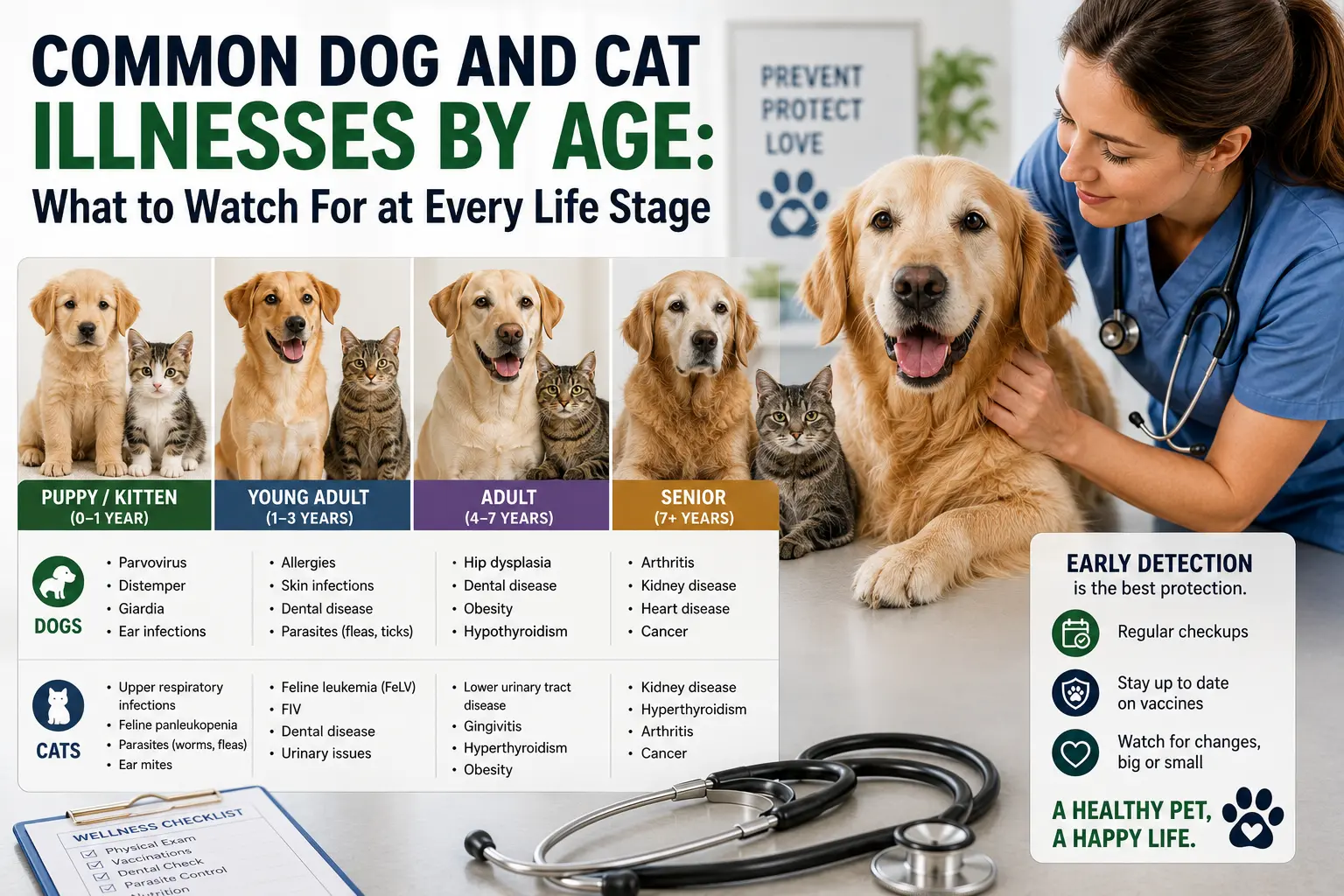
Puppy & Kitten Stage (0–1 Year)
This stage is defined by rapid growth, an immature immune system, and boundless curiosity — a combination that creates a fairly specific set of risks.
Common concerns:
- Parasites — intestinal worms and fleas are extremely common in young animals, often picked up from their mother or environment before adoption
- Infectious diseases — parvovirus (dogs) and panleukopenia (cats) are especially dangerous in unvaccinated young animals, which is why the puppy/kitten vaccine series matters so much
- Digestive upset — new foods, dietary indiscretion, and a still-developing gut can cause vomiting or diarrhea more easily than in adults
- Ingestion of foreign objects — puppies and kittens explore with their mouths, making swallowed toys, string, or household items a real risk
- Congenital or inherited conditions — some breed-specific conditions (like hip dysplasia in certain large breeds, or heart defects) may first show signs during this stage
What to watch for: lethargy, repeated vomiting or diarrhea, visible worms in stool, poor appetite, or any sudden behavior change. Because young immune systems are still developing, illness can progress faster in puppies and kittens than in adults — a “wait and see” approach carries more risk at this stage.
Young Adult Stage (Roughly 1–4 Years for Dogs, 1–6 for Cats)
This is generally the healthiest window of a pet’s life, but it comes with its own risk pattern — mostly tied to activity level and lifestyle rather than aging.
Common concerns:
- Injuries — sprains, strains, and orthopedic injuries from high-energy play, jumping, or exercise are more common in this active stage
- Allergies — environmental and food allergies frequently emerge in young adulthood, showing up as itchy skin, ear infections, or digestive issues
- Dental disease (early stages) — plaque and tartar buildup often begins in this window, even though visible symptoms may not appear yet
- Obesity — weight gain can start creeping in as growth slows but feeding habits don’t adjust, setting the stage for joint and metabolic issues later
- Reproductive health issues — for unspayed/unneutered pets, conditions like pyometra (a serious uterine infection) become a risk as they reach maturity
What to watch for: limping after activity, excessive scratching or licking, recurring ear infections, weight creeping up on the scale, or bad breath that seems worse than “normal dog or cat breath.” This is also the stage where establishing a good preventive care routine pays the most long-term dividends.
Mature Adult Stage (Roughly 4–8 Years for Dogs, 6–10 for Cats)
This stage is often called the “middle age” of pet health — still generally active and healthy, but early signs of age-related conditions can begin to appear, especially without preventive care.
Common concerns:
- Dental disease (advancing) — by this stage, dental disease is one of the most common findings at routine exams if it hasn’t been proactively managed
- Early joint changes — mild stiffness or slower movement can begin, particularly in larger breeds or previously active dogs
- Weight-related issues — obesity risk increases further here, contributing to joint strain, diabetes risk, and reduced overall stamina
- Thyroid issues — hypothyroidism in dogs and hyperthyroidism in cats often first appear in this age range
- Early organ function changes — subtle shifts in kidney or liver values may show up on bloodwork before any outward symptoms appear
What to watch for: increased thirst or urination, unexplained weight change (gain or loss), reduced energy that doesn’t match activity level, or noticeably worse breath and visible tartar. This is the stage where annual bloodwork becomes especially valuable, since many conditions here are detectable before symptoms appear.
Senior Stage (Roughly 8+ for Dogs, 10+ for Cats — Earlier for Large Breeds)
Senior pets are considered to be in the vulnerable, final quarter of their expected lifespan, and this stage generally comes with the widest range of possible health concerns — many of which are manageable with early detection.
Common concerns:
- Arthritis / degenerative joint disease — one of the most common senior conditions, causing stiffness, reduced mobility, and reluctance to jump or climb stairs
- Kidney disease — especially common in senior cats, often progressing quietly before symptoms like increased thirst or weight loss appear
- Heart disease — sometimes detected as a heart murmur during a routine exam before any outward signs are visible
- Cancer — risk increases meaningfully with age; regular lump-and-bump checks and annual exams are key to early detection
- Cognitive decline — sometimes called “dog dementia” or “cat dementia,” this can affect memory, sleep patterns, and house-training reliability
- Diabetes — increasingly diagnosed in older, especially overweight, cats and in certain predisposed dog breeds
- Advanced dental disease — if not addressed earlier, this stage often shows the consequences: infection, tooth loss, and potential impact on other organs
What to watch for: slower movement or reluctance to jump, increased thirst/urination, new lumps or bumps, disorientation or changes in sleep-wake patterns, weight loss despite normal or increased appetite, and any sudden behavior change. Twice-yearly wellness exams (rather than annual) are the standard recommendation for this stage, since conditions can progress meaningfully in just six months.
How Breed Affects the Picture
Life stage isn’t the only factor shaping your pet’s health risks — breed plays a significant role too, sometimes shifting which conditions to watch for earlier or more closely than the general guidelines above suggest.
Small dog breeds (Yorkies, Chihuahuas, Dachshunds, Pomeranians) tend to be especially prone to dental disease, often needing more frequent cleanings than larger breeds. Many small breeds are also predisposed to luxating patellas (kneecap dislocation) and tracheal collapse, conditions that can show up as early as young adulthood.
Large and giant dog breeds (Great Danes, Labradors, German Shepherds, Mastiffs) age faster and face a higher lifetime risk of joint conditions like hip and elbow dysplasia, often showing early signs well before what most owners would consider “senior.” They’re also more prone to certain cancers and to bloat (gastric dilatation-volvulus), a life-threatening emergency condition.
Brachycephalic (flat-faced) breeds like Bulldogs, Pugs, and Persian cats face unique respiratory challenges throughout their lives, along with increased risk of dental crowding and eye conditions due to their facial structure.
Certain cat breeds carry specific genetic risks — Maine Coons and Ragdolls have higher rates of hypertrophic cardiomyopathy (a heart condition), while Persians are prone to polycystic kidney disease.
None of this means these breeds are destined for problems — it means their preventive care and monitoring should be tailored accordingly. If you have a breed (or mixed breed) with known predispositions, it’s worth asking your vet directly which conditions are most relevant to watch for, and at what age screening should realistically begin.
Quick Reference: Life Stage and Common Concerns
| Life Stage | Dog Age Range | Cat Age Range | Most Common Concerns |
|---|---|---|---|
| Puppy/Kitten | 0–1 year | 0–1 year | Parasites, infectious disease, digestive upset, foreign object ingestion |
| Young Adult | 1–4 years | 1–6 years | Injuries, allergies, early dental issues, weight gain |
| Mature Adult | 4–8 years | 6–10 years | Progressing dental disease, early joint changes, thyroid issues, weight-related conditions |
| Senior | 8+ years (earlier for large breeds) | 10+ years | Arthritis, kidney disease, heart disease, cancer, cognitive decline, diabetes |
Keep in mind that large and giant-breed dogs move through these stages faster than small breeds, often reaching “senior” status by age 6 or 7, while small dogs may not be considered senior until 10 or beyond.
A Realistic Scenario: Recognizing the Shift
Back to Marcus and Pepper. At one year old, Pepper’s biggest health risk was an upset stomach from getting into things she shouldn’t. By age six, Marcus noticed she’d put on a bit of extra weight and had slightly worse breath — both easy to dismiss, but both flagged by her vet as early signs worth addressing before they became bigger problems.
By age twelve, Pepper’s annual visit became a twice-yearly one, and her bloodwork started including kidney value screening as a standard part of every exam — something that wouldn’t have been necessary, or even relevant, during her kitten years. Marcus didn’t need to memorize every possible feline illness. He just needed to know that what counted as “normal to watch for” had shifted, and that his vet visits needed to shift along with it.
Building an Age-Appropriate Care Routine
- Match your vet visit frequency to life stage. Annual exams for puppies/kittens through mature adults; twice-yearly for seniors.
- Ask your vet what’s relevant to your pet’s specific stage at each visit, rather than assuming last year’s concerns still apply.
- Track weight consistently. Weight changes — up or down — are one of the most useful early indicators across every life stage.
- Watch for the “new normal” trap. Gradual changes (slower walks, quieter mood, more sleep) are easy to normalize rather than flag. If you’re unsure whether something is “just aging,” ask your vet rather than assuming.
- Budget differently by stage. Preventive costs are fairly predictable in the puppy/kitten and adult stages, but senior pets often require more frequent diagnostics and, sometimes, ongoing management for chronic conditions. Planning ahead for this shift — rather than being caught off guard by it — makes a real difference. Our guide on budgeting for vet bills and building a pet emergency fund can help you plan for both routine, age-related costs and unexpected ones.
Frequently Asked Questions
Q: My dog is 7 — is that already “senior”? It depends on breed and size. Large and giant breeds are often considered senior by 6–7 years old, while smaller breeds may not reach that stage until 10 or later. Your vet can tell you where your specific dog falls based on breed and health history.
Q: Are indoor cats at lower risk for age-related illness than outdoor cats? Indoor cats avoid certain outdoor risks (trauma, exposure to other animals’ diseases), but they’re just as susceptible to age-related conditions like kidney disease, dental disease, arthritis, and cancer. Lifestyle affects some risks, but not the underlying aging process.
Q: My adult pet seems perfectly healthy. Do I really need annual bloodwork? Yes — many of the conditions common in mature adult and senior pets, like early kidney or thyroid changes, don’t cause visible symptoms until they’re more advanced. Bloodwork often catches these before your pet shows any outward signs.
Q: How can I tell if my senior pet is slowing down from normal aging or from a treatable condition like arthritis? This distinction is exactly why a vet visit matters rather than guessing at home. Many age-related mobility issues, including arthritis, are manageable with treatment — but only if they’re identified rather than dismissed as unavoidable aging.
Q: Is weight gain really that big of a concern if my pet still seems active? Yes. Excess weight contributes to joint strain, diabetes risk, and reduced life expectancy, even in pets that still seem playful and energetic. Weight is one of the most controllable health factors at any life stage.
Q: What’s the single most important thing I can do at every life stage? Consistent veterinary visits, appropriately spaced for your pet’s current life stage, paired with your own attentiveness to changes at home. Vets are trained to catch what’s easy to miss, but they can only act on what they see during visits and what you report in between.
Q: Does a mixed-breed pet have a lower risk of breed-specific conditions? Not necessarily lower, but often different or more unpredictable. Mixed-breed pets can inherit predispositions from any breed in their background, which is part of why breed identification (through observation or genetic testing) can be a useful tool for tailoring preventive care, even for pets without a clear pedigree.
Conclusion
Your pet’s health risks change meaningfully as they move from puppyhood or kittenhood through adulthood and into their senior years — and knowing what’s common at each stage helps you catch problems while they’re still manageable. The goal isn’t to memorize every possible condition, but to understand that “normal to watch for” shifts over time, and that adjusting your vet visit schedule and attentiveness accordingly is one of the simplest ways to protect your pet’s long-term health and comfort.
For a deeper, evidence-based look at how veterinary professionals think about life stage and pet health, Banfield Pet Hospital’s overview of dog and cat life stages offers a useful breakdown of what changes at each stage. For a closer look specifically at the senior years, the AAHA Senior Care Guidelines for Dogs and Cats provide the clinical guidelines veterinarians use to structure senior wellness care.
Disclaimer: This article is intended for general informational and educational purposes only and is not a substitute for professional veterinary advice, diagnosis, or treatment. Individual pets can vary significantly based on breed, genetics, and overall health, regardless of age. Always consult a licensed veterinarian regarding your pet’s specific health needs at every life stage.
