

Updated: August 2026
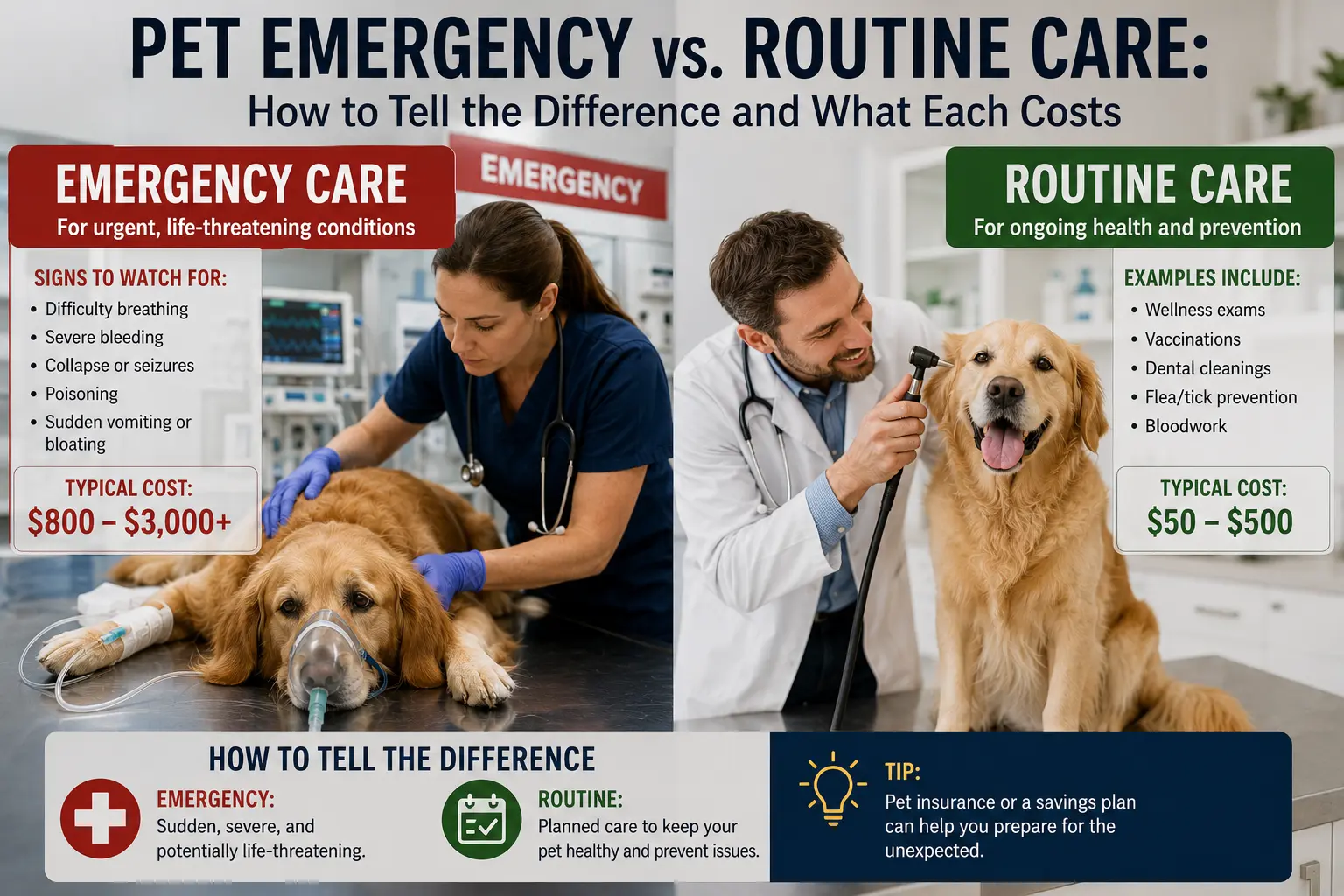
One of the hardest decisions for a pet owner is knowing when a problem can wait for a regular veterinary appointment and when a pet needs emergency care.
A dog that vomits once may not have the same level of urgency as a dog that is repeatedly vomiting, weak, or unable to keep water down. A small cut may be appropriate for a routine appointment, while uncontrolled bleeding after an accident requires immediate attention.
The challenge is that pets cannot explain what they are feeling, and some serious problems can initially look minor.
This guide explains common differences between routine veterinary care, urgent veterinary care, and emergency care, along with practical questions to ask and ways to prepare financially.
Important: This article is an educational guide, not a diagnostic tool. If you are concerned that your pet may be seriously ill or injured, contact your veterinarian or the nearest emergency veterinary hospital. A veterinarian who examines your pet is the appropriate person to determine the urgency and treatment required.
Quick Decision Guide
Use this as a starting point—not as a diagnosis.
| Situation | Typical Next Step |
|---|---|
| Routine vaccination | Schedule a regular appointment |
| Annual wellness examination | Schedule routine veterinary care |
| Mild, short-lived change that resolves | Monitor and contact your veterinarian if it continues |
| Persistent vomiting or diarrhea | Contact a veterinarian promptly |
| New limping without severe trauma | Veterinary appointment; urgency depends on severity |
| Minor wound with controlled bleeding | Contact your veterinarian for advice |
| Severe or uncontrolled bleeding | Emergency veterinary care |
| Difficulty breathing | Emergency veterinary care |
| Collapse or unconsciousness | Emergency veterinary care |
| Seizure | Immediate veterinary guidance; emergency care depending on duration/recovery and circumstances |
| Suspected poisoning | Contact a veterinarian/animal poison service immediately |
| Major trauma or road accident | Emergency veterinary care |
| Sudden paralysis or extreme weakness | Emergency veterinary care |
| Sudden abdominal swelling/bloating | Emergency veterinary care |
AAHA lists difficulty breathing, persistent vomiting/diarrhea, unresponsiveness, seizures, significant bleeding or trauma, abnormal gum color, sudden abdominal swelling, eye injuries, and sudden paralysis or extreme weakness among signs that can indicate a pet emergency.
What Is Routine Veterinary Care?
Routine care is planned care intended to maintain your pet’s health and identify problems before they become serious.
It can include:
- Wellness examinations
- Vaccinations
- Preventive medications
- Parasite prevention
- Dental assessments
- Nutrition discussions
- Weight monitoring
- Routine laboratory testing when appropriate
- Chronic-condition monitoring
- Spay/neuter procedures
- Follow-up appointments
AAHA recommends routine veterinary care at least annually for pets, while senior pets and animals with chronic health problems may need more frequent visits based on their individual needs.
Routine care is not simply about treating illness. Regular examinations can help veterinarians identify health changes that may not be obvious to an owner.
What Is Urgent Veterinary Care?
Not every problem requires an emergency hospital, but some problems should not wait several days for a routine appointment.
Examples can include:
- Persistent vomiting
- Persistent diarrhea
- A new painful limp
- Significant decrease in appetite
- Sudden behavior changes
- Worsening skin or ear problems
- New or worsening pain
- Difficulty urinating
- Repeated coughing
- A wound that needs assessment
- Symptoms that are getting progressively worse
The appropriate response depends on the pet’s age, medical history, severity of symptoms, and other circumstances.
For example, a mild symptom in an otherwise normal adult pet may be handled differently from the same symptom in a very young, elderly, or medically fragile animal.
When you’re unsure, calling your veterinary clinic can help determine whether your pet should be seen immediately, the same day, or at a routine appointment.
What Is a Veterinary Emergency?
A veterinary emergency generally involves a condition where delaying professional assessment could put the pet’s life, organ function, or recovery at serious risk.
Some important warning signs include:
Difficulty Breathing
Breathing problems should be taken seriously.
AAHA notes that respiratory distress can include:
- Gasping
- Wheezing
- Noisy breathing
- Excessive or abnormal panting
- Blue, gray, or purple gums
These signs can occur with serious heart, lung, allergic, or other medical problems.
Action: Seek immediate veterinary attention.
Collapse, Unresponsiveness, or Severe Weakness
A pet that collapses, becomes unconscious, or suddenly cannot stand may have a serious underlying problem.
Possible causes can include:
- Shock
- Poisoning
- Severe illness
- Neurological problems
- Heat-related illness
- Cardiovascular problems
You cannot determine the cause reliably from the symptom alone.
Action: Contact an emergency veterinary hospital immediately.
ASPCA includes loss of consciousness, difficulty standing, apparent paralysis, and abnormal breathing among signs requiring emergency attention.
Seizures
Seizures can be frightening to watch.
During a seizure:
- Keep your pet away from stairs and hard objects.
- Do not put your fingers in the pet’s mouth.
- Keep the surrounding area as safe and quiet as possible.
- Note approximately how long the episode lasts.
- Contact a veterinarian for guidance.
AAHA recommends contacting your veterinarian after a seizure, while emergency assessment may be appropriate depending on the circumstances.
A first-time seizure, repeated seizures, prolonged seizure activity, or failure to return toward normal should be treated as a situation requiring prompt professional guidance.
Severe Bleeding or Major Trauma
Examples include:
- Being hit by a vehicle
- Falling from significant height
- Serious bite wounds
- Severe lacerations
- Heavy uncontrolled bleeding
- Suspected fractures
- Major blunt trauma
A pet can sometimes appear relatively normal immediately after trauma while still having internal injuries.
AAHA specifically recommends immediate assessment for significant trauma or bleeding.
Action: Contact an emergency veterinary hospital and follow their instructions for safe transportation.
Sudden Abdominal Swelling or Bloating
Sudden abdominal enlargement can be associated with serious conditions.
It is especially concerning when accompanied by:
- Repeated unproductive retching
- Weakness
- Pale gums
- Restlessness
- Collapse
- Difficulty breathing
AAHA identifies sudden abdominal swelling or bloating as a potential emergency sign.
Action: Seek emergency veterinary care rather than waiting to see whether the swelling disappears.
Abnormal Gum Color
Healthy gum color varies somewhat between animals, but sudden unusual coloration can be concerning.
AAHA notes that pale, blue, gray, or purple gums may indicate serious problems involving oxygenation, circulation, shock, anemia, or other conditions.
If you notice a significant change in gum color along with weakness, breathing problems, collapse, or other concerning symptoms:
Seek emergency veterinary care.
Eye Injuries
Eye problems can sometimes worsen quickly and may threaten vision.
Emergency assessment may be appropriate for:
- Significant eye trauma
- A visibly damaged eye
- Bulging of the eye
- Severe swelling
- Sudden vision problems
- Significant pain or squinting
- Foreign material that cannot be safely removed
AAHA lists significant eye injuries among situations that require immediate veterinary attention.
Do not attempt to force an injured eye back into position or remove an embedded object yourself.
Persistent Vomiting or Diarrhea
Occasional digestive upset can happen.
However, repeated vomiting or severe diarrhea can become more serious, particularly when accompanied by:
- Blood
- Weakness
- Dehydration
- Abdominal pain
- Loss of responsiveness
- Inability to keep water down
AAHA notes that persistent vomiting and/or diarrhea can constitute an emergency, particularly when severe or accompanied by other concerning signs.
Puppies, kittens, elderly pets, and animals with existing medical conditions may require additional caution.
If you are uncertain about the severity, contact your veterinarian rather than relying on an internet symptom checklist.
Suspected Poisoning: Don’t Wait for Symptoms
Possible poisoning deserves special attention.
If you know or suspect that your pet has swallowed, inhaled, or contacted a potentially toxic substance:
- Remove your pet from further exposure if it is safe to do so.
- Keep the product packaging or identify the substance.
- Note approximately how much may have been involved and when exposure occurred.
- Contact your veterinarian or an appropriate animal poison service immediately.
- Follow the professional’s instructions.
ASPCA warns that some toxic exposures can cause delayed symptoms, meaning a pet may appear normal initially even though treatment is time-sensitive.
Do not give your pet a home remedy or induce vomiting unless a veterinary professional or poison-control expert specifically tells you to do so.
Routine vs Urgent vs Emergency: Practical Examples
Example 1: Annual Vaccination
Your dog is healthy and needs a scheduled vaccination.
Category: Routine
Action: Schedule a normal veterinary appointment.
Example 2: Mild Limping
Your dog has started favoring one leg but is otherwise alert, eating, breathing normally, and not experiencing severe trauma.
Category: May be routine or urgent depending on severity.
Action: Contact your veterinarian and explain the symptoms. They can help determine how quickly your dog should be examined.
Example 3: Dog Hit by a Vehicle
Your dog has been struck by a vehicle.
Even if the dog stands up and appears normal, internal injuries may not be immediately obvious.
Category: Emergency
Action: Contact an emergency veterinary hospital immediately.
Example 4: Cat Vomits Once
Your otherwise healthy adult cat vomits once and then returns to normal behavior.
Category: May not require emergency care.
Action: Monitor closely and contact your veterinarian if vomiting continues, other symptoms develop, or you are concerned.
Example 5: Repeated Vomiting and Weakness
Your dog has vomited repeatedly and is now weak or unusually quiet.
Category: Urgent/emergency depending on severity.
Action: Contact a veterinarian promptly. If the pet is severely weak, unresponsive, having trouble breathing, or showing other emergency signs, go to an emergency veterinary hospital.
What Does Routine Veterinary Care Cost?
Routine veterinary costs vary by location and clinic.
Possible expenses include:
- Examination
- Vaccinations
- Parasite testing
- Preventive medication
- Bloodwork
- Dental care
- Medication
- Follow-up visits
There is no single national price that accurately represents every pet.
The best way to create a budget is to ask your local veterinary clinic for current prices.
You can ask:
“What is your current wellness exam fee?”
“What vaccines are recommended for my pet?”
“What does the preventive-care package include?”
“What would common laboratory tests cost?”
This gives you a much more useful number than copying an average from a website.
What Does Emergency Veterinary Care Cost?
Emergency costs are harder to predict because the examination may be only the beginning.
CareCredit’s May 2026 data reports average emergency examination costs of approximately:
Dog: $135
Cat: $143
However, these figures refer to the emergency examination itself—not the total treatment bill. Diagnostics, medication, imaging, surgery, hospitalization, and other services can substantially increase the final cost.
An emergency bill might therefore include:
Emergency exam
Diagnostic tests
Treatment
Medication
Hospitalization
Follow-up care
Not every pet will need every component.
Why Emergency Care Costs More
Emergency hospitals may need to provide services outside normal clinic hours and may have:
- Extended staffing
- Monitoring equipment
- Diagnostic imaging
- Surgical capability
- Hospitalization
- Critical-care resources
The exact cost structure varies between facilities.
When possible, call ahead and tell the emergency hospital:
- What happened
- Your pet’s species
- Age
- Major symptoms
- Whether the pet is conscious and breathing
- Whether there is severe bleeding or trauma
AAHA recommends calling ahead to emergency veterinary facilities when possible so the team can prepare and provide information about expected wait times.
A Financial Comparison
Consider these two situations.
Routine Care
You expect:
- Wellness exam
- Vaccinations
- Preventive medication
You can plan for these expenses throughout the year.
Emergency Care
Your pet suddenly needs:
- Emergency examination
- Bloodwork
- Imaging
- Medication
- Hospitalization
The exact cost is unknown until the veterinarian assesses the condition.
This is why a pet budget should contain both predictable veterinary savings and an emergency reserve.
How to Prepare Financially for Pet Emergencies
You don’t need to know the exact future cost.
Instead, create a plan.
1. Know Your Local Emergency Clinic
Save:
- Name
- Address
- Phone number
- Opening hours
ASPCA recommends having an emergency-care plan before an emergency happens.
2. Keep a Pet Emergency Fund
Set aside an amount that fits your household finances.
Even a small regular contribution can gradually build a reserve.
For example:
$50/month × 12 = $600/year
$100/month × 12 = $1,200/year
The appropriate target depends on your pet, insurance, local veterinary prices, and financial circumstances.
3. Understand Your Pet Insurance
If you have insurance, know:
- Deductible
- Reimbursement rate
- Annual limit
- Exclusions
- Waiting periods
- Pre-existing-condition rules
Insurance should be viewed as part of a broader financial plan rather than a guarantee that every veterinary bill will be paid.
4. Keep Medical Records Accessible
Keep copies of:
- Vaccination records
- Medication list
- Previous diagnoses
- Laboratory results
- Insurance information
If you need emergency care, having these records available can save time.
What to Do Before Leaving for an Emergency Vet
If your pet needs emergency care:
Call the clinic
Tell them what happened and ask for transportation instructions.
Keep your pet calm
Stress can make some situations worse.
Transport safely
Use a carrier for cats and small pets where appropriate.
For injured dogs, a blanket or other support may help with careful transportation, depending on the injury.
Bring useful information
Take:
- Medication list
- Medical records if readily available
- Insurance information
- Packaging from a suspected toxin
- Any relevant object or material involved in the incident, if safe to transport
ASPCA recommends bringing identifying information or packaging after suspected toxic exposure because it can help veterinary professionals determine the appropriate treatment.
What NOT to Do During a Suspected Emergency
Avoid relying on internet advice as a substitute for professional assessment.
Do not:
- Give human medication unless specifically instructed by a veterinarian.
- Force food or water into an unconscious pet.
- Attempt to straighten a suspected fracture.
- Remove an embedded object.
- Induce vomiting after poisoning unless instructed by a veterinary professional.
- Wait for severe symptoms to appear after a known toxic exposure.
ASPCA specifically recommends contacting a veterinarian or poison-control experts after suspected poisoning rather than waiting for symptoms to worsen.
Build a Simple Pet Emergency Plan
Create a note on your phone containing:
Your Veterinarian
Name: __________
Phone: __________
Address: __________
Emergency Hospital
Name: __________
Phone: __________
Address: __________
Pet Information
Name: __________
Species: __________
Age: __________
Weight: __________
Medications: __________
Medical conditions: __________
Insurance
Provider: __________
Policy number: __________
Deductible: __________
Keeping this information ready can reduce stress when you need it.
Pet Emergency Checklist
Keep at Home
- Pet carrier
- Leash/harness
- Clean towels
- Basic pet first-aid supplies
- Veterinary contact information
- Emergency hospital information
- Current medical records
- Medication list
- Pet insurance information
AAHA recommends maintaining a pet first-aid kit and learning basic pet first-aid skills, while emphasizing that first aid is not a substitute for veterinary care.
When You’re Not Sure, Call
One of the hardest situations is when your pet doesn’t clearly appear to be in an emergency, but something feels wrong.
Don’t feel that you have to diagnose the problem yourself.
You can call:
- Your regular veterinarian
- An emergency veterinary hospital
- An appropriate veterinary telehealth service where available
- An animal poison-control service for suspected toxic exposure
Explain what you are seeing and ask how urgently your pet should be evaluated.
A recent 2026 AAHA discussion of research into how pet owners assess urgency highlights that owners can have difficulty distinguishing whether a condition requires routine, urgent, or emergency care.
That is exactly why professional triage is valuable.
Frequently Asked Questions
Is vomiting always a pet emergency?
No. A single episode in an otherwise normal pet may not require emergency treatment. Repeated vomiting, severe symptoms, blood, weakness, dehydration, or other concerning signs can require prompt veterinary assessment.
Is diarrhea an emergency?
Not every case is an emergency. Persistent or severe diarrhea, particularly with blood, weakness, dehydration, or other symptoms, warrants prompt veterinary attention.
When should I take my dog to an emergency vet?
Examples include difficulty breathing, collapse, unconsciousness, severe bleeding, major trauma, sudden paralysis or extreme weakness, significant abdominal swelling, and other life-threatening signs.
When should I take my cat to an emergency vet?
Cats should receive emergency assessment for signs such as difficulty breathing, collapse, unconsciousness, severe trauma, significant bleeding, seizures, sudden extreme weakness, or other potentially life-threatening changes.
What should I do if my pet eats something poisonous?
Remove further exposure if safe, keep the product packaging or identify the substance, and contact your veterinarian or an animal poison-control service immediately. Do not wait for symptoms before seeking guidance.
Should I wait until morning?
If your pet has signs of a potential emergency, don’t wait simply because it is outside normal clinic hours. Contact an emergency veterinary hospital and explain the symptoms.
Can I treat a pet emergency at home?
Some basic first-aid measures may help stabilize a pet during transportation, but first aid is not a substitute for veterinary care.
How can I reduce emergency veterinary costs?
You cannot eliminate unexpected veterinary expenses, but you can prepare financially by maintaining an emergency fund, understanding your insurance, comparing local veterinary options before an emergency, and discussing treatment estimates with your veterinarian.
Routine vs. Emergency: The Simple Rule
If your pet is healthy and the care is scheduled, it is generally routine care.
If your pet has a new or worsening problem but does not appear immediately life-threatening, contact your veterinarian promptly for guidance.
If your pet has signs such as:
- Difficulty breathing
- Collapse
- Unconsciousness
- Severe bleeding
- Major trauma
- Sudden paralysis
- Severe weakness
- Abnormal gum color
- Serious eye injury
- Significant abdominal swelling
- Other potentially life-threatening symptoms
seek emergency veterinary care immediately.
When you’re uncertain, calling a veterinary professional is safer than trying to diagnose the condition yourself.
Final Takeaway
The goal of this guide is not to teach pet owners how to diagnose emergencies.
It is to help you recognize when waiting may be risky and when professional veterinary guidance is appropriate.
Keep the distinction simple:
Routine
Planned preventive care and regular health monitoring.
Urgent
A new, persistent, painful, or worsening problem that should be discussed with a veterinarian promptly.
Emergency
A potentially life-threatening problem requiring immediate professional assessment.
Prepare before you need help:
Know your regular veterinarian.
Know your nearest emergency hospital.
Keep your pet’s medical information accessible.
Maintain an emergency financial reserve.
And when something seems seriously wrong, contact a veterinary professional rather than relying on an online diagnosis.
Sources & Editorial Methodology
This article prioritizes veterinary and animal-care organizations rather than anonymous blogs or unverified social-media advice.
Primary and authoritative sources consulted include:
- American Animal Hospital Association (AAHA) — emergency signs, routine veterinary care, first aid, and veterinary-care guidance.
- ASPCA — emergency-care planning and suspected poisoning guidance.
- AVMA — pet first-aid and emergency-preparation information.
Cost information is intentionally presented as general planning guidance rather than a promise of what an individual veterinary clinic will charge.
Last reviewed: August 2026
Author: Harry Mills
Medical & Financial Disclaimer
This article is for general educational and financial-planning purposes only. It does not diagnose, treat, or prevent any disease or injury and is not a substitute for professional veterinary care.
Veterinary costs vary by location, provider, pet, diagnosis, treatment, and individual circumstances.
If you believe your pet is experiencing an emergency, contact your veterinarian or the nearest emergency veterinary hospital.
