

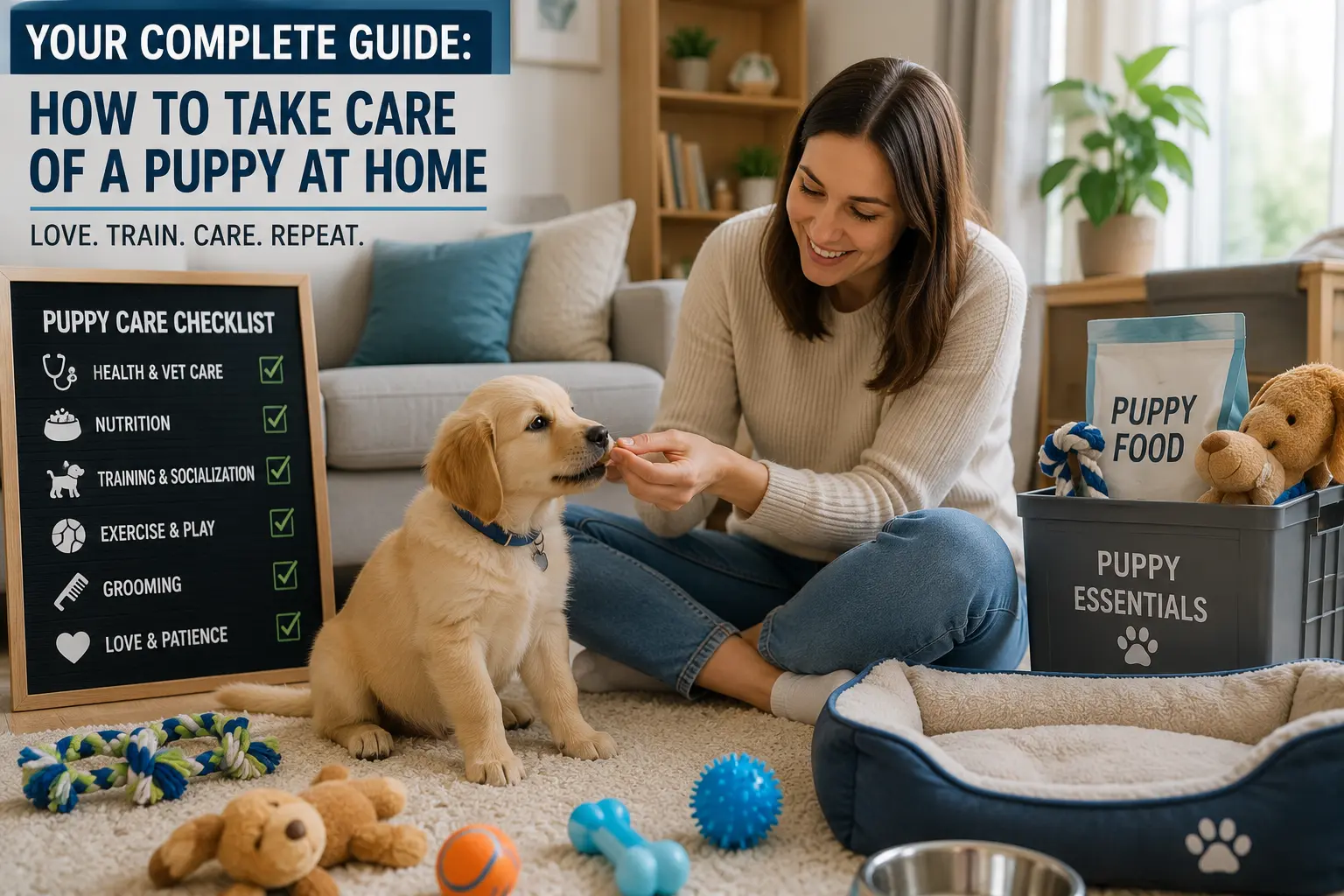
Your Complete Guide: How to Take Care of a Puppy at Home
Bringing a new puppy home is one of the most exciting milestones for any pet owner — and one of the most overwhelming. Between vaccination schedules, potty training, puppy-proofing, feeding questions, and the general chaos of a tiny animal discovering the world for the first time, it’s easy to feel like you need a manual. This is that manual.
This guide walks through everything you need to know to care for a puppy at home, from the moment you bring them through the door through the milestones of their first year, including a practical vaccination and milestone table, answers to the most common new-owner questions, and links to trusted resources for anything you want to dig into further.
Preparing Your Home Before Your Puppy Arrives
The first 48 hours matter enormously, and most of that comes down to preparation you do before your puppy ever sets a paw inside.
Puppy-Proofing Your Space
Puppies explore the world with their mouths, which means anything within reach is a potential chew toy — and potential hazard. Before bringing your puppy home:
- Secure or remove electrical cords, or use cord protectors
- Move houseplants that are toxic to dogs out of reach (lilies, sago palm, and azaleas are common culprits) — the ASPCA’s searchable database of toxic and non-toxic plants is a reliable resource for checking any specific plant in your home
- Store household chemicals, medications, and cleaning supplies in closed cabinets
- Remove small objects that could pose a choking hazard
- Block off stairways or hazardous areas with a puppy gate
- Secure trash cans with locking lids
Setting Up a Designated Space
Puppies thrive on structure and a sense of a safe “home base.” Set up a specific area with a crate, bed, food and water bowls, and a few appropriate chew toys, ideally away from high-traffic zones so your puppy has somewhere calm to retreat to during the overwhelming first few days.
Gathering Essential Supplies
Before your puppy arrives, have these basics on hand:
- A properly sized crate (with room to grow, or an adjustable divider)
- Food and water bowls
- Age-appropriate puppy food
- A collar, ID tag, and leash
- Puppy-safe chew toys
- Enzymatic cleaner for inevitable accidents
- A dog bed or blanket
The First Night and First Week
The first night home is often harder on new owners than it is on the puppy itself, but knowing what to expect helps enormously.
What’s Normal in the First Few Days
Expect some whining, especially overnight, as your puppy adjusts to being separated from littermates and a new environment. Placing the crate near your bed for the first several nights, rather than isolating your puppy in a separate room, can ease this transition considerably. Some owners use a warm (not hot) water bottle wrapped in a towel or a ticking clock near the crate, mimicking the warmth and rhythmic sound of littermates, though results vary by individual puppy.
Managing the Adjustment Period
Keep the first week relatively calm and low-key rather than introducing your puppy to a stream of visitors, other pets, or overstimulating environments right away. A predictable daily rhythm — wake, potty break, feed, play, nap, repeat — helps your puppy settle in far faster than an unpredictable schedule.
Introducing Existing Pets
If you have other pets at home, introduce them gradually and under close supervision, ideally in neutral territory rather than an existing pet’s established space. Keep initial interactions short and calm, and never force an interaction if either animal shows signs of stress.
Feeding Your Puppy: Nutrition Basics
Proper nutrition during the first year sets the foundation for your dog’s long-term health, and puppies have meaningfully different nutritional needs than adult dogs.
Choosing the Right Food
Look for a food specifically formulated for puppies, ideally one that meets the nutritional standards set by the Association of American Feed Control Officials (AAFCO) for growth and reproduction. Large-breed puppies have distinct nutritional needs, since overly rapid growth can contribute to joint and skeletal problems — large-breed puppy formulas are specifically designed to manage this.
Feeding Frequency by Age
Puppies need more frequent, smaller meals than adult dogs, since their stomachs are small and their energy needs are high:
- 6–12 weeks: 4 meals per day
- 3–6 months: 3 meals per day
- 6–12 months: 2 meals per day
- 12+ months: Transition to adult feeding schedule (typically 1–2 meals per day), based on your veterinarian’s guidance
Avoiding Common Feeding Mistakes
Resist the urge to free-feed (leaving food out all day), since this makes it harder to potty train and to monitor your puppy’s appetite for signs of illness. Avoid feeding table scraps, which can encourage begging and, in some cases, introduce foods that are toxic to dogs, such as chocolate, grapes, onions, and xylitol-containing products.
House Training and Potty Training
This is often the single biggest source of stress for new puppy owners, but consistency solves the vast majority of problems.
The Basic Schedule
Puppies generally need a bathroom break:
- Immediately after waking up
- Within 15–30 minutes after eating or drinking
- After active play sessions
- Before bedtime
- Roughly every 1–2 hours for very young puppies, gradually extending as they mature
Building Good Habits
Take your puppy to the same spot outside each time, and reward them immediately with praise or a small treat the moment they finish, not after you’re both back inside. Never punish accidents after the fact — puppies don’t associate a mess found minutes or hours later with the correction, so this only creates confusion and anxiety rather than teaching anything useful.
Crate Training as a Tool
A properly sized crate can meaningfully support house training, since puppies generally avoid soiling the space where they sleep. The crate should be just large enough for your puppy to stand, turn around, and lie down comfortably — not so large that they can eliminate in one corner and sleep in another.
Socialization: The Critical Early Window
Puppy socialization has a genuinely time-sensitive window, generally considered to run from about 3 to 14 weeks of age, during which puppies are most receptive to new experiences without developing fear responses.
What Good Socialization Looks Like
Expose your puppy, in a controlled and positive way, to:
- A variety of people (different ages, appearances, and mobility aids)
- Other vaccinated, friendly dogs
- Different surfaces (grass, tile, gravel, stairs)
- Everyday sounds (vacuum cleaners, traffic, doorbells)
- Car rides and (eventually) the veterinary office, ideally including some visits that don’t involve a shot
Balancing Socialization With Health Risk
Because puppies aren’t fully vaccinated until around 16 weeks, veterinarians often recommend a balanced approach: avoid areas with high concentrations of unknown dogs (like public dog parks) until vaccination is complete, while still prioritizing controlled, low-risk socialization opportunities during this critical window, since waiting until full vaccination is complete can mean missing the socialization period entirely.
Vaccinations and Veterinary Care
Vaccinations are one of the most important investments you’ll make in your puppy’s long-term health, and following a proper schedule protects against several serious, sometimes fatal, diseases.
Understanding Core vs. Non-Core Vaccines
Veterinary guidelines distinguish between core vaccines (recommended for essentially all puppies) and non-core vaccines (recommended based on lifestyle and regional risk factors). The American Animal Hospital Association’s canine vaccination guidelines offer a detailed, veterinarian-reviewed breakdown of this framework. Core vaccines typically include protection against canine distemper, parvovirus, adenovirus (hepatitis), and rabies. Non-core vaccines — such as bordetella (kennel cough), leptospirosis, canine influenza, and Lyme disease — are recommended based on your puppy’s specific risk factors, geographic location, and lifestyle.
A Typical Vaccination and Milestone Timeline
| Age | Key Milestones |
|---|---|
| 6–8 weeks | First round of core vaccines; initial veterinary wellness exam |
| 9–11 weeks | Second round of core vaccine boosters; begin controlled socialization |
| 12–14 weeks | Third round of core vaccine boosters |
| 14–16 weeks | Final puppy vaccine round, including rabies vaccine |
| 4–6 months | Spay/neuter discussion with your veterinarian; adult teeth coming in |
| 6 months | Consider basic obedience class completion; monitor growth plate development in large breeds |
| 12–16 months | Annual booster vaccinations begin; transition to adult food |
Your veterinarian may adjust this schedule based on your puppy’s specific health history, breed, and regional disease risk, so treat this table as a general framework rather than a substitute for individualized veterinary guidance.
Beyond Vaccines
Your puppy’s early veterinary visits will also typically include deworming, a fecal exam to check for intestinal parasites, and a discussion of flea and tick prevention appropriate for your region.
Exercise and Mental Stimulation
Puppies need physical activity, but overexertion — especially in large breeds with still-developing joints — can cause harm rather than benefit.
The “Five-Minute Rule”
A commonly cited general guideline suggests roughly five minutes of structured exercise per month of age, up to twice daily, until a puppy is fully grown (for example, roughly 15 minutes for a 3-month-old puppy). This is a general guideline rather than a precise veterinary standard, and your veterinarian can help tailor exercise recommendations to your specific puppy’s breed and growth stage.
Mental Enrichment Matters Too
Puppies need mental stimulation just as much as physical exercise. Puzzle feeders, short training sessions, and supervised chew time all help tire out an energetic puppy’s mind, which can meaningfully reduce destructive behavior driven by boredom.
Basic Training Fundamentals
Early training sets the tone for your dog’s behavior for years to come, and positive reinforcement is the method most broadly recommended by veterinary behaviorists today.
Start With the Basics
Focus early training on:
- Name recognition: Teaching your puppy to respond reliably to their name
- Sit, stay, and come: The foundational commands most other training builds on
- Loose-leash walking: Introduced gradually, ideally after your puppy is comfortable wearing a collar or harness
- Bite inhibition: Teaching appropriate mouth pressure through consistent, gentle correction of nipping during play
Consider a Formal Puppy Class
Structured puppy classes offer the dual benefit of formal training guidance and safe, supervised socialization with other puppies, and many veterinary offices can recommend a reputable local option.
Sleep Needs and Routine
Puppies sleep considerably more than adult dogs, often 18 to 20 hours a day when very young, though this sleep tends to come in short bursts rather than one long stretch. This is a normal and important part of healthy development, since much of a puppy’s physical and neurological growth happens during sleep.
Establishing a consistent bedtime routine — a final potty break, a calm wind-down period, and a predictable time for settling into the crate — helps your puppy learn to self-soothe and sleep through longer stretches as they mature. Most puppies can gradually extend overnight sleep as their bladder control improves, typically achieving a full night without a bathroom break somewhere between 4 and 6 months of age, though this varies by individual puppy and breed size.
Grooming and Basic Hygiene
Grooming needs vary significantly by breed, but a few basics apply broadly:
- Brushing: Regular brushing, even for short-haired breeds, helps reduce shedding and gives you a chance to check for skin issues, parasites, or lumps.
- Nail trims: Puppy nails grow quickly and should be trimmed regularly to avoid overgrowth and discomfort.
- Ear checks: Regular ear checks help catch infections early, particularly in breeds with floppy ears.
- Teeth care: Introducing tooth brushing early, even before all adult teeth come in, helps your puppy accept dental care as a normal routine rather than a stressful one later in life.
- Bathing: Puppies generally don’t need frequent baths — overbathing can dry out their skin — so follow your veterinarian’s or groomer’s specific recommendation for your breed.
Common Health Issues to Watch For
New puppy owners should be aware of a few common early health concerns:
- Intestinal parasites: Common in puppies and typically addressed through the deworming protocol your veterinarian establishes during early visits.
- Parvovirus: A serious, potentially fatal illness that underscores the importance of completing the full vaccination series before extensive exposure to unknown dogs.
- Teething discomfort: Puppies often chew more intensely during teething, so having appropriate chew toys on hand helps protect your furniture and their comfort.
- Hypoglycemia in small-breed puppies: Very young, small-breed puppies can be prone to low blood sugar, so consistent, frequent feeding matters especially for toy breeds.
If your puppy shows signs of lethargy, vomiting, diarrhea, or refusal to eat, contact your veterinarian promptly, since puppies can decline quickly compared to adult dogs.
Budgeting for Your Puppy’s First Year
The first year of puppy ownership tends to be the most expensive, given the concentration of vaccinations, spay/neuter surgery, initial supplies, and training costs. If you haven’t already mapped out what this first year is likely to cost, our complete guide to first-year and adoption budgeting breaks down realistic cost expectations and planning strategies so there are no unpleasant financial surprises during this already demanding period.
Frequently Asked Questions
How often should I feed my puppy? Feeding frequency depends on age: four meals daily for very young puppies (6–12 weeks), tapering to three meals by 3–6 months, and two meals by 6–12 months, before eventually transitioning to an adult schedule.
When can my puppy go outside safely? Most veterinarians recommend limiting exposure to areas with unknown dogs (like public parks) until the full vaccine series is complete, typically around 16 weeks, while still allowing controlled, low-risk socialization opportunities during this window.
How long does house training usually take? Most puppies are largely house trained within 4 to 6 months with consistent routines, though this varies by individual puppy, breed, and how consistently the schedule is followed.
When should I spay or neuter my puppy? Timing varies by breed size and veterinary recommendation, with many veterinarians suggesting a discussion around 4 to 6 months of age, though large-breed dogs sometimes benefit from waiting longer to support proper joint development. This decision should be made individually with your veterinarian.
How much exercise does my puppy need? A general guideline suggests roughly five minutes of structured exercise per month of age, up to twice daily, until full growth is reached, though this varies by breed and individual puppy.
What vaccines does my puppy absolutely need? Core vaccines — protecting against distemper, parvovirus, adenovirus, and rabies — are recommended for essentially all puppies. Additional non-core vaccines depend on your region and your puppy’s specific lifestyle.
Is it normal for my puppy to nip and bite during play? Yes, this is a normal developmental behavior related to teething and learning bite inhibition. Consistent, gentle redirection during puppyhood typically resolves this well before adulthood.
Conclusion
Raising a puppy is a genuine commitment, but it’s also one that rewards consistency far more than perfection. Getting the fundamentals right — proper nutrition, a realistic vaccination schedule, patient house training, thoughtful socialization during that critical early window, and age-appropriate exercise — sets the stage for a well-adjusted, healthy adult dog. Every puppy develops at their own pace, so treat the timelines in this guide as a general framework, and lean on your veterinarian for anything specific to your puppy’s breed, health history, or individual needs. The early effort you put in during these first several months pays off for years to come.
Disclaimer
This article is intended for general informational and educational purposes only and does not constitute veterinary advice. Every puppy is different, and specific nutritional, vaccination, exercise, and health needs can vary significantly by breed, health history, and individual circumstances. Always consult a licensed veterinarian for guidance tailored to your puppy.
