

Updated: August 2026
Cats are often described as relatively affordable pets, especially compared with larger dogs. That can be true, but “affordable” does not mean free.
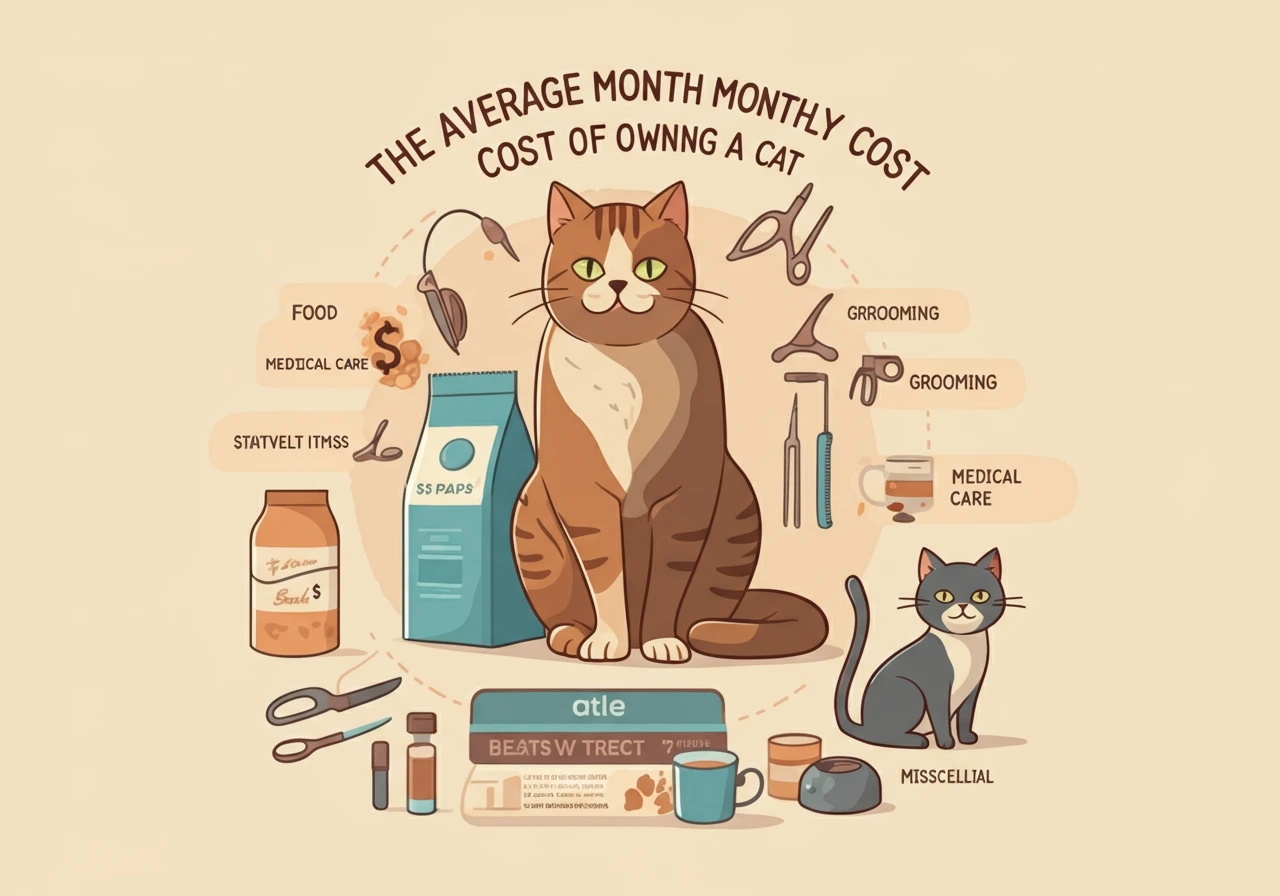
A cat’s monthly expenses can include food, litter, routine veterinary care, parasite prevention, toys, grooming, replacement supplies, and other occasional costs. Some expenses happen every month, while others arrive only once or twice a year.
That makes the real cost of cat ownership easy to underestimate.
Instead of asking only:
“How much does a cat cost per month?”
a more useful question is:
“How much should I set aside every month so normal cat expenses don’t surprise me later?”
This guide breaks the budget into recurring and irregular expenses and shows how to turn those costs into a practical monthly amount.
Important: This article is for general educational purposes. Actual cat ownership costs vary by location, cat age, health, food choice, household preferences, and veterinary needs. The examples below are budgeting illustrations, not guaranteed prices or veterinary recommendations.
Quick Answer: What Is the Average Monthly Cost of Owning a Cat?
There is no single monthly amount that applies to every cat.
A useful planning range for a healthy adult cat can be thought of as roughly $70–$200+ per month for ordinary ownership expenses, before unusually expensive medical treatment.
That range is intentionally broad because two households can have very different budgets.
One owner might spend less by:
- Buying food in larger quantities
- Using basic litter
- Grooming at home
- Buying fewer toys
- Choosing a lower-cost veterinary clinic
Another owner might spend substantially more because of:
- Premium food
- Multiple litter boxes
- Regular grooming
- Pet insurance
- Preventive treatments
- Higher local veterinary prices
- Prescription food or medication
The important point is that a monthly average should be used as a planning tool, not as a universal price tag.
A Better Way to Think About Cat Costs
Cat ownership expenses fall into four useful categories:
1. Recurring costs
Expenses you expect regularly.
Examples:
- Food
- Litter
- Routine medications
- Insurance premiums
2. Periodic costs
Expenses that don’t happen every month but should still be included in your budget.
Examples:
- Annual veterinary examinations
- Vaccinations
- Preventive treatments
- Grooming
- Replacement carriers
3. Occasional replacement costs
Items that last for months or years.
Examples:
- Scratching posts
- Beds
- Water fountains
- Litter boxes
- Carriers
- Toys
4. Unexpected costs
These are the hardest to predict.
Examples:
- Emergency veterinary treatment
- Unexpected illness
- Surgery
- Diagnostic testing
- Prescription medication
A realistic monthly budget should account for all four categories.
Monthly Cat Budget at a Glance
Here is a practical budgeting framework for one adult cat:
| Expense | Example Monthly Budget |
|---|---|
| Food | $20–$60 |
| Litter | $10–$30 |
| Routine health / preventive care | $10–$30 |
| Toys & enrichment | $5–$15 |
| Grooming / hygiene | $0–$20 |
| Pet insurance, if used | Varies |
| Replacement supplies | $5–$15 |
| Veterinary reserve | $15–$50+ |
| Illustrative total | $65–$220+ |
These are planning ranges, not national price averages.
Your actual monthly cost can fall below or above these figures.
The biggest mistake is treating the low end as a guaranteed cost.
1. Cat Food: Usually the Most Predictable Recurring Expense
Food is one of the easiest expenses to budget because you can estimate how much your cat consumes each month.
Your food budget can vary based on:
- Cat’s size
- Age
- Activity level
- Wet vs. dry food
- Food brand
- Feeding schedule
- Special dietary requirements
- Prescription diet
A healthy adult cat eating standard commercial food may cost considerably less to feed than a cat requiring a veterinary therapeutic diet.
A simple calculation
Suppose your cat food costs:
$45 per month
Annual cost:
$45 × 12 = $540
If you want a more detailed food-specific budget, use your actual package price and feeding instructions rather than relying on a generic average.
Your monthly food budget should also include occasional changes in consumption as your cat’s age, weight, or health needs change.
2. Cat Litter
Litter is another recurring expense that is easy to overlook.
Your monthly litter cost depends on:
- Number of litter boxes
- Type of litter
- Brand
- How frequently you clean the boxes
- How frequently you replace litter
- Whether you use clumping or non-clumping litter
For example, a household using two litter boxes will naturally use more litter than a household with one box.
Instead of asking:
“How much does litter cost?”
track:
How many containers do I use each month × price per container
That gives you a much more accurate personal budget.
3. Routine Veterinary Care
Routine veterinary expenses are not necessarily monthly bills.
That makes them easy to forget when creating a monthly budget.
Instead of waiting for the annual appointment and paying the full amount at once, divide expected yearly costs by 12.
Example
Suppose you expect to spend:
$360 per year
on routine veterinary care.
Monthly budget:
$360 ÷ 12 = $30
You can set aside $30 every month even though the actual bill arrives later.
This is called sinking-fund budgeting.
It turns an irregular annual expense into a predictable monthly contribution.
4. Preventive Care
Depending on your veterinarian’s recommendations and your cat’s circumstances, preventive care can include things such as:
- Vaccinations
- Parasite prevention
- Routine examinations
- Screening tests
- Other preventive services
Not every cat needs exactly the same preventive schedule.
Age, lifestyle, medical history, geographic risks, and veterinary advice can all matter.
For that reason, don’t build your budget around a generic checklist alone.
Ask your veterinarian what preventive care is appropriate for your cat and then convert the expected annual cost into a monthly amount.
5. Cat Litter Box and Replacement Supplies
Some cat expenses are not really “monthly” expenses at all.
A litter box might last for years.
A scratching post might last several months.
A carrier might last many years.
But eventually, these items need replacement.
A useful way to budget for them is to create a small replacement-supplies category.
For example:
$10/month × 12 = $120/year
That gives you $120 available for replacing or upgrading ordinary pet supplies.
If you don’t spend it, the money can remain in the category for the next year.
6. Toys and Enrichment
Cats don’t necessarily require expensive toys.
However, environmental enrichment is important for many cats.
Your budget might include:
- Interactive toys
- Balls
- Wand toys
- Scratchers
- Cat trees
- Puzzle feeders
- Replacement toy parts
You do not need to spend a large amount every month.
A better approach is to buy selectively and rotate toys so that familiar items remain interesting.
7. Grooming and Hygiene
Cats generally do much of their own grooming.
That means many owners can keep grooming expenses relatively low.
You may still spend money on:
- Nail clippers
- Brushes
- Shampoo when appropriate
- Grooming tools
- Professional grooming for cats that need it
Long-haired cats may require more grooming attention than short-haired cats.
If you groom your cat yourself, the recurring monthly cost may be close to zero after purchasing the necessary tools.
8. Pet Insurance
Pet insurance is optional and should be treated as a separate budgeting decision.
If your monthly premium is:
$35
then the annual premium is:
$35 × 12 = $420
But the premium is not the only potential insurance-related expense.
You may also have:
- Deductibles
- Your share of eligible claims
- Non-covered expenses
- Waiting-period expenses
Therefore, don’t include the insurance premium in your budget without also considering how you would handle the deductible.
For a separate discussion of pet insurance costs, keep this article focused on total cat ownership budgeting rather than repeating a full insurance comparison.
9. Veterinary Emergency Reserve
This is one of the most important categories in a realistic cat budget.
Emergency veterinary care is unpredictable.
You might go years without a major emergency.
Or your cat might suddenly require:
- Diagnostic testing
- Hospitalization
- Surgery
- Emergency medication
- Specialist treatment
A monthly emergency contribution does not mean you will spend that money every month.
It means you are building a financial buffer before you need it.
For example:
$30/month × 12 = $360/year
After three years:
$360 × 3 = $1,080
That reserve can become useful for unexpected expenses.
For a more detailed emergency-fund calculation, use a dedicated emergency-fund tool rather than mixing the entire calculation into this article.
Fixed vs. Variable Cat Expenses
One of the easiest ways to improve your budget is to separate costs that are relatively predictable from costs that can change.
More predictable
- Food
- Litter
- Insurance premium
- Regular preventive products
More variable
- Veterinary treatment
- Medication
- Prescription food
- Grooming
- Replacement supplies
- Emergency treatment
Your budget should be large enough to absorb changes in the second category.
How Much Does an Indoor Cat Cost Per Month?
Indoor cats can have a relatively predictable monthly budget.
A typical planning structure might include:
- Food
- Litter
- Routine-care reserve
- Enrichment
- Replacement supplies
- Emergency savings
Indoor status does not eliminate veterinary costs.
Indoor cats can still develop illnesses, injuries, dental problems, urinary problems, and age-related conditions.
Therefore, an indoor cat should still have a health-related financial reserve.
How Much Does an Outdoor Cat Cost Per Month?
Outdoor cats may require a different budget depending on their circumstances.
Potential additional considerations include:
- More frequent parasite prevention
- Increased injury risk
- Additional veterinary care
- Identification and microchipping
- Outdoor shelters or equipment
- Higher replacement costs for certain supplies
Outdoor access does not automatically make a cat expensive, but it can change the types of risks you need to budget for.
How Age Changes Your Cat Budget
Your cat’s monthly cost can change throughout its life.
Kitten
A kitten may have higher initial expenses because of:
- Initial veterinary visits
- Vaccinations
- Spay/neuter
- Microchipping
- Carrier
- Litter equipment
- Scratching equipment
- Initial supplies
These are often startup costs, not permanent monthly costs.
Adult Cat
A healthy adult cat may have a relatively stable routine budget.
Typical categories include:
- Food
- Litter
- Routine care
- Preventive care
- Enrichment
- Emergency savings
This is usually the easiest stage for monthly budgeting.
Senior Cat
As a cat ages, health-related expenses can become less predictable.
You may need to budget for:
- More frequent veterinary monitoring
- Diagnostic testing
- Prescription medication
- Special diets
- Chronic-condition management
Not every senior cat develops expensive medical problems.
The important budgeting principle is simply to expect greater uncertainty.
One-Time Cat Costs New Owners Often Forget
A monthly budget does not capture everything.
New cat owners may need to purchase:
- Carrier
- Litter box
- Food bowls
- Water bowl or fountain
- Scratching post
- Bed
- Brush
- Nail clippers
- Toys
- Identification equipment
These startup expenses can make the first year of ownership significantly more expensive than later years.
That distinction is important.
A cat that costs $100 per month after setup may have required several hundred dollars of initial purchases before the regular monthly budget even begins.
First-Year Cost vs. Ongoing Cost
Consider this hypothetical example.
Initial setup
- Carrier: $50
- Litter equipment: $60
- Scratcher: $40
- Bowls: $25
- Toys and enrichment: $50
- Initial veterinary expenses: $250
Startup total:
$475
Now suppose ongoing expenses average:
$100/month
Annual recurring cost:
$1,200
First-year total:
$475 + $1,200 = $1,675
This example demonstrates why first-year ownership and ongoing ownership should be budgeted separately.
The actual amounts will vary.
How to Build a Monthly Cat Budget
Use this five-step method.
Step 1: Record Your Actual Monthly Purchases
Track your cat-related spending for three months.
Include:
- Food
- Litter
- Medication
- Toys
- Supplies
- Grooming
Don’t estimate when you can measure.
Step 2: Add Annual Expenses
List expenses that occur once or a few times per year.
For example:
- Annual veterinary visit
- Vaccinations
- Preventive treatment
- License or registration where applicable
- Replacement carrier
- Grooming
Add the expected annual total.
Step 3: Divide Annual Expenses by 12
Suppose annual irregular expenses equal:
$600
Then:
$600 ÷ 12 = $50/month
Your monthly budget should include that $50 even though you don’t spend it every month.
Step 4: Add an Emergency Contribution
Choose an amount that fits your financial situation.
For example:
$30/month
Keep this separate from your routine spending.
Step 5: Review the Budget Every Six Months
Your cat’s needs can change.
Review:
- Food cost
- Litter cost
- Veterinary expenses
- Insurance
- Medication
- Emergency savings
Adjust the monthly amount when necessary.
A Sample Monthly Cat Budget
Here is an illustrative budget for one healthy adult cat:
| Category | Monthly Amount |
|---|---|
| Food | $40 |
| Litter | $20 |
| Routine-care sinking fund | $25 |
| Preventive-care reserve | $10 |
| Toys/enrichment | $10 |
| Replacement supplies | $10 |
| Emergency savings | $30 |
| Total | $145/month |
Annualized:
$145 × 12 = $1,740
This does not mean every cat costs exactly $1,740 per year.
It is an example of how to build a realistic budget.
A Lower-Cost Budget Example
Some owners may be able to maintain a healthy cat on a lower recurring budget.
Illustrative example:
| Category | Monthly Amount |
|---|---|
| Food | $25 |
| Litter | $12 |
| Routine-care reserve | $15 |
| Enrichment | $5 |
| Replacement supplies | $5 |
| Emergency savings | $20 |
| Total | $82/month |
Annualized:
$984/year
Again, this is a budgeting example rather than a recommended minimum.
Cutting costs should never mean ignoring appropriate veterinary care or your cat’s nutritional needs.
A Higher-Cost Budget Example
Another household might choose a more comprehensive budget.
| Category | Monthly Amount |
|---|---|
| Food | $60 |
| Litter | $30 |
| Routine-care reserve | $35 |
| Preventive care | $20 |
| Enrichment | $20 |
| Grooming | $15 |
| Replacement supplies | $15 |
| Emergency savings | $50 |
| Total | $245/month |
Annualized:
$2,940/year
The difference between this and the lower-cost example illustrates why one national “average” can be misleading.
Both budgets can represent responsible ownership.
They simply reflect different choices and circumstances.
What Is a Reasonable Monthly Cat Budget?
Instead of choosing a single number, use a three-level approach.
Basic Budget
Designed around essential routine expenses.
Food + litter + routine-care reserve + emergency savings
Standard Budget
Adds:
Preventive care + enrichment + replacement supplies
Higher-Comfort Budget
May also include:
Premium food + insurance + professional grooming + higher emergency savings
This approach is more useful than telling every cat owner to spend the same amount.
How to Lower Cat Ownership Costs Without Cutting Necessary Care
Saving money does not have to mean buying the cheapest products available.
Buy Based on Usage
Track how quickly you use food and litter before changing brands or quantities.
Compare Unit Prices
A larger package is not automatically cheaper.
Calculate:
Total price ÷ weight or quantity
Avoid Impulse Purchases
Cats do not need a new toy every week.
Rotate existing toys and replace damaged items when necessary.
Budget for Annual Costs
A small monthly sinking fund can prevent annual veterinary expenses from becoming a financial surprise.
Prevent Small Problems From Becoming Big Problems
Follow appropriate preventive care and consult your veterinarian when your cat has concerning symptoms.
Trying to save money by ignoring health problems can create larger expenses later.
The Difference Between Cheap and Cost-Efficient
These terms are not identical.
Cheap
You spend less today.
Cost-efficient
You spend money in a way that provides good value over time.
For example, a $5 scratching post that falls apart quickly may be less cost-efficient than a $15 post that lasts several years.
Likewise, skipping a routine veterinary visit may save money today but could have different consequences depending on the cat’s health.
A good pet budget focuses on long-term value, not simply the lowest immediate price.
How Location Changes the Monthly Budget
The cost of owning a cat can vary substantially by location.
Food and litter may have relatively predictable retail pricing, but veterinary services can vary considerably.
If you live in a high-cost metropolitan area, your veterinary reserve may need to be larger than the reserve used by someone in a lower-cost area.
Therefore, use your local prices whenever possible.
A practical method is:
- Call one or two local veterinary clinics.
- Ask for the price of a routine examination.
- Ask what preventive services your cat may need.
- Use those actual prices in your annual budget.
- Divide the annual estimate by 12.
This gives you a much more useful local budget than a generic internet average.
Why Monthly Averages Can Be Misleading
Suppose your cat has the following expenses:
January
$90
February
$80
March
$75
April
$85
May
$70
June
$350
July
$80
August
$75
September
$85
October
$70
November
$90
December
$80
The annual total is:
$1,230
Average monthly cost:
$1,230 ÷ 12 = $102.50
But you did not actually spend $102.50 every month.
This distinction matters.
The purpose of a monthly average is to help you plan cash flow, not predict the exact amount that will appear on every month’s bank statement.
The Sinking-Fund Method for Cat Owners
A sinking fund is money set aside gradually for an expense you expect later.
Suppose you estimate:
Annual routine veterinary cost = $360
Instead of finding $360 suddenly, save:
$30/month
After 12 months:
$360
You can use the same method for:
- Veterinary care
- Grooming
- Annual medication
- Replacement equipment
- Insurance deductibles
This is one of the simplest ways to make pet ownership financially predictable.
What Should Be Included in Your Cat Budget?
Use this checklist:
- Food
- Litter
- Routine veterinary care
- Preventive care
- Medication
- Pet insurance, if applicable
- Toys and enrichment
- Grooming
- Replacement supplies
- Emergency savings
- Initial setup costs
- Occasional travel or boarding costs
Not every category will apply every month.
That is why separating monthly spending from annual reserves is useful.
What About Cat Boarding or Pet Sitting?
If you travel, this can become a meaningful ownership expense.
Your budget might include:
- Boarding
- Professional pet sitting
- Drop-in visits
- Transportation
- Emergency backup care
If you travel twice per year, estimate the expected annual cost and divide it by 12.
For example:
$480 annual travel-related pet care ÷ 12 = $40/month
You don’t necessarily spend $40 every month.
You are simply preparing for the expense.
What About Prescription Food or Medication?
This can materially change a cat’s monthly budget.
A cat with a medical condition may require:
- Prescription food
- Regular medication
- Supplements recommended by a veterinarian
- Follow-up examinations
These expenses should be treated separately from the basic healthy-cat budget.
If your cat already requires ongoing treatment, build your budget around your actual current costs, not a generic average.
What About Multiple Cats?
Don’t simply multiply every expense by the number of cats.
Some costs scale almost directly:
- Food
- Litter
- Medication
Other costs may be shared:
- Carrier
- Grooming tools
- Some toys
- Certain household equipment
For example, two cats may not require twice as many carriers for everyday use, but they will generally require more food and litter.
Build a separate budget for each cat and then identify shared expenses.
How to Budget for Two Cats
Suppose one cat costs:
$120/month
A second cat might add:
$80/month
Total:
$200/month
rather than automatically assuming:
$120 × 2 = $240
The actual result depends on what expenses are shared.
What If Your Budget Is Tight?
If money is limited, prioritize spending in this order:
First: Essential care
- Appropriate food
- Clean litter
- Necessary veterinary care
- Required medication
Second: Preventive planning
- Routine veterinary care
- Appropriate preventive treatment
- Emergency savings
Third: Optional spending
- Premium accessories
- Extra toys
- Decorative products
- Nonessential upgrades
The objective is not to make cat ownership as cheap as possible.
It is to make essential care financially sustainable.
A Simple Cat Cost Formula
You can estimate your own monthly budget using:
Monthly recurring expenses
Annual expenses ÷ 12
Emergency savings contribution
=
Recommended monthly pet budget
For example:
Recurring:
$70/month
Annual expenses:
$480/year ÷ 12 = $40/month
Emergency savings:
$30/month
Total:
$70 + $40 + $30 = $140/month
This is a much more personalized figure than relying on a single national average.
How to Create Your Own Cat Budget in 10 Minutes
Write down your actual numbers:
Food
$____ / month
Litter
$____ / month
Medication
$____ / month
Insurance
$____ / month
Routine veterinary care
$____ / year
Preventive care
$____ / year
Grooming
$____ / year
Replacement supplies
$____ / year
Travel / boarding
$____ / year
Emergency savings
$____ / month
Now calculate:
Monthly expenses
Annual expenses ÷ 12
Emergency contribution
Your result is your personal monthly cat budget.
When Should You Increase Your Monthly Cat Budget?
Consider increasing it when:
- Your cat becomes a senior
- Veterinary costs in your area increase
- Your cat develops a chronic condition
- Food prices increase
- You add insurance
- You begin traveling more
- Your emergency savings are too small
Reviewing the budget periodically is better than waiting for a large unexpected bill.
What Should You Do With Unused Pet-Budget Money?
If you budget $150 per month but spend only $120, don’t automatically treat the $30 as disposable income.
You could move it into:
- Emergency savings
- Annual veterinary fund
- Replacement-supplies fund
- Future medication fund
Over time, small unused amounts can create a useful financial buffer.
The Most Important Difference: Budget vs. Actual Cost
Your monthly budget is a planned amount.
Your actual cost is what you eventually spend.
Those numbers will not always match.
For example:
Budget: $150/month
Actual average: $125/month
That does not necessarily mean your budget was wrong.
The extra $25 may be helping you prepare for an annual vet visit or an unexpected expense.
A good budget is designed to absorb normal variation.
Final Verdict: How Much Should You Budget for a Cat?
There is no single monthly cost that applies to every cat.
For planning purposes, many owners may find a broad range such as $70–$200+ per month useful as a starting point for ordinary ongoing expenses, but your actual number could be lower or considerably higher.
The most accurate method is to build the number yourself.
Start with:
Food + litter + recurring care
Then add:
Annual expenses ÷ 12
Then add:
Emergency savings
That gives you a monthly budget that reflects your actual situation.
The key is to separate:
- Everyday spending
- Annual expenses
- Replacement costs
- Unexpected veterinary expenses
Once you do that, the cost of cat ownership becomes much easier to understand and manage.
A cat may be relatively inexpensive compared with some pets, but responsible ownership still requires planning.
The goal isn’t to spend the least possible amount.
It is to make sure you can consistently provide appropriate care without turning an unexpected expense into a financial crisis.
Frequently Asked Questions
What is the average monthly cost of owning a cat?
A broad planning range for ordinary expenses is roughly $70–$200+ per month, but there is no universal figure. Food, litter, veterinary care, location, insurance, and your cat’s health can substantially change the total.
Is $100 a month enough for a cat?
It can be enough for some healthy cats, depending on local prices and what is included in the budget. However, $100 should not automatically be treated as a universal minimum.
Is owning a cat cheaper than owning a dog?
Often, cats can cost less because they generally consume less food and do not require the same level of daily equipment or services as many dogs. However, individual veterinary and medical costs can vary significantly.
What is the biggest monthly expense for most cats?
Food and litter are common recurring expenses, while veterinary care can become the largest expense when medical treatment is needed.
How much should I save each month for cat emergencies?
There is no universal amount. Consider your cat’s age, health, local veterinary costs, insurance deductible, and current emergency savings. The important thing is to build a reserve gradually rather than waiting for an emergency.
Does an indoor cat cost less than an outdoor cat?
An indoor cat may have fewer outdoor-related risks, but indoor cats still require food, litter, routine veterinary care, preventive care, and emergency planning.
Does the first year of owning a cat cost more?
Often, yes. Initial setup expenses such as a carrier, litter equipment, scratching post, bowls, toys, and initial veterinary care can make the first year more expensive than later years.
How much does a kitten cost per month?
A kitten’s ongoing monthly expenses can be similar to those of an adult cat, but the first year may cost more because of initial veterinary care, vaccinations, spay/neuter, equipment, and other setup expenses.
How much does a senior cat cost per month?
There is no standard senior-cat price. Some senior cats remain relatively inexpensive, while others require medication, diagnostic testing, special diets, or more frequent veterinary care.
How can I lower my cat’s monthly expenses?
Track actual spending, compare unit prices, avoid unnecessary purchases, plan annual expenses through sinking funds, and prioritize essential care over optional products.
Editorial Methodology
PetPolicyFinance uses a budgeting-first approach rather than presenting one “official” monthly cost for every cat.
For this guide, cat ownership expenses are separated into:
- Recurring expenses
- Periodic expenses
- Replacement expenses
- Emergency expenses
The example dollar amounts are illustrative budgeting ranges, not quotations from a specific insurer, retailer, veterinary clinic, or government agency.
Actual costs vary according to location, cat age, health, lifestyle, product selection, and household preferences.
Readers should use their own receipts, local veterinary prices, and current product prices to create a personalized budget.
Editorial Disclaimer
PetPolicyFinance.com is an independent educational website. We are not a veterinary clinic, insurance company, financial adviser, or law firm.
This article provides general information about pet budgeting and does not constitute veterinary, financial, insurance, or legal advice.
Veterinary recommendations should come from a licensed veterinarian familiar with your cat’s health history.
Prices and product costs can change. Always check current local prices before making financial decisions.
Author: Harry Mills
Last Reviewed: August 2026
