

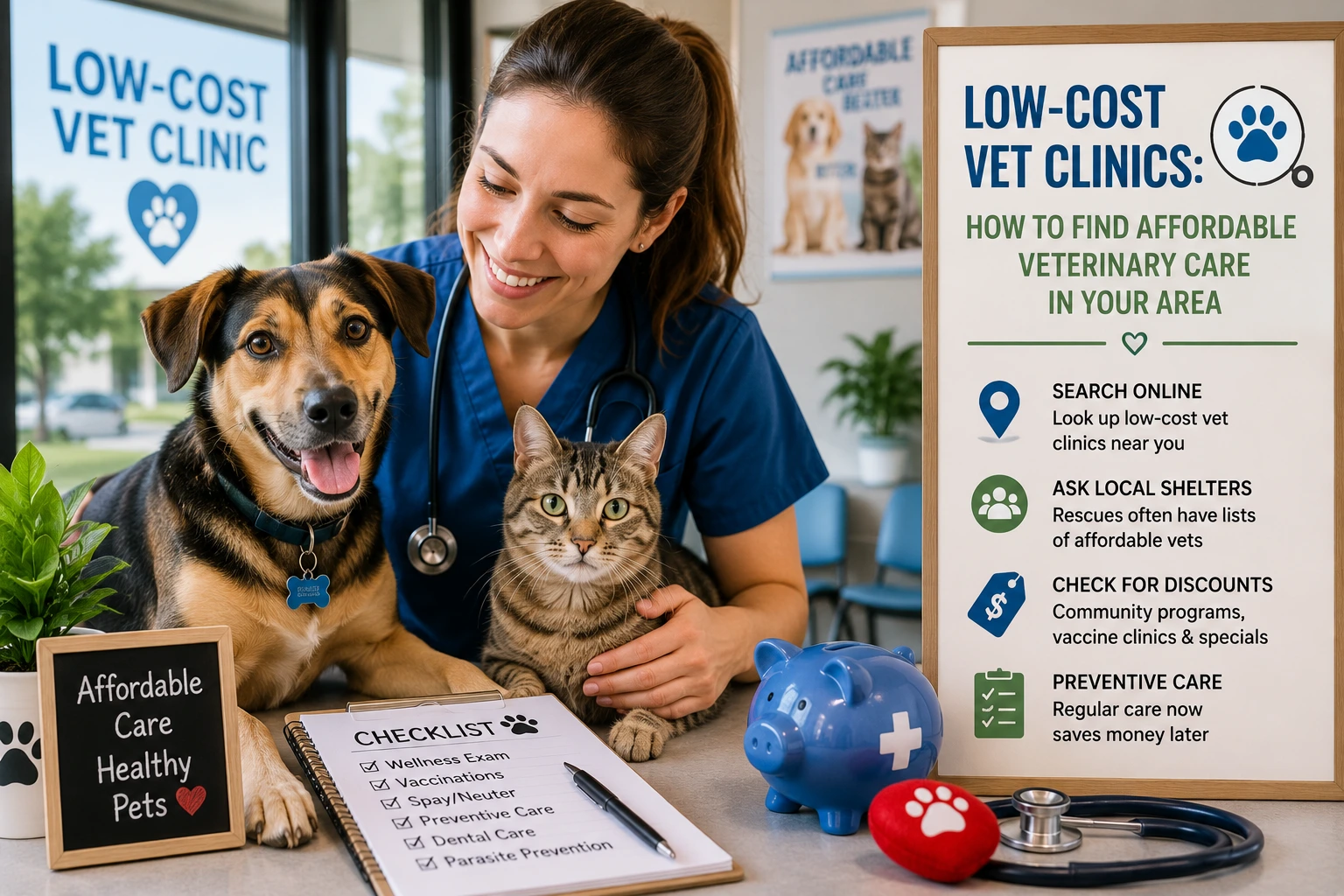
Veterinary care is one of the most important investments you can make in your pet’s health — but it’s also one of the most significant ongoing expenses of pet ownership. A routine wellness exam can cost $50–$100. A single emergency visit can run into the thousands. For many pet owners, especially those on fixed or limited incomes, the rising cost of veterinary care creates an impossible-feeling choice between financial stability and their pet’s wellbeing.
The good news is that affordable veterinary care exists in virtually every region of the country. Low-cost vet clinics, nonprofit organizations, veterinary schools, and community assistance programs make quality pet care accessible to families at every income level — if you know where to look.
This comprehensive guide walks you through exactly how to find affordable veterinary care in your area, what types of services these clinics offer, and how to maximize your savings without ever compromising your pet’s health.
Why Veterinary Costs Have Risen So Dramatically
Before diving into solutions, it helps to understand why veterinary costs have increased so significantly in recent years. Several factors contribute to the rising price of pet care:
- Advanced medical technology: Veterinary medicine now offers MRIs, chemotherapy, orthopedic surgery, and specialist care that simply didn’t exist a generation ago — and these advancements come at a cost.
- Increased demand: Pet ownership surged during and after the pandemic, placing greater demand on a limited supply of veterinary professionals.
- Veterinarian shortage: The United States faces a growing shortage of licensed veterinarians, particularly in rural areas, which drives up prices in markets with limited competition.
- Rising overhead costs: Clinic equipment, staff wages, medical supplies, and facility costs have all increased significantly.
Understanding these factors helps you recognize that high veterinary costs aren’t simply a matter of profit — but it also means that finding alternatives requires some research and planning.
1. Search for Nonprofit and Humane Society Clinics
One of the best starting points for affordable veterinary care is your local humane society or SPCA. Many of these organizations operate low-cost veterinary clinics that are open to the general public — not just adopted animals. Services commonly offered at these clinics include:
- Core vaccinations (rabies, DHPP for dogs, FVRCP for cats)
- Spay and neuter surgery
- Microchipping
- Flea and tick prevention
- Basic wellness exams
Prices at humane society clinics are often 50–70% lower than private veterinary practices for the same services. Some clinics operate on a sliding scale based on household income, making care even more accessible for low-income pet owners.
How to find them: Search “[your city] humane society low-cost vet clinic” or visit the websites of your local SPCA and humane society directly. Many list their clinic services and pricing online.
2. Visit a Veterinary School Teaching Clinic
Veterinary colleges and universities across the country operate teaching clinics where veterinary students perform examinations and procedures under the direct supervision of licensed, experienced veterinarians. These clinics typically offer services at significantly reduced rates — sometimes 30–50% below private practice prices — because they serve a dual educational purpose.
The quality of care at teaching clinics is generally excellent. Every procedure is supervised, and the students performing your pet’s care are in the final stages of their professional training. Teaching clinics often have access to advanced diagnostic equipment that smaller private practices don’t, making them a particularly good option for complex cases.
Common services available at veterinary school clinics include:
- Wellness exams and vaccinations
- Dental cleanings
- Diagnostic imaging (X-rays, ultrasound)
- Surgery
- Specialist consultations (cardiology, dermatology, oncology)
How to find them: Search “[your state] veterinary school teaching hospital” or visit the Association of American Veterinary Medical Colleges (AAVMC) website at aavmc.org for a directory of accredited veterinary schools.
3. Look for Community Vaccination Clinics
Many areas host periodic low-cost vaccination events organized by animal welfare organizations, pet supply stores, or mobile veterinary services. These clinics typically operate on weekends and offer core vaccines, rabies shots, microchipping, and sometimes flea/tick prevention at significantly reduced prices — often $10–$25 per vaccine compared to $20–$50 at private practices.
National pet supply retailers like PetSmart and Petco frequently partner with veterinary service providers to host in-store vaccination clinics. These events are widely advertised in-store, online, and through social media.
How to find them:
- Check the events section of your local PetSmart or Petco website
- Search “[your city] low-cost pet vaccination clinic”
- Follow your local animal shelter’s social media pages, which often announce upcoming community clinic events
- Check community boards on Nextdoor or Facebook Groups for local pet owners
4. Explore Mobile Veterinary Services
Mobile veterinary clinics bring affordable care directly to communities that may lack easy access to traditional veterinary practices. These services are particularly valuable in rural areas and underserved urban neighborhoods where brick-and-mortar clinics are scarce or prohibitively expensive.
Mobile vet services typically offer:
- Wellness exams
- Vaccinations
- Microchipping
- Parasite prevention
- Basic diagnostics
Because mobile clinics have lower overhead than physical practices — no expensive facility to maintain — they can often pass those savings on to clients. Costs vary widely, but mobile services are frequently 20–40% less expensive than comparable private clinic services.
How to find them: Search “[your city or county] mobile vet clinic” or “[your area] mobile veterinary services.” Local animal welfare organizations and pet rescue groups often maintain lists of mobile vet services in their communities.
5. Contact Local Animal Rescue Organizations
Even if you didn’t adopt your pet from a rescue organization, many rescues maintain relationships with veterinary partners who offer discounted services to community members — not just adopters. Some rescues operate their own low-cost clinics, while others can refer you to trusted affordable providers in the area.
Rescue organizations are deeply embedded in their local pet care ecosystems and often have insider knowledge about resources that aren’t widely advertised. A quick phone call or email to a local rescue can yield referrals to affordable vets, upcoming vaccination events, and financial assistance programs you may not have found on your own.
6. Ask About Payment Plans and Financing Options
Many private veterinary practices — not just low-cost clinics — offer payment plans or financing options that make expensive procedures more manageable. Options commonly available include:
- CareCredit: A healthcare financing card widely accepted at veterinary offices, offering promotional periods with no interest if paid in full within a set timeframe (typically 6–24 months).
- Scratchpay: A veterinary-specific financing service with flexible repayment plans and quick approval decisions.
- In-house payment plans: Some veterinary practices offer their own installment plans for established clients. It never hurts to ask directly.
Payment plans don’t reduce the total cost of care, but they make large bills manageable by spreading them over time. This option is particularly valuable for unexpected emergency expenses.
7. Look Into Pet Assistance Programs and Charitable Organizations
A number of national and regional nonprofit organizations provide financial assistance to pet owners who genuinely cannot afford necessary veterinary care. These programs are need-based and typically require an application, but they can provide grants or subsidies that cover a portion — or in some cases all — of qualifying veterinary expenses.
Notable organizations that offer pet care financial assistance include:
- The Pet Fund (thepetfund.com): Provides financial assistance for non-basic, non-emergency veterinary care including cancer treatment, heart disease, and orthopedic conditions.
- RedRover Relief (redrover.org): Offers financial assistance grants for pets in urgent need of veterinary care.
- Brown Dog Foundation (browndogfoundation.org): Helps families afford life-saving veterinary treatment for dogs and cats with serious illnesses.
- Frankie’s Friends (frankiesfriends.org): Supports pets diagnosed with cancer, cardiac disease, or other life-threatening conditions.
Many breed-specific rescue organizations also maintain emergency medical funds for owners of that breed who need financial assistance. Search for your pet’s breed along with “medical assistance fund” to find breed-specific resources.
8. Use Preventative Care to Reduce Long-Term Costs
One of the most effective strategies for reducing veterinary costs over time isn’t about finding cheaper care — it’s about needing less care in the first place. Preventative health practices significantly reduce the likelihood of expensive illnesses and emergencies:
- Keep vaccinations current. Preventing diseases like parvovirus or distemper is dramatically cheaper than treating them.
- Maintain parasite prevention year-round. Treating a flea infestation or heartworm disease costs far more than monthly preventatives.
- Schedule annual wellness exams. Early detection of conditions like diabetes, kidney disease, or dental disease leads to cheaper, more successful treatment outcomes.
- Maintain a healthy weight for your pet. Obesity in pets is linked to diabetes, joint disease, heart conditions, and shortened lifespans — all of which generate significant veterinary expenses.
- Practice daily dental care. Brushing your pet’s teeth or providing dental chews reduces the need for expensive professional cleanings under anesthesia.
Investing $150–$300 per year in preventative care can realistically save you $1,000–$5,000 in treatment costs for conditions that preventative care would have caught or avoided entirely.
9. Compare Prices Between Local Veterinary Practices
Veterinary pricing is not standardized, and costs for the same service can vary significantly between practices in the same city or neighborhood. Many pet owners assume all vets charge roughly the same — but a wellness exam that costs $85 at one clinic might cost $55 at another just a few miles away.
Before settling on a veterinarian, call 3–5 local practices and ask for their pricing on:
- Annual wellness exam
- Core vaccines (rabies, DHPP or FVRCP)
- Heartworm test
- Dental cleaning
This simple exercise can identify meaningfully more affordable options within your existing area without requiring you to travel far or sacrifice quality of care.
10. Consider Pet Insurance to Cap Out-of-Pocket Costs
Pet insurance doesn’t reduce the sticker price of individual veterinary visits, but it fundamentally changes the financial impact of unexpected or expensive care. With a good pet insurance policy, a $3,000 emergency surgery might cost you only your deductible and copay — often $200–$600 out of pocket — rather than the full amount.
Monthly premiums for pet insurance typically range from:
- Cats: $10–$30/month
- Dogs (small/medium): $20–$40/month
- Dogs (large/giant breeds): $35–$75/month
The key to maximizing value from pet insurance is enrolling before your pet develops any health conditions. Pre-existing conditions are excluded from most policies, so early enrollment locks in broader coverage and often lower premiums.
When combined with a low-cost clinic for routine care and preventative services, pet insurance creates a comprehensive, affordable approach to veterinary costs that protects you from both the everyday and the catastrophic.
Red Flags to Watch for at Low-Cost Clinics
Low-cost veterinary care is overwhelmingly legitimate and safe — but as with any service, it pays to be an informed consumer. Watch for these warning signs:
- No licensed veterinarian on site. All veterinary procedures must be performed or directly supervised by a licensed DVM. Ask who will be treating your pet.
- No examination before treatment. A reputable clinic always examines your pet before administering vaccines or performing procedures.
- Pressure to purchase unnecessary services. Any clinic that pressures you into services your pet doesn’t need should be approached with caution.
- No medical records provided. You should always receive documentation of services rendered, vaccines given, and any findings from the examination.
A low price does not mean low quality — but it’s always reasonable to ask questions and trust your instincts.
Quick Reference: Where to Find Affordable Vet Care
| Resource | Best For | Typical Savings |
|---|---|---|
| Humane Society Clinics | Vaccines, spay/neuter, microchipping | 50–70% off private rates |
| Veterinary School Clinics | Full-service care including surgery | 30–50% off private rates |
| Community Vaccination Events | Core vaccines, microchipping | $10–$25 per service |
| Mobile Vet Services | Routine care in underserved areas | 20–40% off private rates |
| Pet Assistance Programs | Major illness, emergency care | Grants/subsidies available |
| CareCredit / Scratchpay | Managing large unexpected bills | Payment flexibility |
| Price Comparison (local vets) | Routine care | 10–30% savings possible |
| Pet Insurance | Emergency and specialist care | Significant cost protection |
Frequently Asked Questions
Are low-cost vet clinics as good as regular vets? Yes, in most cases. Nonprofit clinics, humane society clinics, and veterinary school teaching hospitals maintain high standards of care. The difference is price, not quality. Always verify that a licensed veterinarian is on site.
Can I get a wellness exam at a low-cost clinic? Many low-cost clinics focus on vaccines and preventative services rather than full wellness exams. Veterinary school clinics are the best option if you need a comprehensive examination at reduced cost.
What if I genuinely can’t afford emergency vet care? Contact local rescue organizations and nonprofit assistance programs immediately. Organizations like RedRover Relief and The Pet Fund offer emergency grants. Many emergency veterinary hospitals also have financial counselors on staff who can help identify assistance options.
Do low-cost clinics offer dental cleanings? Some do, particularly veterinary school teaching clinics. Dental cleanings require anesthesia and are more complex than vaccine administration, so not all low-cost clinics offer them. Call ahead to confirm.
How do I know if my pet qualifies for a financial assistance program? Most programs are income-based and require documentation of financial need along with a veterinary estimate for the needed treatment. Visit the organization’s website directly for specific eligibility requirements and application instructions.
Final Thoughts
Affordable veterinary care is more accessible than most pet owners realize — it just requires knowing where to look. Whether you rely on a local humane society clinic for routine vaccinations, take advantage of a veterinary school for complex care, or enroll in pet insurance to protect against the unexpected, there are real and practical options available at every budget level.
Your pet deserves quality care. With the resources outlined in this guide, cost doesn’t have to stand in the way of providing it.
Disclaimer: The resources and cost estimates in this article are provided for general informational purposes. Availability of low-cost veterinary services varies by location. Always verify current pricing and services directly with the provider before your visit. This article does not constitute veterinary or financial advice.
