

Updated: August 2026
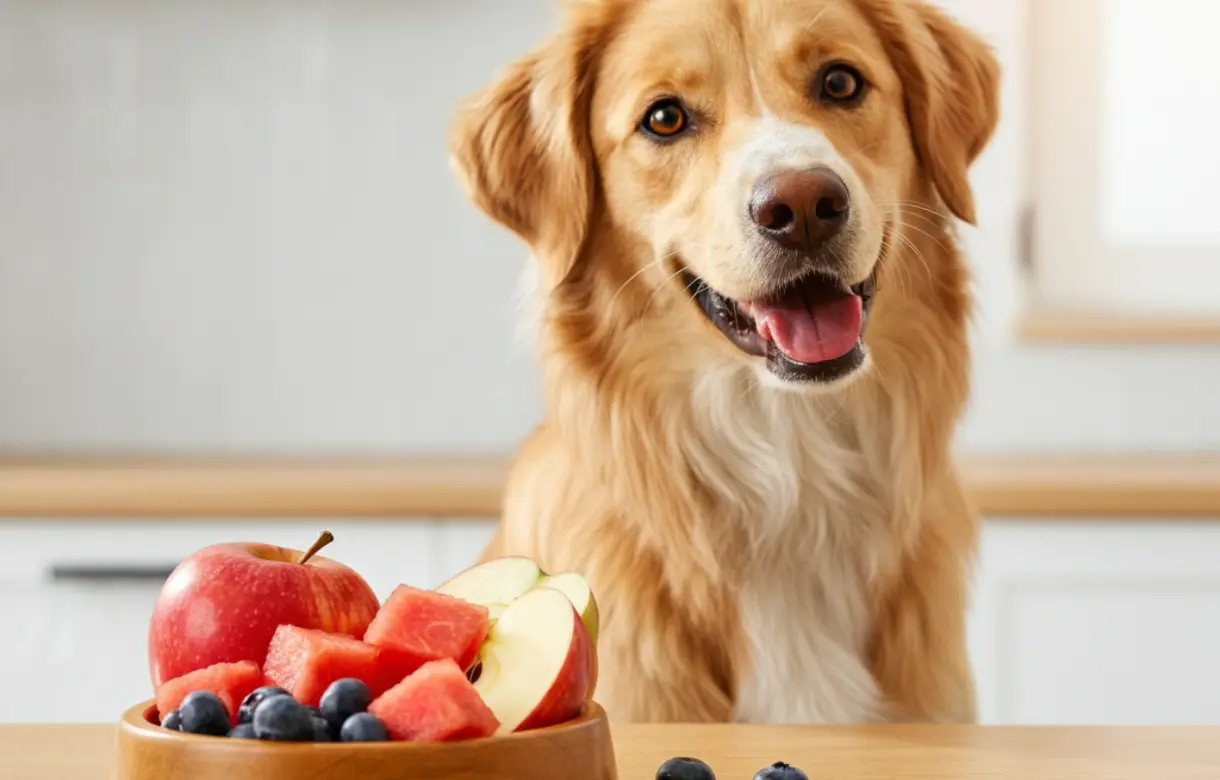
Many dogs enjoy small pieces of fruit as an occasional treat. Fruits can provide water, fiber, and naturally occurring nutrients, but not every fruit is safe for dogs, and even safe fruits can cause problems if served incorrectly or in excessive amounts.
The safest approach is simple:
Choose an appropriate fruit, remove unsafe parts, serve a small portion, and introduce new foods gradually.
This guide explains which common fruits dogs can eat, which parts should be removed, how much to offer, which fruits to avoid, and when a reaction may require veterinary attention.
Important: This is general pet-health information, not veterinary advice. Individual dogs can have allergies, diabetes, gastrointestinal disease, obesity, or other conditions that affect which treats are appropriate. If your dog has a medical condition or is on a therapeutic diet, ask your veterinarian before introducing new foods.
Quick Answer: What Fruits Can Dogs Eat?
Several common fruits can be offered to many healthy dogs in small amounts.
Generally dog-safe options include:
- Apples — without seeds and core
- Bananas — without the peel
- Blueberries
- Strawberries
- Raspberries
- Blackberries
- Watermelon — without seeds and rind
- Cantaloupe — without rind and seeds
- Mango — without skin and pit
- Peaches — without pit
- Pears — without seeds and core
- Pineapple — without skin and tough core
But “safe” does not mean unlimited.
Fruit should generally be treated as an occasional treat, not as a replacement for a nutritionally complete dog food.
The American Kennel Club notes that fruits such as apples, bananas, blueberries, cantaloupe, cranberries, mangoes, oranges, pears, pineapple, raspberries, strawberries, and watermelon can be appropriate treats for dogs when prepared properly, while also emphasizing portion control and removal of unsafe parts. AKC: Fruits Dogs Can Eat
Safe Fruits for Dogs at a Glance
| Fruit | Generally Safe? | What to Remove | Important Consideration |
|---|---|---|---|
| Apple | Yes | Seeds, core, stem | Cut into small pieces |
| Banana | Yes | Peel | Higher in sugar |
| Blueberries | Yes | None | Small berries can be easy to portion |
| Strawberries | Yes | Stem/leaves | Cut for small dogs |
| Raspberries | Yes | None | Small portions |
| Blackberries | Yes | None | Can be messy |
| Watermelon | Yes | Seeds, rind | High water content |
| Cantaloupe | Yes | Seeds, rind | Higher natural sugar |
| Mango | Yes | Skin, pit | Pit can be dangerous |
| Peach | Yes | Pit | Pit must be completely removed |
| Pear | Yes | Seeds, core, stem | Cut into small pieces |
| Pineapple | Yes | Skin, core | Naturally sweet |
| Orange | Yes, in moderation | Peel, seeds | Citrus may upset some stomachs |
| Grapes | No | — | Avoid completely |
| Raisins | No | — | Avoid completely |
The safest serving method is plain, fresh fruit in small pieces without added sugar, syrup, chocolate, spices, or artificial sweeteners.
1. Apples
Apples can be an occasional treat for many dogs.
They contain water, fiber, and naturally occurring nutrients.
How to serve apples safely
- Wash the apple.
- Remove the stem.
- Remove the core.
- Remove all seeds.
- Cut the flesh into appropriately sized pieces.
Why remove the seeds and core?
Apple seeds contain compounds that can release cyanide when crushed and digested in sufficient quantities. The core can also present a choking or obstruction risk, particularly for small dogs.
Don’t give your dog a whole apple and assume it will safely remove the dangerous parts itself.
Best serving method
Plain apple slices with the core and seeds removed.
2. Bananas
Bananas are generally safe for dogs in small portions.
They contain carbohydrates, fiber, potassium, and other nutrients.
However, bananas are also relatively calorie-dense compared with some watery fruits.
How to serve
- Remove the peel.
- Cut into small pieces.
- Offer only a modest amount.
The peel itself is not considered poisonous, but it can be difficult to digest and may cause gastrointestinal problems. AKC: Fruits Dogs Can Eat
Good use
A few small pieces can work as an occasional treat.
3. Blueberries
Blueberries are one of the easiest fruits to use as a small dog treat.
They are:
- Small
- Easy to portion
- Naturally sweet
- Convenient
- Rich in naturally occurring antioxidants
Wash them before serving.
For very small dogs, you can break or mash larger berries to reduce choking concerns.
4. Strawberries
Dogs can generally eat strawberries in moderation.
Before serving:
- Wash them.
- Remove the stem and leaves.
- Cut large berries into smaller pieces.
Strawberries contain natural sugar, so portion size still matters.
If your dog has diabetes, obesity, or another condition requiring dietary control, discuss treats with your veterinarian.
5. Raspberries
Raspberries can be offered in small amounts.
However, moderation is particularly important because raspberries naturally contain a small amount of xylitol, a sweetener that is highly toxic to dogs at sufficient doses.
This does not mean that ordinary small portions of raspberries are automatically dangerous. It means you should not feed large quantities or treat raspberries as an unlimited snack.
If you want a simple everyday fruit treat, blueberries or small pieces of apple may be easier options.
6. Blackberries
Blackberries are generally safe for many dogs when served as an occasional treat.
Wash them and offer a small amount.
Because berries can be soft and juicy, they can be particularly convenient for training treats for some dogs.
However, individual dogs can react differently to new foods.
7. Watermelon
Watermelon can be a refreshing occasional treat, especially during warm weather.
It has a high water content, but the preparation matters.
Remove:
- Seeds
- Rind
The rind can be difficult to digest and may cause gastrointestinal problems.
Safe serving
Cut the red flesh into small, seedless pieces.
Avoid giving your dog a large chunk with the rind attached.
8. Cantaloupe
Cantaloupe can be offered in moderation.
Before serving:
- Remove the rind.
- Remove the seeds.
- Cut the flesh into small pieces.
Cantaloupe is relatively sweet, so it is better treated as an occasional snack rather than a large part of the diet.
9. Mango
Dogs can generally eat mango flesh in small amounts.
However, always remove:
- Skin
- Large central pit
The pit is the major concern.
It can create a choking hazard or potentially cause an intestinal obstruction if swallowed.
Safe method
Peel the mango, remove the pit completely, and cut the flesh into small pieces.
10. Peaches
Fresh peach flesh can be offered to dogs in moderation.
But the pit must be removed completely.
Peach pits can create:
- Choking risk
- Intestinal obstruction risk
- Potential toxicity concerns if chewed and ingested
Never give your dog a whole peach and allow it to chew around the pit.
11. Pears
Pears can be an occasional treat.
Before serving:
- Remove the stem.
- Remove the core.
- Remove the seeds.
- Cut the flesh into small pieces.
As with apples, the seeds and core should not be treated as edible portions.
12. Pineapple
Fresh pineapple can be safe for many dogs in small quantities.
Remove:
- Tough outer skin
- Hard central core
The flesh is naturally sweet, so portion size matters.
Avoid canned pineapple packed in heavy syrup because of the added sugar.
13. Oranges
Small amounts of orange flesh can be safe for many dogs.
However:
- Remove the peel.
- Remove seeds.
- Offer only a small amount.
The acidity may cause stomach upset in some dogs.
Dogs do not need citrus fruit to meet their nutritional requirements, so there is no reason to force orange into the diet if your dog does not tolerate it.
Fruits Dogs Should NOT Eat
Some fruits deserve a much stronger warning.
Grapes
Do not feed grapes to dogs.
Grape toxicity can cause serious kidney injury in dogs, and the amount that causes problems cannot be reliably predicted for an individual dog.
The ASPCA lists grapes and raisins among foods that can be toxic to dogs. ASPCA: People Foods Pets Should Avoid
If your dog eats grapes, contact a veterinarian or appropriate animal poison-control service promptly rather than waiting for symptoms.
Raisins
Raisins should also be avoided.
This includes raisins found in:
- Bread
- Cookies
- Trail mix
- Granola
- Cereals
- Baked goods
Because grapes and raisins can cause serious kidney problems in dogs, accidental ingestion should be treated seriously.
What About Cherries?
Cherries are not a good choice for routine dog treats.
The fruit flesh itself is not the primary concern, but the pits, stems, and leaves contain cyanogenic compounds, and the pits can also create an obstruction risk.
Because removing every potentially hazardous part can be difficult, there are many safer fruits to choose instead.
For simplicity:
Skip cherries and choose a seedless fruit such as blueberries or strawberries.
What About Avocado?
Avocado is another fruit where caution is appropriate.
The ASPCA lists avocado among foods that can cause problems for pets, and the large pit also creates an obstruction hazard. ASPCA: People Foods Pets Should Avoid
There is little reason to use avocado as a dog treat when many simpler alternatives exist.
Fruit Seeds, Pits, Cores and Rinds: Why They Matter
One of the biggest mistakes people make is thinking:
“If the fruit is safe, every part of it must be safe.”
That’s not true.
Different fruit parts can create different risks.
Seeds
Some seeds can contain potentially harmful compounds.
Pits
Pits can create:
- Choking hazards
- Intestinal obstruction
- Toxicity concerns if chewed
Cores
Hard cores can be difficult to digest and can become lodged.
Rinds
Some rinds are difficult to digest and may cause gastrointestinal upset or obstruction.
Stems and leaves
Certain fruit plants contain compounds that are unsafe for dogs.
Therefore:
Prepare the fruit before giving it to your dog.
How Much Fruit Can a Dog Eat?
There is no single portion that is correct for every dog.
A Chihuahua and a Great Dane should not receive the same amount of fruit.
Portion size depends on:
- Dog’s size
- Daily calorie needs
- Activity
- Age
- Health
- Existing diet
- Other treats
The AKC recommends keeping treats, including fruit, limited and notes the general veterinary nutrition guideline that treats should make up no more than about 10% of a dog’s daily calorie intake. AKC: Fruits Dogs Can Eat
Think of fruit as a treat, not a replacement for balanced dog food.
Simple Portion Examples
These are practical starting examples for healthy dogs, not veterinary prescriptions.
Small dog
Try:
1–2 small pieces
Medium dog
Try:
2–5 small pieces
Large dog
Try:
A small handful of appropriately cut fruit
Then monitor your dog.
The exact amount should be adjusted based on the dog’s overall calorie intake and the type of fruit.
A high-calorie banana should not be treated exactly like low-calorie watermelon.
How to Introduce a New Fruit
Don’t give your dog a large bowl of a fruit it has never eaten.
Instead:
Step 1
Choose one fruit.
Step 2
Prepare it properly.
Step 3
Give a very small portion.
Step 4
Monitor your dog for digestive or allergic reactions.
Step 5
If there are no problems, you can occasionally offer a slightly larger appropriate portion.
Introducing one new food at a time also makes it easier to identify which food caused a reaction if your dog develops symptoms.
Signs Your Dog May Not Tolerate a Fruit
Stop giving the new food and monitor your dog if you notice:
- Vomiting
- Diarrhea
- Excessive gas
- Abdominal discomfort
- Itching
- Skin irritation
- Swelling
- Changes in appetite
Mild digestive upset may resolve, but more serious symptoms require veterinary guidance.
When to Contact a Veterinarian
Seek veterinary advice promptly if your dog develops:
- Repeated vomiting
- Severe diarrhea
- Blood in vomit or stool
- Extreme weakness
- Difficulty breathing
- Facial swelling
- Collapse
- Severe abdominal pain
- Loss of consciousness
For suspected poisoning or ingestion of a dangerous fruit, do not wait for symptoms before contacting a veterinary professional.
The ASPCA Animal Poison Control Center provides emergency poison information for pets. ASPCA Animal Poison Control Center
What If My Dog Eats Grapes Accidentally?
Treat this as a potentially serious ingestion.
Do this:
- Remove any remaining grapes.
- Estimate how many may have been eaten.
- Note approximately when ingestion occurred.
- Keep the packaging or remaining fruit if available.
- Contact your veterinarian or animal poison-control service immediately.
Don’t:
- Wait for symptoms
- Give random home remedies
- Induce vomiting unless instructed by a veterinary professional
The ASPCA identifies grapes and raisins as potentially toxic to dogs and recommends professional guidance for suspected poisoning. ASPCA: People Foods Pets Should Avoid
Can Puppies Eat Fruit?
Healthy puppies can potentially have small amounts of appropriate fruit, but their nutritional needs are different from adult dogs.
The main diet should be a complete and balanced puppy food appropriate for growth.
Fruit should remain a small treat.
Because puppies are smaller and more vulnerable to dehydration and digestive upset, introduce new foods cautiously.
If your puppy has vomiting, diarrhea, poor appetite, or lethargy, contact your veterinarian rather than assuming the problem is simply a food intolerance.
Can Senior Dogs Eat Fruit?
Senior dogs can generally have appropriate fruits in moderation, but their dietary needs may differ because of:
- Weight changes
- Dental problems
- Kidney disease
- Diabetes
- Gastrointestinal conditions
- Other chronic illnesses
If your senior dog has a diagnosed medical condition, ask your veterinarian which treats are appropriate.
Can Dogs With Diabetes Eat Fruit?
Don’t assume that fruit is automatically appropriate for a diabetic dog.
Fruit contains naturally occurring sugars and carbohydrates, and the amount can vary significantly between fruits.
A diabetic dog’s diet should be planned around its overall nutritional and medical needs.
Ask your veterinarian before adding fruit regularly.
Can Overweight Dogs Eat Fruit?
Potentially, but portions matter.
Treat calories count.
For an overweight dog, replacing a calorie-dense commercial treat with a small amount of a lower-calorie fruit may sometimes fit into a weight-management plan—but the total daily calorie intake still matters.
Don’t assume that “natural” calories don’t count.
Fruit vs. Commercial Dog Treats
Fruit is not automatically healthier simply because it is natural.
Compare the two options based on:
| Factor | Fruit | Commercial Treat |
|---|---|---|
| Natural ingredients | Often | Depends |
| Added sugar | Usually none in fresh fruit | Varies |
| Calories | Varies | Varies |
| Portion control | Important | Important |
| Nutritional purpose | Treat | Treat |
| Complete diet | No | Usually no |
Neither should replace a complete and balanced dog food.
Fresh Fruit vs. Dried Fruit
Fresh fruit is generally easier to portion because it contains more water.
Dried fruit is much more concentrated.
For example, removing water can dramatically increase the amount of sugar and calories in a small volume.
More importantly:
Raisins and grapes should never be used as dog treats.
Be especially careful with trail mixes and snack products containing raisins.
What About Fruit Juice?
Fruit juice is generally unnecessary for dogs.
It can contain:
- Concentrated sugar
- Fewer useful benefits than whole fruit
- Added ingredients
- Excess calories
A dog does not need fruit juice as part of a balanced diet.
If you want to give fruit, small pieces of appropriate whole fruit are usually a simpler choice.
What About Canned Fruit?
Canned fruit can contain:
- Added sugar
- Syrup
- Preservatives
- Other ingredients
If you want to offer fruit, fresh plain fruit is generally easier to control.
If canned fruit is used, check the ingredient list carefully and avoid products containing ingredients that are unsafe for dogs.
Avoid Products Containing Xylitol
This deserves special attention.
Xylitol is highly toxic to dogs.
It can be found in some:
- Sugar-free foods
- Candy
- Gum
- Baked products
- Peanut or nut butters
- Dental products
- Supplements
The ASPCA lists xylitol as a toxic ingredient for dogs and warns that ingestion can cause serious effects, including dangerously low blood sugar and liver injury. ASPCA: People Foods Pets Can Eat/Avoid
Never assume a “sugar-free” product is safe.
Always check the ingredient list.
How Fruit Fits Into a Dog’s Budget
Fruit can also be considered from a pet-budget perspective.
Suppose you spend:
$3 per week on fresh fruit treats
Annual cost:
$3 × 52 = $156
That’s not necessarily a problem, but it shows why small recurring purchases belong in your overall pet budget.
You can compare:
- Fresh fruit
- Commercial treats
- Training treats
- Dental treats
based on cost per serving, not just package price.
A Simple Fruit-Treat Budget
Suppose you spend:
$12/month on dog treats
Annual cost:
$12 × 12 = $144
If you reduce that to:
$8/month
Annual cost:
$8 × 12 = $96
Annual savings:
$144 − $96 = $48
Small changes can add up over a year.
However, don’t choose a food simply because it is cheaper. Safety and appropriate nutrition should come first.
How to Choose the Best Fruit for Your Dog
Instead of asking:
“What is the healthiest fruit?”
ask:
1. Is the fruit safe?
Avoid known toxic fruits such as grapes and raisins.
2. Can I prepare it safely?
Remove pits, seeds, cores, stems, leaves, and rinds where appropriate.
3. Does my dog tolerate it?
Watch for digestive or allergic reactions.
4. Does it fit the dog’s diet?
Consider calories and existing medical conditions.
5. Can I control the portion?
Small pieces are easier to measure.
6. Is it affordable?
Choose treats that fit your pet budget.
10 Easy Dog-Safe Fruit Choices
For many healthy dogs, these are practical options when properly prepared:
- Blueberries
- Strawberries
- Apples without seeds/core
- Bananas without peel
- Watermelon without seeds/rind
- Cantaloupe without seeds/rind
- Pears without seeds/core
- Mango without skin/pit
- Peaches without pit
- Pineapple without skin/core
These should still be offered in moderation.
Fruits to Avoid
For a simple safety rule, remember:
Never intentionally feed:
Grapes
Raisins
Also use caution or avoid fruits where safe preparation is difficult, such as cherries with pits.
When in doubt about a particular fruit, ask your veterinarian before feeding it.
Safe Fruit Preparation Checklist
Before giving fruit to your dog:
- Wash the fruit.
- Remove toxic or potentially dangerous parts.
- Remove pits.
- Remove seeds where appropriate.
- Remove hard cores.
- Remove tough rinds.
- Cut into small pieces.
- Avoid added sugar.
- Avoid syrup.
- Check for xylitol or other unsafe ingredients.
- Start with a small portion.
Frequently Asked Questions
What is the safest fruit for dogs?
There is no single “safest” fruit for every dog. Blueberries, strawberries, and properly prepared apples are commonly used as small treats, but individual dogs can respond differently.
Can dogs eat apples?
Yes, dogs can generally eat apple flesh in moderation. Remove the seeds, stem, and core before serving.
Can dogs eat bananas?
Yes, in moderation. Remove the peel and serve small portions because bananas contain natural sugar and calories.
Can dogs eat watermelon?
Yes, many dogs can eat the flesh in moderation. Remove the seeds and rind first.
Can dogs eat strawberries?
Yes, strawberries can be offered in small portions after washing and removing the stem and leaves.
Can dogs eat grapes?
No. Grapes should be avoided because they can cause serious kidney injury in dogs. ASPCA: People Foods Pets Should Avoid
Can dogs eat raisins?
No. Raisins should be avoided for the same toxicity concern associated with grapes.
Can dogs eat mango?
Dogs can generally eat small amounts of mango flesh, but the skin and pit should be removed.
Can dogs eat peaches?
Small amounts of peach flesh can be offered, but the pit must be completely removed.
Can dogs eat oranges?
Small amounts of orange flesh may be acceptable for many dogs, but remove the peel and seeds. Some dogs may experience stomach upset from citrus.
Can dogs eat pineapple?
Fresh pineapple can be offered in small amounts after removing the skin and hard core.
How much fruit can my dog eat?
There is no universal portion. Fruit should be a small part of the dog’s overall treat intake. The AKC notes the commonly used guideline that treats should account for no more than about 10% of daily calories. AKC: Fruits Dogs Can Eat
What should I do if my dog eats grapes?
Contact your veterinarian or animal poison-control service promptly. Do not wait for symptoms to appear.
Final Takeaway
Fruit can be a useful occasional treat for many healthy dogs, but safe preparation and portion control matter more than finding a “superfruit.”
The easiest rules to remember are:
Choose plain fruit.
Remove pits, seeds, cores, stems, leaves, and rinds when appropriate.
Start with a small portion.
Watch your dog’s response.
Keep treats limited.
And most importantly:
Never intentionally feed grapes or raisins to dogs.
If your dog accidentally eats a potentially toxic fruit or develops serious symptoms such as repeated vomiting, weakness, difficulty breathing, collapse, or severe diarrhea, contact a veterinary professional promptly.
A balanced commercial or properly formulated home-prepared diet should provide your dog’s primary nutrition. Fruit is a treat—not a substitute for a complete and balanced diet.
Sources & Editorial Methodology
This article was prepared using veterinary and animal-health sources rather than relying on unverified social-media claims or generic pet blogs.
American Kennel Club
The AKC provides guidance on fruits that dogs can eat, preparation, portion control, and fruits that should be avoided. AKC — Fruits Dogs Can Eat
ASPCA Animal Poison Control
The ASPCA provides information about foods that can be dangerous to pets, including grapes, raisins, xylitol-containing products, and other potentially toxic foods. ASPCA — People Foods Pets Should Avoid
Editorial Method
We classify fruits based on commonly cited veterinary guidance and focus on safe preparation rather than claiming that one fruit is universally best for every dog.
Nutrition and treat recommendations can vary according to a dog’s age, size, health, medications, and existing diet.
Last reviewed: August 2026
Author: Harry Mills
Pet Health Disclaimer
This article is for general educational purposes only. It is not veterinary, medical, nutritional, or financial advice.
Individual dogs can have food allergies, diabetes, gastrointestinal disease, obesity, or other medical conditions that affect which foods and treats are appropriate.
If your dog has a medical condition, is taking medication, or develops concerning symptoms after eating a food, consult your veterinarian.
PetPolicyFinance.com does not guarantee that any particular fruit is appropriate for every individual dog.
