

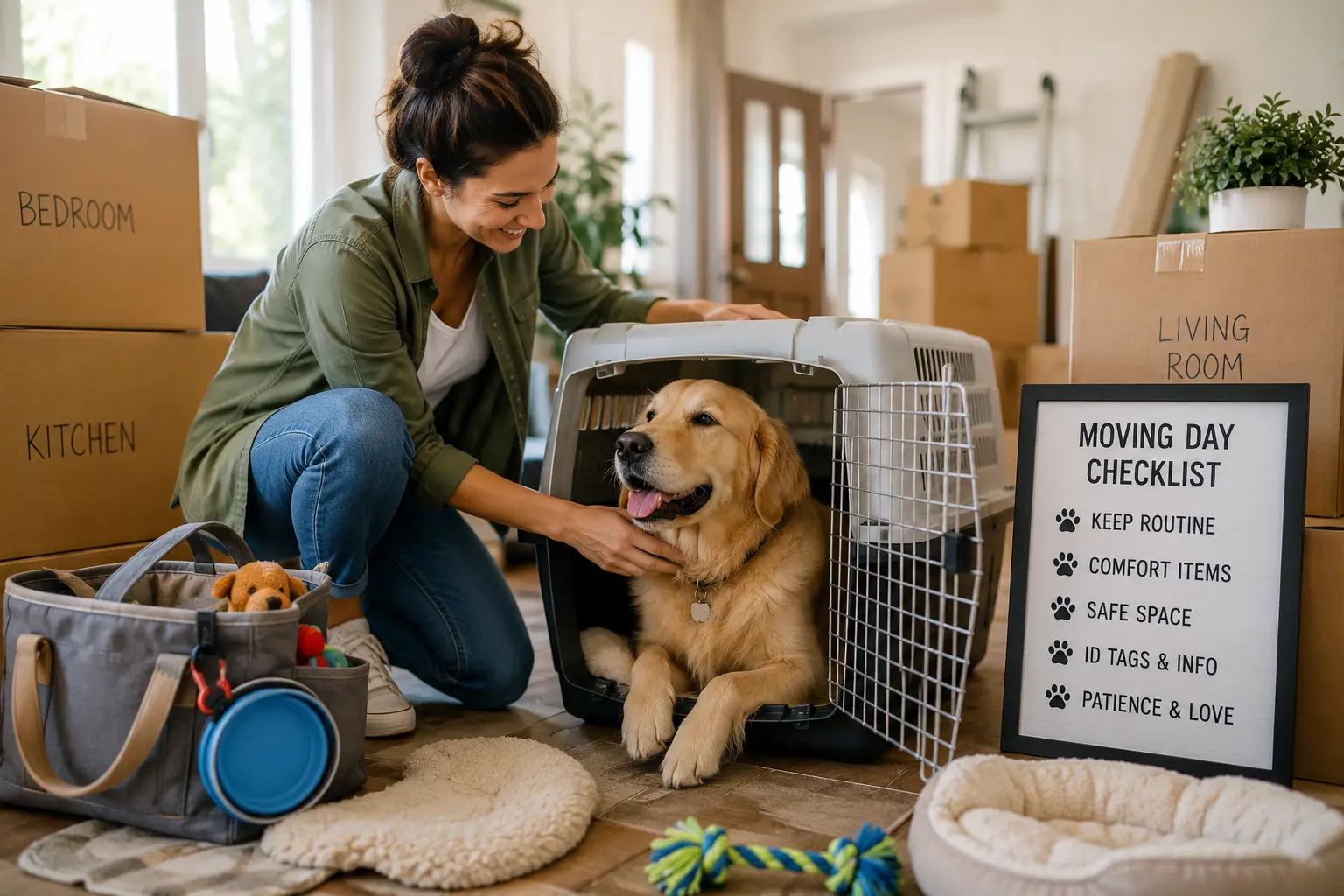
Moving day is disorienting even for humans, who at least understand what’s happening. For pets, a move means their entire world — smells, sounds, furniture placement, daily rhythms — gets upended all at once, often with strangers carrying boxes through open doors. It’s genuinely one of the most stressful experiences a pet can go through, and it’s also one of the moments when pets are most likely to escape, become injured, or develop lasting anxiety if the transition isn’t handled thoughtfully.
This guide walks through exactly how to move house with a pet with as little stress as possible — from the weeks of preparation beforehand, through moving day itself, to helping your pet settle into an unfamiliar home. It includes a moving-day timeline table, answers to the most common questions pet owners have about relocating, and links to trusted resources for anything you want to explore further.
Why Moving Is So Hard on Pets
Pets rely heavily on routine, scent, and environmental familiarity to feel secure. A move disrupts all three simultaneously: the smells that made a space feel safe are gone, the predictable daily rhythm is interrupted by packing chaos, and the physical environment itself changes entirely. On top of that, moving day often involves unfamiliar people (movers, friends helping out) repeatedly opening doors — one of the single biggest risk factors for pets escaping during a move.
Cats tend to be particularly sensitive to environmental change, since much of their sense of security is tied to established scent markers throughout a space. Dogs are often more adaptable overall, but can still show real anxiety symptoms, including pacing, excessive vocalization, loss of appetite, or house-training regressions during a move.
Weeks Before the Move: Laying the Groundwork
The single best thing you can do for a stress-free move is start preparing well before moving day itself, rather than trying to manage everything in the final 48 hours.
Update Identification Early
Update your pet’s microchip registration and ID tags with your new address and current phone number as soon as you have this information confirmed, rather than waiting until the move is complete. The AVMA’s official microchipping FAQ recommends updating this information as soon as possible after any change of address. Moving day significantly increases the risk of a pet slipping out an open door, so having current contact information in place beforehand — not after — matters considerably.
Schedule a Veterinary Check-Up
If you’re moving to a new city or state, schedule a visit with your current veterinarian before the move to obtain complete copies of your pet’s medical records, including vaccination history and any ongoing medication needs. This also gives you an opportunity to discuss your specific pet’s anxiety level and whether any additional support, such as a calming supplement or a pheromone product, might help with the transition.
Research Your New Location
Before arriving, identify a veterinarian near your new home, along with the nearest 24-hour emergency animal hospital, so you’re not searching for this information during an actual emergency. If you’re moving to a new state, confirm whether your destination has different licensing, leash, or breed-specific requirements you’ll need to comply with.
Gradually Acclimate Your Pet to Moving Chaos
Packing boxes, bubble wrap, and general household disruption can be unsettling on their own, separate from the eventual move itself. Introducing this change gradually — rather than having the house transform overnight — gives your pet more time to adjust incrementally rather than facing one overwhelming shift.
Reinforce Carrier and Crate Comfort
If your pet isn’t already comfortable with their carrier or crate, begin working on this well in advance. A carrier that’s associated with positive experiences — treats, meals, a favorite blanket — will be far less stressful to use on the actual moving day than one your pet has never willingly entered before.
The Week Before: Final Preparations
As moving day approaches, a few final steps help ensure everything is ready.
Pack a Dedicated “Moving Day Bag” for Your Pet
Keep this bag separate from general moving boxes, and make sure it’s easily accessible rather than buried in the moving truck. It should include:
- Food and water for several days, plus bowls
- Any medications and dosing instructions
- Copies of medical and vaccination records
- A leash, collar, and extra ID tags
- Waste bags or a portable litter box and litter
- A familiar blanket or toy
- A basic pet first-aid kit
- A recent photo of your pet, in case of an escape
Confirm Your Transportation Plan
Decide well in advance how your pet will actually travel to the new home — in your own vehicle, or via a professional pet transport service for longer distances. If flying, confirm your airline’s specific pet policy, including carrier size limits and any required health documentation, since these details need lead time to sort out properly.
Prepare a “Safe Room” Strategy
Identify a specific room in your current home where your pet can stay, undisturbed, on the actual day movers are loading the truck. This single step meaningfully reduces the number one risk during a move: an open door and a startled pet slipping out unnoticed amid the chaos.
Moving Day: A Practical Timeline
Here’s a general framework for how moving day itself typically unfolds when a pet is involved.
| Time | Action |
|---|---|
| Morning of the move | Feed a smaller-than-usual meal to reduce the risk of motion sickness later; confirm the safe room is set up |
| Before movers arrive | Place your pet in the designated safe room with food, water, and familiar items; post a sign on the door |
| During loading | Keep the safe room door closed at all times; check in periodically without fully opening the door |
| Departure | Transport your pet directly, ideally in your own vehicle, using a secured carrier or harness |
| Arrival at new home | Bring your pet immediately to a pre-set-up safe room in the new house, rather than allowing free exploration |
| First evening | Set up food, water, and a litter box (if applicable) in the safe room; keep the environment calm and quiet |
| First 24–48 hours | Gradually introduce additional rooms one at a time, supervising closely |
This table reflects a common approach, but the right pace for your specific pet may be faster or slower depending on their individual temperament and how they typically respond to change.
Settling In: The First Days in a New Home
Arriving at the new house is only the beginning of the adjustment period, not the end of it.
Start With One Safe Room
Resist the urge to let your pet explore the entire new house immediately. Setting up a single room with familiar bedding, food, water, and toys — and litter, for cats — gives your pet a manageable, secure starting point rather than an overwhelming, unfamiliar space all at once.
Pet-Proof Before Expanding Access
Before letting your pet explore additional rooms, check for hazards specific to the new space: gaps in fencing, loose window screens, exposed cords, or anything toxic left behind by a previous owner, such as houseplants or chemical residue.
Reintroduce Your Normal Routine as Quickly as Possible
Getting back to consistent feeding times, walk schedules, and play sessions as soon as realistically possible helps signal to your pet that, despite the unfamiliar surroundings, life is returning to a predictable rhythm.
Watch for Signs of Ongoing Stress
Some adjustment stress is normal and typically resolves within days to a couple of weeks. Watch for signs that stress is more significant or persistent, including prolonged appetite loss, excessive hiding, ongoing house-training regressions, or unusual aggression, and consult your veterinarian if these signs continue beyond a reasonable adjustment window.
Common Mistakes That Make Moving Harder on Pets
A few recurring mistakes tend to make an already stressful moving day even more difficult for pets:
- Introducing the new home all at once. Allowing full-house access immediately, rather than a gradual room-by-room introduction, often overwhelms pets and can prolong the adjustment period rather than shortening it.
- Skipping the safe room on moving day itself. Leaving a pet loose in a house full of open doors and unfamiliar movers is one of the most common causes of pets going missing during a move.
- Forgetting to update identification until after arriving. Waiting until the move is complete to update microchip and ID tag information leaves a dangerous gap during exactly the period when escape risk is highest.
- Changing food or routine at the same time as the move. Introducing a new pet food brand, feeding schedule, or other significant change during the same window as the move adds an unnecessary additional stressor on top of an already disruptive transition.
- Assuming a previously calm pet won’t need extra reassurance. Even easygoing pets can show unexpected anxiety during a move, so it’s worth watching for behavior changes rather than assuming a normally low-stress pet will handle the transition without any support.
- Rushing outdoor access for cats. Allowing a cat outside too soon after arriving at a new home significantly increases the risk of the cat attempting to find their way back to the previous residence or becoming lost in unfamiliar territory.
Helping Anxious Pets Specifically
Some pets handle change with relative ease, while others show significant anxiety around even minor disruptions to routine. If your pet falls into the more anxious category, a few additional strategies can help:
Recognize Early Warning Signs
Excessive panting, pacing, drooling, hiding, or vocalization are common early indicators of stress. Catching these signs early allows you to adjust your approach — slowing down the introduction process, offering more reassurance, or consulting your veterinarian — before the stress escalates further.
Maintain as Much Familiarity as Possible
Keeping familiar bedding, unwashed items that carry your scent, and favorite toys readily available throughout the moving process gives an anxious pet a consistent anchor point amid an otherwise unfamiliar environment.
Consider a Trial Run for Especially Anxious Pets
For pets with a documented history of significant anxiety, some owners find it helpful to bring the pet to the new home briefly before the full move — even just a short visit — to allow some initial, low-pressure exposure to the new space ahead of the more overwhelming full moving-day experience.
Don’t Hesitate to Involve Your Veterinarian
If your pet has a known history of severe anxiety, discussing your specific moving timeline with your veterinarian in advance allows time to explore appropriate support options, whether that’s behavioral strategies, environmental products, or in some cases, a veterinarian-guided medical approach for particularly difficult transitions.
Special Considerations for Cats
Cats generally require a more gradual, room-by-room introduction process than dogs, given how strongly their sense of security is tied to established territory and scent. Keeping a cat confined to a single room for the first 24 to 48 hours — with their litter box, food, water, and a hiding spot — before gradually expanding access tends to produce a much smoother transition than allowing full-house access immediately.
For cats accustomed to going outdoors, it’s worth delaying outdoor access at a new home for at least a couple of weeks, giving them time to firmly associate the new house with safety and food before venturing beyond it — this significantly reduces the risk of a cat attempting to return to their previous home or becoming lost in unfamiliar territory.
Special Considerations for Multi-Pet Households
If you’re moving multiple pets simultaneously, consider staggering their introduction to the new space rather than releasing everyone into the new environment at once. This reduces the chance of stress-driven conflict between pets who are each already managing their own individual adjustment.
When to Consider Professional Help
For particularly anxious pets, long-distance moves, or households managing several animals at once, it may be worth considering additional support:
- A veterinary behaviorist consultation if your pet has a history of significant anxiety, to discuss options ahead of the move.
- A professional pet relocation service for long-distance or international moves, particularly when air travel or complex documentation is involved.
- A trusted pet sitter to watch your pet at a separate, calm location on the actual day the moving truck is loaded, removing them from the chaos entirely rather than relying on a safe room within the same house.
Frequently Asked Questions
How far in advance should I start preparing my pet for a move? Ideally several weeks in advance, particularly for updating identification, gathering veterinary records, and gradually acclimating your pet to moving-related disruption like packed boxes and rearranged furniture.
Should I sedate my pet for a stressful move or long car ride? Most veterinarians advise against sedating pets for travel without direct medical guidance, since sedatives can interfere with an animal’s ability to regulate body temperature and maintain balance. The AVMA’s guidance on pet travel covers safer alternatives worth discussing with your veterinarian before moving day.
How long does it typically take a pet to adjust to a new home? Most pets show noticeable improvement within a few days to two weeks, though this varies by individual temperament, species, and how gradually the introduction to the new space is handled.
Is it normal for my pet to have house-training accidents after a move? Yes, this is a common, typically temporary stress response. Reestablishing a consistent routine as quickly as possible usually resolves it, though persistent issues warrant a veterinary check to rule out a medical cause.
Should I update my pet’s microchip before or after the move? Update your pet’s microchip registration as soon as your new address is confirmed, ideally before the move itself, since the period during and immediately after a move carries the highest risk of an escape.
Can I use pheromone products to help my pet during a move? Many owners find pheromone sprays or diffusers helpful for reducing stress during a move, particularly for cats. Effectiveness varies by individual animal, and it’s worth discussing options with your veterinarian if your pet has significant anxiety.
Should I let my cat outside right away in the new home? No — most veterinarians recommend keeping cats indoors for at least a couple of weeks after a move, allowing them to firmly associate the new home with safety before introducing outdoor access.
Budgeting for a Pet-Friendly Move
Moving with a pet often comes with costs beyond the standard moving budget — updated documentation, a new veterinarian visit, potential boarding or pet-sitting fees on moving day, and possibly a professional pet transport service for longer distances. If you’re mapping out these costs alongside the rest of your household moving budget, our guide to general pet budgeting and cost planning can help you account for these often-overlooked expenses so nothing catches you by surprise.
Conclusion
Moving house is disruptive for everyone in the household, pets included — but with enough advance preparation, a clear moving-day plan, and a patient, gradual approach to settling into the new space, most pets adjust successfully within a relatively short window. The core principles are simple even when the logistics aren’t: keep your pet secure and calm during the actual chaos of moving day, reintroduce their environment gradually rather than all at once, and reestablish a predictable routine as quickly as you reasonably can. A little extra planning goes a long way toward making moving day far less stressful for the whole household — pets included.
Disclaimer
This article is intended for general informational and educational purposes only and does not constitute veterinary or professional relocation advice. Every pet responds differently to change, and specific medical, behavioral, or travel considerations should be discussed with a licensed veterinarian, particularly for pets with significant anxiety, existing health conditions, or long-distance or international moves.
