

If you’ve ever picked up a prescription at your veterinarian’s office and winced at the price, you’re not alone. Pet medications — from flea preventatives and heartworm pills to antibiotics, anti-inflammatory drugs, and chronic disease management medications — represent one of the most significant and recurring costs of pet ownership. And like human healthcare, the cost gap between brand-name and generic versions of the same medication can be staggering.
But are generic pet medications actually as safe and effective as their brand-name counterparts? Can you really trust them? And how much can you realistically save by making the switch?
This in-depth guide answers all of those questions — giving you the knowledge you need to make confident, informed decisions about your pet’s medications without ever compromising their health or safety.
What Is a Generic Pet Medication?
A generic medication is a drug that contains the same active ingredient, in the same concentration, as its brand-name equivalent. When a pharmaceutical company develops a new drug, it receives a patent that gives it exclusive rights to manufacture and sell that drug for a set period — typically 20 years from the date of filing, though the effective market exclusivity period is often shorter by the time the drug reaches consumers.
Once that patent expires, other manufacturers are legally permitted to produce their own versions of the drug using the same active ingredient. These versions are called generics. To receive FDA approval (or USDA approval for certain veterinary biologics), generic medications must demonstrate bioequivalence to the brand-name product — meaning they deliver the same active ingredient into the bloodstream at the same rate and concentration.
What generics are allowed to differ in are inactive ingredients — the fillers, binders, flavorings, and coatings that make up the rest of the pill or liquid. These differences are generally minor and clinically insignificant for most pets, though they can occasionally matter for animals with specific allergies or sensitivities.
How Much Can You Actually Save With Generic Pet Medications?
The savings potential with generic pet medications is real and significant. Here are some concrete examples of common pet medications and the typical price difference between brand-name and generic versions:
Heartworm Prevention
- Heartgard Plus (brand): $45–$65 for a 6-month supply (medium dog)
- Ivermectin/Pyrantel generic equivalent: $20–$35 for a 6-month supply
Potential savings: $20–$30 per 6-month supply, or $40–$60 per year
Flea and Tick Prevention
- NexGard (brand): $60–$85 for a 3-month supply
- Afoxolaner generic equivalent: $35–$55 for a 3-month supply
Potential savings: $25–$30 per 3-month supply, or $100–$120 per year
Antibiotics
- Clavamox (brand amoxicillin/clavulanate): $30–$60 for a 2-week course
- Amoxicillin/clavulanate generic: $15–$30 for a 2-week course
Potential savings: $15–$30 per treatment course
Anti-Inflammatory and Pain Medications
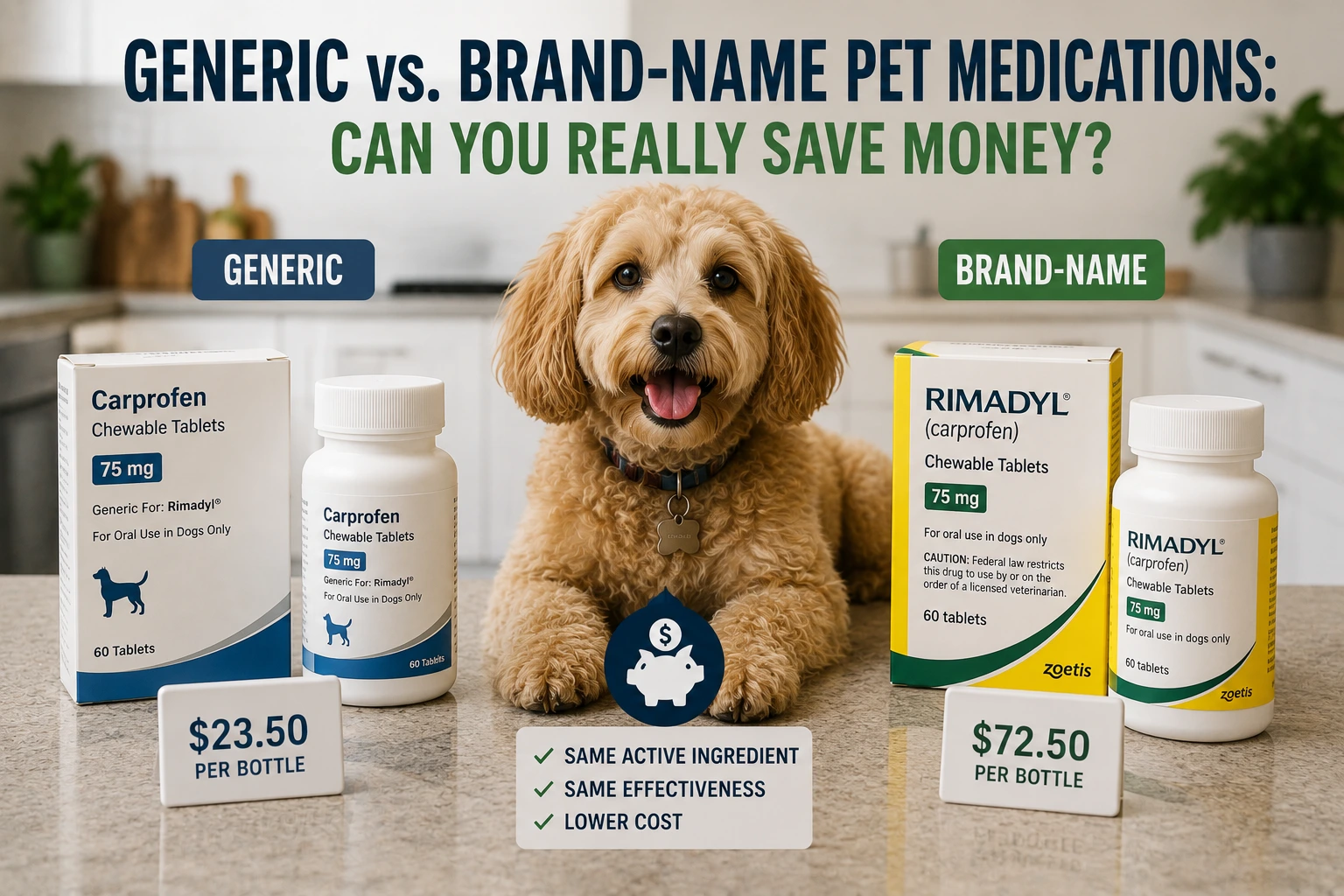
- Rimadyl (brand carprofen): $60–$100 for a 30-day supply
- Carprofen generic: $25–$50 for a 30-day supply
Potential savings: $35–$50 per month, or $420–$600 per year for pets on long-term pain management
Thyroid Medications (Cats)
- Felimazole (brand methimazole): $40–$70 per month
- Methimazole generic: $15–$35 per month
Potential savings: $25–$35 per month, or $300–$420 per year
For pet owners managing a chronic condition — arthritis, hypothyroidism, diabetes, heart disease, or allergies — the cumulative savings from switching to generics can be $300–$700 or more per year. That’s a meaningful difference in any household budget.
Are Generic Pet Medications Safe?
This is the question most pet owners ask first, and the answer is a well-supported yes — with some important nuances.
FDA Approval and Bioequivalence Standards
Generic medications approved by the FDA must meet rigorous standards for bioequivalence. This means the generic version must deliver the active ingredient into the body at a rate and concentration that falls within an acceptable range of the brand-name product — typically within 80–125% of the brand-name’s pharmacokinetic profile. This range sounds wide but has been established through extensive research as clinically insignificant for the vast majority of medications.
The FDA’s Center for Veterinary Medicine (CVM) oversees the approval of generic veterinary drugs and applies the same bioequivalence standards used for human generics. A generic pet medication carrying FDA approval has been reviewed and meets federal safety and efficacy standards.
When the Difference Might Matter
While generic medications are safe for the vast majority of pets in the vast majority of situations, there are some specific circumstances where differences between brand-name and generic formulations can be clinically relevant:
Narrow therapeutic index medications: Some medications require very precise blood concentrations to be effective without being toxic. For these drugs — which include certain seizure medications like phenobarbital and some cardiac drugs — even small variations between brand and generic formulations can potentially affect outcomes. For pets on these medications, your veterinarian may recommend staying with one specific formulation (brand or generic) consistently rather than switching back and forth.
Flavor and palatability differences: The inactive ingredients in generics can include different flavorings. If a brand-name chewable medication your pet happily takes every month is replaced with a generic that tastes different, you may suddenly have a pet that refuses to take their medication — which effectively makes the cheaper option more expensive if doses are missed.
Inactive ingredient sensitivities: Rarely, a pet may have an allergy or sensitivity to a specific inactive ingredient in a generic formulation that wasn’t present in the brand-name version. This is uncommon but worth monitoring when making any medication switch.
Types of Generic Pet Medications Available
The availability of generics varies by medication category. Here’s an overview of where generics are most and least available:
Widely Available as Generics:
- Antibiotics: Amoxicillin, doxycycline, metronidazole, cephalexin, clindamycin
- Anti-inflammatory drugs: Carprofen, meloxicam, prednisolone
- Heartworm prevention: Ivermectin-based products
- Thyroid medications: Methimazole (for cats), levothyroxine (for dogs)
- Antihistamines: Diphenhydramine, cetirizine, loratadine
- Anti-anxiety medications: Fluoxetine (Prozac equivalent), trazodone
- Gastrointestinal medications: Metoclopramide, sucralfate, omeprazole
- Seizure medications: Phenobarbital, potassium bromide, levetiracetam
Limited or No Generic Availability:
- Some newer flea/tick preventatives: Certain newer isoxazoline-class medications (Bravecto, Simparica Trio) are still under patent protection
- Specialty cancer medications: Toceranib (Palladia) and some other veterinary oncology drugs
- Some behavior medications: Clomipramine (Clomicalm) may have limited generic availability depending on your region
- Newer allergy medications: Oclacitinib (Apoquel) and lokivetmab (Cytopoint) remain proprietary
Where to Buy Generic Pet Medications
Where you purchase generic pet medications matters almost as much as whether you buy generics at all. The same generic medication can vary in price by 30–50% between purchasing sources.
Your Veterinarian’s Office
The most convenient option, but typically the most expensive. Veterinary clinics mark up medications to cover dispensing costs, staff time, and overhead. While your vet should always be your first resource for diagnosis and prescription, you are not obligated to fill prescriptions at the clinic.
Online Pet Pharmacies
Reputable online pharmacies offer significant savings — often 20–40% below clinic prices — on both brand-name and generic medications. Key options include:
- Chewy Pharmacy: One of the largest online pet pharmacies, with competitive pricing and a straightforward prescription transfer process
- 1800PetMeds: Long-established online pet pharmacy with broad medication inventory
- Vetsource: Operates pharmacy fulfillment for many veterinary clinics; prices are sometimes but not always lower than direct retail
Always verify that an online pharmacy displays the VIPPS seal (Verified Internet Pharmacy Practice Sites) issued by the National Association of Boards of Pharmacy. This certification confirms the pharmacy operates legally and meets safety standards.
Human Pharmacies
This is one of the most underutilized cost-saving strategies in pet medication management. Many pet medications — particularly common antibiotics, anti-inflammatory drugs, antihistamines, thyroid medications, and anti-anxiety medications — use the exact same active ingredients as human medications and can be filled at any human pharmacy with a valid prescription.
Popular pharmacies like Costco, Walmart, Kroger, and Walgreens often offer deeply discounted generic prices on medications that overlap between human and veterinary use. GoodRx — the prescription discount service widely used for human medications — now covers many pet medications as well, and can identify dramatically lower prices at local pharmacies.
Example: Generic metronidazole (a commonly prescribed antibiotic for digestive issues) might cost $40 at a veterinary clinic but less than $10 at a Walmart pharmacy using a GoodRx discount.
Warehouse Clubs
Costco and Sam’s Club pharmacies offer some of the lowest generic medication prices available, often beating online pet pharmacies. If you already have a membership, this is worth exploring for commonly prescribed medications.
How to Switch From Brand-Name to Generic: A Step-by-Step Approach
Making the switch from brand-name to generic pet medications is straightforward when done correctly:
Step 1: Talk to your veterinarian. Before switching any medication, have a conversation with your vet. Ask specifically whether a generic equivalent is available and appropriate for your pet’s condition. For most medications, your vet will readily support the switch. For narrow therapeutic index medications, they may advise against switching or recommend additional monitoring.
Step 2: Request a written prescription. You have the right to request a written prescription for any medication your pet is prescribed. Most veterinarians will provide one without issue. This allows you to fill the prescription at any pharmacy of your choice — including online pharmacies and human pharmacies where the medication is available.
Step 3: Compare prices before purchasing. Use GoodRx, Chewy Pharmacy, and 1800PetMeds to compare prices for your specific medication, dosage, and quantity before committing to a purchase. Prices can vary significantly even among online pharmacies.
Step 4: Monitor your pet after switching. When switching from a brand-name to a generic (or between generics from different manufacturers), monitor your pet for any changes in response — both positive and negative. For chronic medications, a follow-up vet check 4–6 weeks after switching is reasonable to confirm the medication is still working as expected.
Step 5: Stay consistent once you find a product that works. Once you’ve found a generic that works well for your pet, stick with it. Switching between different manufacturers’ generic versions of the same drug introduces unnecessary variability, particularly for narrow therapeutic index medications.
Red Flags to Avoid When Buying Generic Pet Medications
Not all generic medications — and not all sources — are created equal. Watch for these warning signs:
- No FDA or USDA approval mentioned: Any reputable generic medication should carry regulatory approval. Be skeptical of products that don’t mention it.
- Suspiciously low prices with no established brand or manufacturer information: If a price seems too good to be true, investigate the source before purchasing.
- International online pharmacies without verifiable credentials: Some international pharmacies operate outside U.S. regulatory oversight. Medications from these sources may not meet the same safety and quality standards.
- No requirement for a prescription: In the U.S., prescription pet medications require a valid prescription. Any pharmacy that sells prescription medications without one is operating illegally and should be avoided entirely.
Quick Savings Reference: Brand vs. Generic Comparison
| Medication | Brand Name | Monthly Brand Cost | Monthly Generic Cost | Annual Savings |
|---|---|---|---|---|
| Carprofen (arthritis) | Rimadyl | $60–$100 | $25–$50 | $420–$600 |
| Methimazole (cat thyroid) | Felimazole | $40–$70 | $15–$35 | $300–$420 |
| Fluoxetine (anxiety) | Reconcile | $30–$60 | $10–$20 | $240–$480 |
| Meloxicam (pain) | Metacam | $30–$55 | $15–$30 | $180–$300 |
| Amoxicillin (antibiotic) | Amoxi-Tabs | $20–$40/course | $8–$15/course | Varies |
| Ivermectin (heartworm) | Heartgard | $8–$12/month | $4–$6/month | $48–$72 |
Frequently Asked Questions
Do I need a prescription to buy generic pet medications? Yes — if the medication is classified as a prescription drug, you need a valid prescription from a licensed veterinarian regardless of whether you’re buying brand-name or generic. Over-the-counter medications like some antihistamines and basic supplements do not require prescriptions.
Can I use human generic medications for my pet? In many cases, yes — with your veterinarian’s explicit approval and correct dosing guidance. Dosing for pets differs significantly from humans, and some human medications contain ingredients (like xylitol in some formulations) that are toxic to animals. Never give your pet any human medication without veterinary guidance.
Will my vet be upset if I ask to fill my prescription elsewhere? Most veterinarians understand and support cost-conscious pet care. A good vet should never make you feel guilty for seeking a more affordable pharmacy option. If they do, it’s worth considering whether that practice truly has your pet’s best interests at heart.
Are compounded medications the same as generics? No. Compounded medications are custom-formulated preparations made by a compounding pharmacy, often to create a specific dosage, flavor, or format not commercially available. They are not the same as FDA-approved generics and operate under different regulatory standards. Compounding has legitimate uses but carries different considerations than generic substitution.
How do I find out if a generic version of my pet’s medication exists? Ask your veterinarian directly, or search the FDA’s Green Book (the FDA database of approved animal drug products) at fda.gov. You can also ask a pharmacist at Chewy Pharmacy, 1800PetMeds, or a human pharmacy whether a generic equivalent is available.
Final Thoughts
The answer to the question in this article’s title is a clear yes — you really can save meaningful money by choosing generic pet medications, and you can do so without compromising your pet’s health or the quality of their care. For pet owners managing chronic conditions, the annual savings can run into the hundreds of dollars. Even for routine medications like heartworm prevention and antibiotics, the savings add up quickly over the course of a year.
The keys to doing it safely are straightforward: work with your veterinarian, use reputable licensed pharmacies, monitor your pet after any switch, and be aware of the small category of medications where brand consistency matters. Within those guardrails, generic pet medications represent one of the smartest and most accessible cost-saving strategies available to modern pet owners.
Your pet deserves the best care possible. With generics, “best” and “affordable” don’t have to be mutually exclusive.
Disclaimer: This article is intended for general informational purposes only and does not constitute veterinary or pharmaceutical advice. Always consult your licensed veterinarian before making any changes to your pet’s medication regimen. Medication availability, pricing, and regulatory status may vary by location and are subject to change.
