

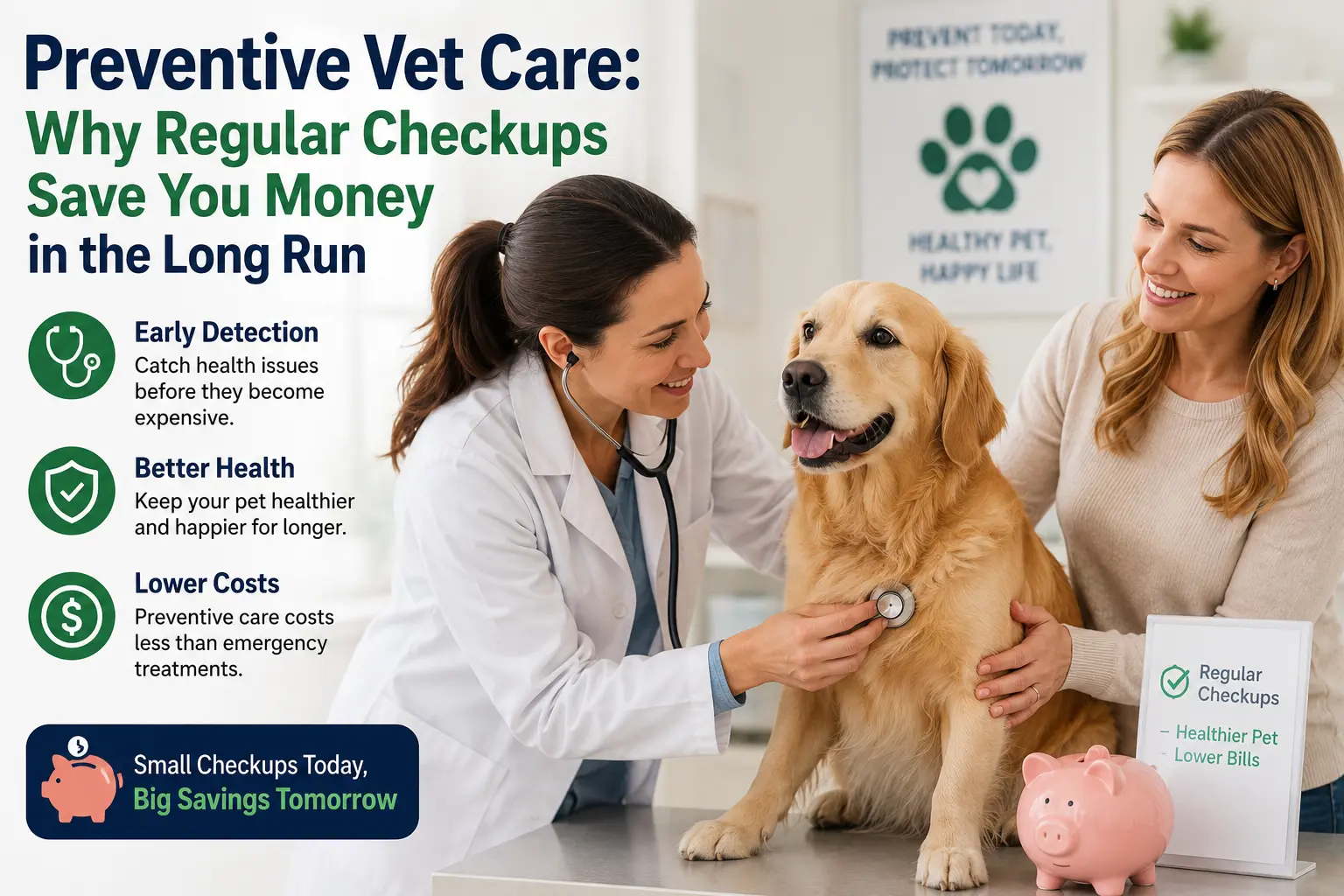
When Sarah adopted her four-year-old rescue cat, Biscuit, she skipped the “unnecessary” annual checkup for two years because Biscuit seemed perfectly healthy — eating well, playing, no obvious problems. Then one afternoon Biscuit stopped eating entirely. An emergency visit revealed advanced dental disease that had silently progressed into a painful tooth root abscess. The bill for emergency extractions, antibiotics, and follow-up care came to just over $1,400. Two routine checkups, at roughly $60–$100 each, would have caught the problem at stage one — for a fraction of the cost, and without weeks of hidden pain for Biscuit.
This is the story that plays out in exam rooms every day. Preventive vet care doesn’t always feel urgent, especially when your pet seems fine. But “seems fine” and “is fine” are not the same thing, and the gap between them is where the big bills hide. This guide breaks down exactly why regular checkups pay for themselves, what preventive care actually includes, and how to build a simple, budget-friendly preventive care plan for your own pet.
Why “My Pet Seems Healthy” Isn’t the Full Picture
Dogs and cats are experts at hiding illness. In the wild, showing weakness makes an animal a target, and that instinct hasn’t disappeared just because your pet sleeps on your couch. Many common conditions — dental disease, early kidney issues, thyroid problems, arthritis, even some cancers — develop slowly and quietly, with no obvious symptoms until they’re advanced.
This is exactly why annual (or twice-yearly for seniors) checkups exist. A physical exam, bloodwork, and a conversation with your vet about behavior changes can catch a problem while it’s still a $100 fix, rather than after it’s become a $1,000+ emergency.
There’s also a biological reason checkups matter more for pets than for people: pets age faster than we do. A single year for a dog or cat can represent several years of human aging, depending on breed and life stage. That means a condition that would take years to progress in a person can develop meaningfully within just months in a pet — which is part of why annual exams for adult pets (and twice-yearly for seniors) are considered the standard of care rather than an optional extra.
The Real Math: Prevention vs. Treatment
Numbers make this easier to see than abstract advice does. Here’s how routine preventive costs stack up against the cost of treating the same problem once it becomes serious:
| Preventive Care | Typical Cost | What Happens If Skipped | Typical Treatment Cost Later |
|---|---|---|---|
| Annual wellness exam | $50–$100 | Health issues go undetected until symptoms appear | Varies — often hundreds to thousands, depending on the disease |
| Routine dental cleaning | $300–$700 | Periodontal disease progresses silently | $600–$2,000+ for cleaning with extractions; $2,500–$5,000 for jaw fracture repair from severe untreated disease |
| Core vaccinations | $20–$60 per vaccine | Preventable diseases like parvovirus or feline leukemia become possible | $1,000–$5,000+ for hospitalization and treatment of a preventable illness |
| Monthly heartworm/flea/tick prevention | $10–$30/month | Heartworm disease, tick-borne illness, or flea infestations can take hold | $500–$1,000+ for heartworm treatment; ongoing costs for chronic tick-borne disease |
| Annual bloodwork/screening | $80–$200 | Early kidney, liver, or thyroid disease goes unnoticed | Ongoing management of advanced chronic disease can run into the thousands annually |
The pattern is consistent across nearly every category of preventive care: the checkup or preventive treatment costs a small, predictable amount, while the “wait and see” approach risks a large, unpredictable bill — plus real suffering for your pet in the meantime.
Dental disease is a particularly striking example. It’s estimated that a large majority of dogs and cats show some degree of periodontal disease by adulthood, yet it’s one of the most preventable conditions in veterinary medicine. A routine cleaning costs a few hundred dollars; letting the disease progress can mean extractions, oral surgery, or even jaw fractures from severely eroded bone, with bills climbing into the thousands.
What Preventive Vet Care Actually Includes
“Preventive care” isn’t just a single annual exam — it’s a bundle of smaller, ongoing habits that work together. Here’s what a solid preventive plan typically covers:
1. Annual (or semi-annual) wellness exams. A full physical exam — checking weight, heart and lung sounds, joints, skin, eyes, ears, and teeth — gives your vet a baseline and lets them catch subtle changes year over year. Senior pets (generally age 7+, earlier for large breeds) benefit from exams every six months, since conditions can progress faster in that life stage.
2. Core vaccinations. Vaccines protect against serious, sometimes fatal diseases like rabies, parvovirus, distemper, and feline leukemia. They’re one of the most cost-effective preventive tools in veterinary medicine — a small, predictable expense against diseases that are otherwise expensive (or impossible) to treat.
3. Parasite prevention. Monthly heartworm, flea, and tick prevention is inexpensive compared to treating an active infestation or heartworm disease, which can require months of restricted activity and costly injections.
4. Dental care. Regular cleanings, plus at-home brushing or dental chews, are one of the highest-leverage preventive investments you can make. Dental disease doesn’t just affect the mouth — untreated infections can spread and affect the heart, liver, and kidneys.
5. Bloodwork and diagnostic screening. Baseline bloodwork lets your vet catch early kidney, liver, or thyroid changes before they become symptomatic — often the difference between a simple diet adjustment and a lifelong medication regimen.
6. Weight and nutrition management. Obesity contributes to joint problems, diabetes, and heart strain. A vet who sees your pet regularly can flag creeping weight gain long before it becomes a chronic condition.
7. Behavior and lifestyle check-ins. Your vet can only give tailored advice — indoor vs. outdoor risks, exercise needs, diet — if they actually see your pet regularly and know their history.
How Preventive Needs Change by Age and Breed
Preventive care isn’t one-size-fits-all — what your pet needs shifts as they age, and some breeds carry higher risk for specific conditions.
Puppies and kittens (0–1 year): This stage is about building a foundation — a full vaccination series, parasite prevention, spay/neuter timing discussions, and early screening for congenital issues. Frequent vet visits during this period also help your pet get comfortable with handling and exams, which pays off for years to come.
Adults (1–7 years, varies by size): This is the “don’t skip it just because they’re fine” window. Annual exams, dental care, and yearly bloodwork are the core of prevention here, since this is when silent conditions like early kidney changes or dental disease typically begin.
Seniors (7+ for most breeds, earlier for large and giant breeds): Twice-yearly exams become the standard here, since aging pets can develop or progress through health issues much faster than younger ones. Bloodwork, joint health, and weight management become especially important, as does watching for subtle behavior changes that might otherwise be dismissed as “just getting older.”
Breed-specific risk factors also matter. Small breeds like Yorkies, Chihuahuas, and Dachshunds are especially prone to dental disease and may need more frequent cleanings. Large and giant breeds are more susceptible to joint issues and certain cancers. Brachycephalic (flat-faced) breeds like Bulldogs and Pugs often need closer monitoring of breathing and dental health. Ask your vet which risks are most relevant to your specific pet’s breed mix so your preventive plan is actually tailored to them, not just generic.
Common Misconceptions About Preventive Care
A few beliefs tend to keep pet owners from following through on preventive visits — and they’re worth addressing directly:
- “My pet acts totally normal, so nothing’s wrong.” As covered earlier, pets are skilled at masking illness. Normal behavior is reassuring, but it isn’t a diagnostic test — bloodwork and physical exams catch things behavior alone can’t.
- “Vaccines and preventive meds are just a way for vets to make money.” Core vaccines and parasite prevention are backed by decades of veterinary research and are dramatically cheaper than treating the diseases they prevent. The financial incentive, if anything, points the other way — routine prevention means less recurring high-cost treatment for chronic conditions.
- “I’ll just take them in when something looks wrong.” By the time a symptom is visible, many conditions (like dental disease or kidney decline) are already moderate to advanced. Waiting for visible symptoms often means treating a bigger, costlier problem than if it had been caught on a routine visit.
- “Indoor pets don’t need the same level of care as outdoor pets.” Indoor pets avoid certain outdoor risks, but remain fully susceptible to dental disease, obesity, organ disease, and genetic conditions — all of which preventive visits are designed to catch.
- “Preventive care is only worth it for young, healthy pets.” It’s actually most valuable for middle-aged and senior pets, since that’s when the risk of developing a costly chronic condition increases the most.
A Realistic Scenario: Two Owners, Two Outcomes
Consider two dog owners with nearly identical dogs — both medium-sized, both around six years old.
Owner A skips annual exams because her dog “never seems sick.” Three years later, her dog stops eating and starts drinking excessive water. A trip to the vet reveals advanced kidney disease that had been silently developing. Treatment now involves specialized prescription food, ongoing medication, and regular monitoring — an ongoing expense that could run into the hundreds of dollars per month for the rest of the dog’s life, on top of the stress of a serious diagnosis.
Owner B keeps up with annual exams and bloodwork. At one visit, routine labs show slightly elevated kidney values — no symptoms yet, but an early warning sign. Her vet recommends a diet adjustment and closer monitoring. Because it was caught early, the condition is managed with a much simpler and less expensive plan, and progression slows significantly.
Same starting point, same underlying risk — very different financial and emotional outcomes, because one dog’s condition was caught early and the other wasn’t.
Building a Simple, Budget-Friendly Preventive Care Plan
You don’t need a large budget to take preventive care seriously — you need consistency. Here’s a practical framework:
- Schedule the annual exam like you would your own physical. Put it on a recurring calendar reminder so it doesn’t quietly slip a year (or two).
- Bundle preventive costs into your monthly budget. Instead of treating vet visits as a surprise expense, set aside a fixed monthly amount — even $20–$40 — specifically for preventive care and parasite prevention.
- Ask your vet for a written preventive care schedule. Many clinics can outline exactly what your pet needs and when, based on age, breed, and health history, so nothing gets missed.
- Brush your pet’s teeth (or use vet-approved dental products) between cleanings. This can meaningfully reduce how often a full professional cleaning is needed.
- Track your pet’s weight and behavior at home. Small changes — drinking more water, slowing down on walks, being pickier about food — are often the earliest clues something is developing.
- Consider how you’ll pay for both preventive and unexpected costs. Some owners use a dedicated savings account; others use pet insurance or wellness plans. Either way, having a plan in place means you’re never choosing between your pet’s health and your finances. If you haven’t worked through the numbers yet, our guide on budgeting for vet bills and building a pet emergency fund walks through practical ways to plan for both routine and unexpected costs so a big bill never catches you off guard.
Frequently Asked Questions
Q: How often should I take my pet to the vet if they seem perfectly healthy? Most healthy adult dogs and cats benefit from one full wellness exam per year. Senior pets (generally 7+ for most breeds, earlier for large breeds) are usually better served by exams every six months, since health changes can progress faster at that stage.
Q: Is preventive care really cheaper than just waiting until something goes wrong? In the vast majority of cases, yes. Preventive costs are small, predictable, and spread out over time. Treating an advanced condition — whether it’s dental disease, heartworm, or a chronic illness caught late — is almost always significantly more expensive, and often involves procedures or medications that a pet will need for the rest of their life.
Q: My pet is young and healthy. Do I really need annual bloodwork already? Yes, even for young pets. Baseline bloodwork while your pet is healthy gives your vet a reference point for future exams, making it much easier to spot subtle changes later. It also occasionally catches congenital or early-onset conditions that wouldn’t otherwise show symptoms yet.
Q: Does pet insurance cover preventive care? It depends on the policy. Most standard pet insurance plans are built around accident and illness coverage, not routine preventive costs — but many insurers offer optional wellness add-ons that reimburse for exams, vaccines, and dental cleanings. It’s worth checking your specific policy’s terms or asking your provider directly.
Q: What’s the single most cost-effective preventive step I can take? If you can only prioritize one thing, most vets would point to consistent annual exams paired with dental care. Together, they catch the widest range of common, expensive-to-treat conditions — from organ disease to periodontal disease — while it’s still manageable.
Q: My indoor cat never goes outside. Do they still need regular checkups? Yes. Indoor cats are protected from some outdoor risks, but they’re still susceptible to dental disease, obesity, kidney disease, thyroid issues, and other conditions unrelated to outdoor exposure. Being indoors doesn’t make a cat immune to age-related or genetic health issues.
Q: How can I keep preventive care affordable if money is tight? Ask your vet about wellness plans, which bundle routine services into predictable monthly payments. Many clinics also offer discounted vaccine or dental clinics during specific months, and some areas have low-cost community veterinary clinics or mobile services. Setting aside even a small fixed amount each month specifically for preventive care can also make the annual exam feel like a routine expense rather than a financial surprise.
Conclusion
Preventive vet care isn’t an extra expense — it’s the single most reliable way to keep both your pet’s health and your bank account in good shape. The pattern holds across nearly every category of care: a small, predictable cost now almost always beats a large, unpredictable one later, and it spares your pet unnecessary pain along the way. If it’s been a while since your pet’s last checkup, that’s the most useful thing you can do this week — not because something is necessarily wrong, but because catching a problem early is exactly what keeps it from becoming an expensive, painful one.
For more detail on what a thorough preventive care visit should include, the AAHA’s guide to preventive healthcare for pets is a helpful reference built directly from veterinary guidelines. If you’re budgeting for dental costs specifically, CareCredit’s breakdown of pet dental cleaning costs offers useful, up-to-date pricing data to plan around.
Disclaimer: This article is intended for general informational and educational purposes only and is not a substitute for professional veterinary advice, diagnosis, or treatment. Costs mentioned are national averages and can vary significantly based on your location, your pet’s size and breed, and your veterinary provider. Always consult a licensed veterinarian to determine the appropriate preventive care schedule and treatment plan for your individual pet.

1 Comment
“Great breakdown! I’d add that keeping a simple record of vaccination dates and checkup results makes vet visits so much faster and helps catch trends over time (weight changes, etc.) that are easy to miss otherwise.”