

When Priya adopted her puppy, Biscuit, she assumed one round of “puppy shots” would cover him for life. At his first vet visit, she was surprised to learn Biscuit needed a whole series of vaccines over several months — and that as an adult, he’d still need regular boosters for years to come. “I had no idea it was this involved,” she admitted. “I thought vaccines were a one-time thing, like a checkbox you tick off as a puppy.”
Priya’s confusion is incredibly common. Vaccination schedules for dogs and cats aren’t complicated once you understand the logic behind them, but the actual timeline — which vaccines, at what age, how often — isn’t something most new pet owners know going in. Getting it right matters: vaccines are one of the most effective, affordable ways to protect your pet from serious, sometimes fatal diseases, and staying on schedule is what makes them work.
This guide breaks down exactly what to expect, year by year, for both dogs and cats — plus the difference between “core” and “non-core” vaccines, what they actually protect against, and how to budget for the process without surprises.
Core vs. Non-Core Vaccines: What’s the Difference?
Before diving into the schedule, it helps to understand how vets categorize vaccines.
Core vaccines are recommended for every dog or cat, regardless of lifestyle, because they protect against diseases that are widespread, highly contagious, and often severe or fatal. These aren’t optional in any meaningful sense — they’re the baseline of responsible pet ownership.
Non-core vaccines are recommended based on your individual pet’s risk factors — things like whether they spend time outdoors, go to boarding facilities or dog parks, live in an area with specific disease risks, or interact regularly with other animals. Your vet will help determine which non-core vaccines make sense for your pet’s actual lifestyle.
This distinction matters because not every pet needs every available vaccine — a strictly indoor cat with no other animals in the household has very different risk factors than an outdoor cat in a multi-cat household, for example. Your vet is the best resource for translating your specific pet’s day-to-day life into an actual vaccine plan, since factors like travel, boarding, dog park visits, and even your regional disease prevalence all play a role in which non-core vaccines make sense.
Puppy Vaccination Schedule: Year One
Puppies are vaccinated in a series rather than a single dose because of something called maternal antibody interference — antibodies passed from mother to puppy through nursing can block a vaccine from working fully if given too early. That’s why puppies need several rounds spaced a few weeks apart, ending with a final booster old enough to guarantee the vaccine takes effect.
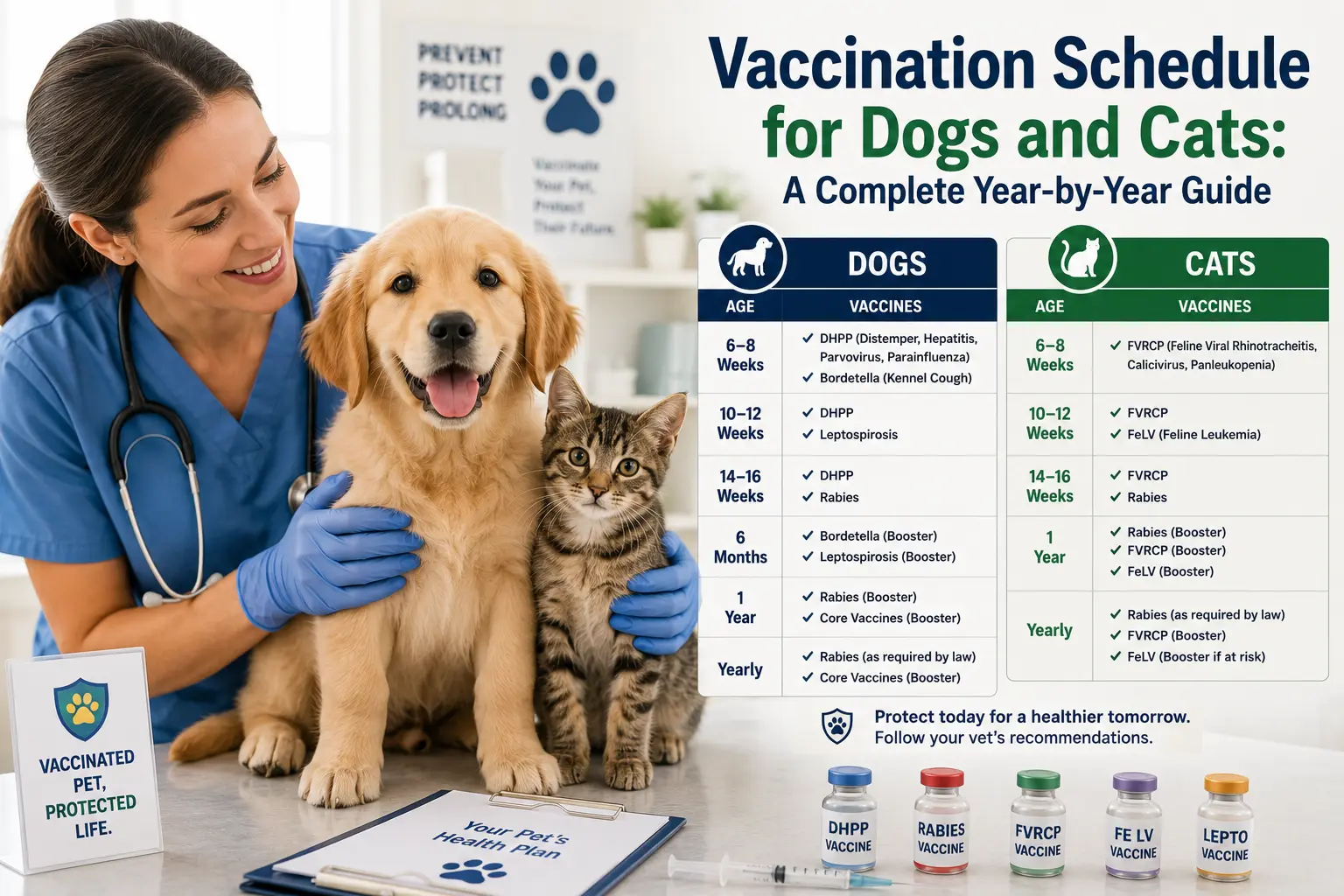
| Puppy Age | Vaccines Typically Given |
|---|---|
| 6–8 weeks | First DHPP (distemper, hepatitis, parainfluenza, parvovirus) dose |
| 10–12 weeks | Second DHPP dose; Leptospirosis (if recommended); Bordetella (if high-risk lifestyle) |
| 14–16 weeks | Third DHPP dose; Rabies (typically required by law); Lyme disease (if in an endemic area) |
| 16–20 weeks | Final core vaccine booster — the most important dose to ensure full immunity |
| 12 months | 1-year booster for all core vaccines administered during the puppy series |
Missing that final booster around 16 weeks is one of the most common reasons a young dog’s vaccination isn’t fully effective, since earlier doses can still be partially blocked by maternal antibodies. Most vets consider this the single most important shot in the entire puppy series.
Adult Dog Vaccination Schedule
Once your dog completes their puppy series and one-year booster, the schedule shifts to a maintenance rhythm:
| Vaccine | Typical Frequency |
|---|---|
| Rabies | Every 1–3 years, depending on vaccine type and local law |
| DHPP (distemper, hepatitis, parainfluenza, parvovirus) | Every 3 years for most dogs |
| Leptospirosis | Annually, if recommended based on risk |
| Bordetella (kennel cough) | Every 6–12 months, especially for dogs that board, attend daycare, or visit dog parks |
| Canine influenza | Annually, if recommended based on risk |
| Lyme disease | Annually, in tick-endemic areas |
Rabies vaccination schedules are determined by both the vaccine manufacturer’s labeling and your local or state law, so the exact interval can vary by location — your vet will confirm what’s required where you live.
Senior Dog Vaccination Considerations
Vaccination doesn’t stop as your dog ages, but your vet may adjust the approach. Senior dogs (generally age 7+, earlier for large breeds) still need core vaccines on schedule, but your vet may also discuss:
- Whether titers (blood tests measuring existing immunity) make sense as an alternative to some routine boosters
- How any existing health conditions might affect vaccine timing or type
- Balancing vaccination needs against overall health status during more frequent senior wellness visits
This is a conversation to have directly with your vet rather than a decision to make on your own — senior pets benefit from continued protection, but the plan should be personalized.
Kitten Vaccination Schedule: Year One
Like puppies, kittens follow a multi-dose series for the same immunological reason — early doses can be blocked by maternal antibodies, so a final booster at the right age is essential.
| Kitten Age | Vaccines Typically Given |
|---|---|
| 6–8 weeks | First FVRCP dose (feline viral rhinotracheitis, calicivirus, panleukopenia) |
| 10–12 weeks | Second FVRCP dose; FeLV (feline leukemia) series often begins here |
| 14–16 weeks | Third FVRCP dose; Rabies (typically required by law) |
| 16–20 weeks | Final core booster — critical for full immunity |
| 12 months | 1-year booster for all core vaccines |
FeLV (feline leukemia virus) is considered core for all kittens under one year old, regardless of whether they’ll live strictly indoors, since lifestyle can change and kittens are more susceptible during this early period.
Adult Cat Vaccination Schedule
| Vaccine | Typical Frequency |
|---|---|
| Rabies | Every 1–3 years, depending on vaccine type and local law |
| FVRCP | Every 3 years for most adult cats |
| FeLV | Non-core after age 1; recommended only for cats with ongoing exposure risk (outdoor access, multi-cat households) |
| Chlamydia felis / Bordetella | Non-core; only for cats in higher-risk, multi-cat environments |
It’s a common misconception that strictly indoor cats don’t need ongoing vaccination. In reality, core vaccines are still recommended for indoor cats — rabies exposure can occur from a bat entering the home, and upper respiratory viruses can be introduced through a new cat, a vet visit, or even objects brought in from outside.
Senior Cat Vaccination Considerations
As with senior dogs, senior cats (generally 7+ years) continue to need core vaccines, though your vet may discuss titers or adjusted timing based on your cat’s specific health status, especially if they have chronic conditions that affect vaccination decisions. Twice-yearly wellness exams for senior cats also offer a natural opportunity to reassess their vaccination plan alongside their overall health.
What These Diseases Actually Are (And Why They’re Worth Preventing)
Vaccine names are often just abbreviations, which can make it hard to appreciate what they’re actually protecting against. Here’s a quick, plain-language breakdown:
For dogs:
- Distemper — A severe viral disease affecting the respiratory, gastrointestinal, and nervous systems. It’s highly contagious and often fatal, with survivors sometimes left with permanent neurological damage.
- Parvovirus — A highly contagious virus that attacks a puppy’s intestinal tract and immune system. Without treatment, parvo has a very high mortality rate, and even with intensive treatment, it can mean days of hospitalization and thousands of dollars in vet bills.
- Hepatitis (Canine Adenovirus) — A viral infection affecting the liver, eyes, and kidneys, ranging from mild to fatal.
- Leptospirosis — A bacterial disease spread through contaminated water or soil that can cause kidney and liver failure. It’s also zoonotic, meaning it can spread from pets to people.
- Rabies — A fatal viral disease affecting the nervous system, transmissible to humans and virtually all warm-blooded animals. There is no cure once symptoms appear, which is why rabies vaccination is legally mandated almost everywhere.
- Bordetella (kennel cough) — A highly contagious respiratory infection common in dogs that spend time in boarding, daycare, or dog parks. Rarely fatal on its own, but uncomfortable and easily spread.
For cats:
- Panleukopenia (feline parvo) — A severe, highly contagious viral disease with a very high mortality rate in unvaccinated kittens, attacking rapidly dividing cells including bone marrow and the intestinal lining.
- Feline Viral Rhinotracheitis (feline herpesvirus) — Causes upper respiratory infection symptoms like sneezing, nasal discharge, and eye infections. It can also lead to lifelong, recurring flare-ups during periods of stress.
- Calicivirus — Another major cause of feline upper respiratory disease, sometimes accompanied by mouth ulcers and joint pain.
- Feline Leukemia (FeLV) — A virus that suppresses the immune system and increases cancer risk, spread through close contact like grooming, shared food bowls, or bites.
- Rabies — Just as with dogs, this is fatal, zoonotic, and legally required in most areas — including for indoor-only cats in many jurisdictions.
Seeing what these vaccines actually prevent makes it much clearer why vets treat the core series as non-negotiable rather than optional extras.
A Realistic Scenario: Getting the Timing Right
Let’s go back to Priya and Biscuit. At 8 weeks, Biscuit got his first DHPP dose. Priya, thinking one shot might be “enough,” almost skipped the follow-up appointments when Biscuit seemed perfectly healthy in between visits. Her vet explained that skipping the remaining doses wouldn’t just be “less protection” — it could mean no real protection at all, since a puppy’s early vaccines can be neutralized by antibodies from his mother until he’s older.
Priya kept every appointment. By 16 weeks, Biscuit had received his full core vaccine series, was fully protected, and Priya had a clear written schedule from her vet for his one-year booster and beyond. The lesson: vaccination isn’t about getting “some” protection early — it’s about completing the full sequence so the protection actually holds.
Budgeting for Vaccinations
Vaccine costs vary by location and clinic, but here’s a general sense of what to expect:
- Individual core vaccines typically run $20–$60 per dose
- A full puppy or kitten vaccine series (including multiple visits) often totals $150–$300 over the first several months
- Annual adult booster visits typically run $50–$150, depending on which vaccines are due that year
- Rabies vaccination is often lower cost individually but may be required by law regardless of your pet’s lifestyle
Because puppies and kittens require several vaccine visits in a short window, it’s worth budgeting for this upfront rather than being surprised by it appointment by appointment. Many clinics also offer low-cost vaccine clinics or wellness packages that bundle the full puppy or kitten series into a more predictable cost. If you’d like a broader framework for planning around both routine costs like this and larger, unexpected vet bills, our guide on budgeting for vet bills and building a pet emergency fund can help you plan ahead.
Frequently Asked Questions
Q: My puppy or kitten missed a dose in their series. Does that mean starting over? Not necessarily, but it depends on how much time has passed. Talk to your vet — they’ll determine whether the series can continue where it left off or needs to be restarted based on current veterinary guidelines and how long the gap was.
Q: Are vaccines really necessary for pets that stay indoors full-time? Yes. Core vaccines are recommended for all pets regardless of lifestyle, including strictly indoor cats and dogs. Diseases like rabies can still reach indoor pets through unexpected exposure (a bat in the house, for example), and some vaccines are legally required regardless of lifestyle.
Q: Can I space out my pet’s vaccines instead of doing them all in one visit? In many cases, yes — this is a conversation to have with your vet, especially if you’re concerned about your pet’s reaction to multiple vaccines at once. Spacing them out may mean more visits, but some owners and vets prefer this approach for certain pets.
Q: What if my adult pet is overdue for a booster? Contact your vet as soon as possible. Depending on how overdue the vaccine is, your pet may need a single booster or, in some cases, may need to restart part of the series. Waiting longer only increases the period of reduced protection.
Q: Are there any side effects I should watch for after vaccination? Mild, short-term soreness at the injection site or slight lethargy for a day is common and not usually concerning. However, persistent vomiting, difficulty breathing, facial swelling, or hives should be reported to your vet immediately, as these can indicate a more serious reaction.
Q: Do rabies vaccine requirements vary by state or country? Yes. Rabies vaccination is legally required in most places, but the required frequency (often 1 or 3 years, depending on the vaccine product used) is set by local and state law. Your vet will know the specific requirements for your area.
Q: My dog goes to daycare or boarding often. Are there extra vaccines I should consider? Yes — most boarding and daycare facilities require the Bordetella (kennel cough) vaccine, and many also recommend or require canine influenza vaccination given how easily these respiratory illnesses spread in group settings. Check with your specific facility, since requirements can vary.
Q: Is it normal for vaccine schedules to differ slightly between vets or clinics? Yes, to a degree. While core vaccine recommendations are fairly standardized based on national guidelines, individual vets may adjust timing or non-core vaccine choices based on your pet’s specific health history, local disease prevalence, and lifestyle. Slight variation between clinics doesn’t necessarily mean either one is wrong — it reflects a personalized approach rather than a rigid one-size-fits-all protocol.
Conclusion
A vaccination schedule can look intimidating on paper, but the logic behind it is simple: puppies and kittens need a complete series to build real immunity, adults need consistent boosters to maintain it, and seniors need a personalized plan that accounts for their overall health. Missing steps along the way — especially that final puppy or kitten booster — can mean your pet isn’t as protected as you think, even if they’ve technically “had their shots.” Keeping a written schedule from your vet, setting calendar reminders, and budgeting for the full first-year series upfront are the simplest ways to make sure your pet stays protected exactly when it matters most.
For the full, evidence-based clinical guidelines behind these recommendations, the AAHA Canine Vaccination Guidelines and the AAHA/AAFP Feline Vaccination Guidelines are excellent, veterinarian-reviewed resources to reference alongside your own vet’s recommendations.
Disclaimer: This article is intended for general informational and educational purposes only and is not a substitute for professional veterinary advice, diagnosis, or treatment. Vaccine schedules, requirements, and costs can vary based on your pet’s individual health, lifestyle, location, and applicable local law. Always follow the specific vaccination plan recommended by your licensed veterinarian.
