

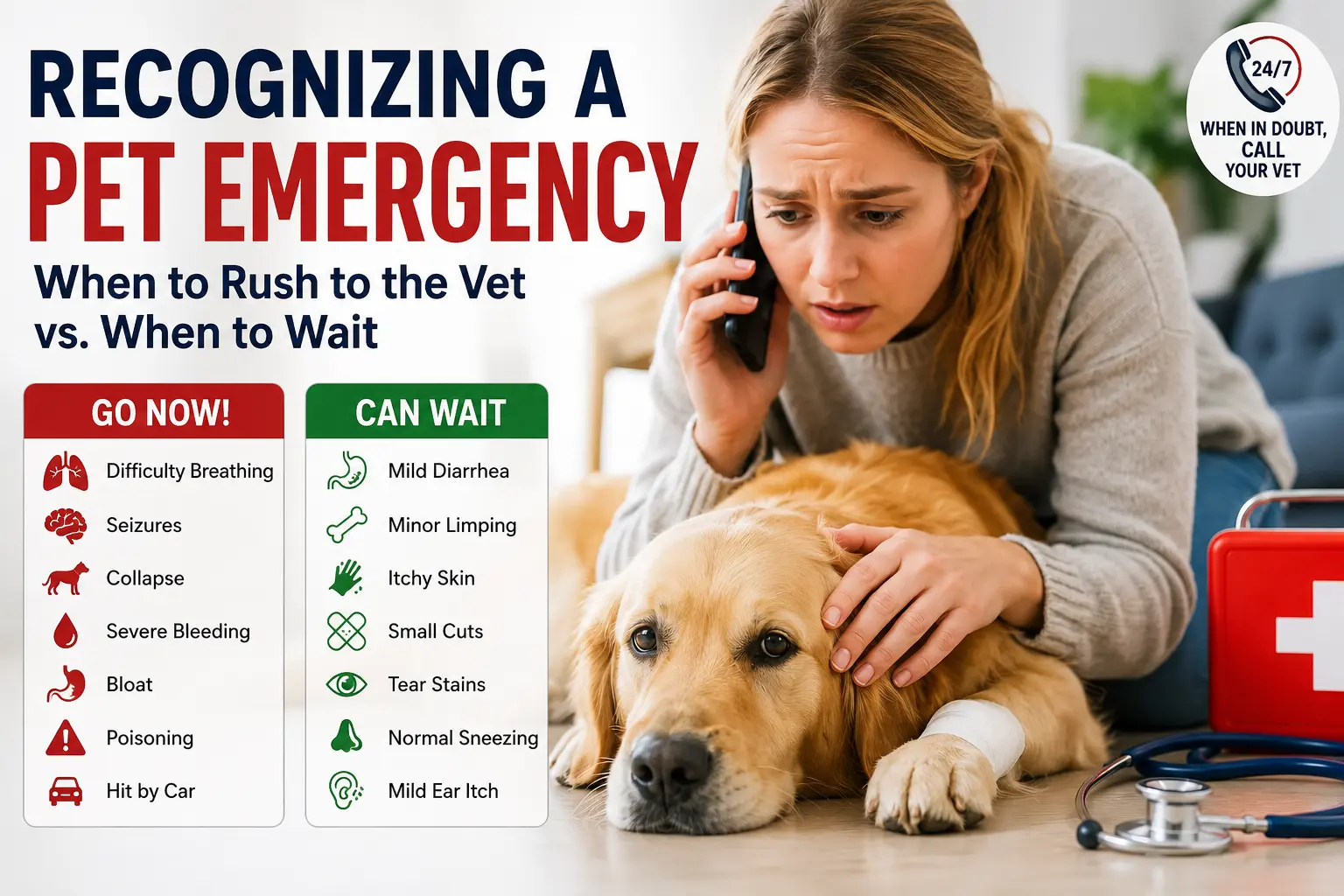
It’s 11:40 PM. Your dog Max just threw up his dinner, and now he’s pacing in circles, drooling, and trying to vomit again with nothing coming up. Do you rush him to the emergency vet 25 minutes away, or wait until morning and call your regular vet when they open?
If your stomach just dropped reading that, you already know how this feels. Every pet owner eventually faces a version of this moment — a strange symptom at an inconvenient hour, a decision that has to be made fast, and no vet on the phone to ask “is this normal?”
This guide is built to answer exactly that question. We’ll walk through the real warning signs that mean “go now,” the symptoms that can usually wait for a regular appointment, and the in-between cases that trip up even experienced pet parents. You’ll also find a quick-reference table, real data on how vets and owners judge urgency differently, and a checklist you can save for the next time panic sets in.
Why This Decision Is So Hard to Get Right
Pets can’t tell you what hurts or how bad it feels. They can only show you — through behavior, posture, sounds, and physical signs — and it’s up to you to read those cues correctly under pressure.
Research backs up just how tricky this is. A study published in PLOS ONE in early 2026 by researchers at the Royal Veterinary College found that dog owners judged a pet’s condition as less urgent than veterinary surgeons did in roughly 28% of cases, based on responses from over 1,700 dog owners across more than 5,300 total assessments. In plain terms: pet owners often underestimate how serious a symptom actually is — not because they don’t care, but because it’s genuinely hard to tell from the outside.
That gap matters. Wait too long on a real emergency, and a treatable problem can become life-threatening or far more expensive to treat. Rush to the ER for something that could have waited, and you’re paying premium emergency fees for a problem your regular vet could have handled at a fraction of the cost. Getting better at telling the difference protects both your pet’s health and your wallet.
The “Go Now” List: True Emergencies That Can’t Wait
The American Veterinary Medical Association maintains a well-known list of situations that always warrant immediate veterinary consultation or care, regardless of the time of day. If your pet is showing any of these signs, skip the “wait and see” approach and head to an emergency clinic:
- Difficulty breathing — open-mouth breathing in cats, rapid or labored breaths, wheezing, or choking sounds
- Severe or non-stop bleeding — anything that hasn’t slowed after five minutes of firm pressure
- Suspected poisoning — chocolate, xylitol, grapes, antifreeze, rodent poison, certain plants, or human medication
- Inability to urinate or defecate, especially with straining or visible pain — this is especially dangerous in male cats
- Seizures, particularly a first-ever seizure, multiple seizures, or one lasting more than a few minutes
- Collapse or sudden inability to stand or walk
- Severe vomiting or diarrhea — more than two episodes in 24 hours, or paired with lethargy, blood, or other symptoms
- A swollen, hard, or bloated belly, especially in large-breed dogs — this can signal bloat (gastric dilatation-volvulus), a rapidly fatal condition
- Pale, blue, gray, or bright red gums
- Trauma — being hit by a car, a fall from height, or a serious animal attack, even if your pet “seems fine” afterward
- Heatstroke signs — heavy panting, drooling, wobbling, or collapse after heat exposure
- Eye injuries — sudden swelling, visible damage, or an eye that won’t stay open
- Any sudden, severe pain that causes crying, aggression when touched, or a hunched posture
If you’re seeing any of these, don’t call and wait on hold — go directly to the nearest emergency or 24-hour animal hospital.
The “Call First, Then Decide” Zone
Not every worrying symptom means dropping everything and driving across town. Plenty of situations are uncomfortable and worth addressing quickly, but they usually give you enough time to call your vet’s office (or an after-hours line) and get guidance before deciding where — and whether — to go.
Examples that typically fall here:
- Mild limping without visible swelling, and your pet is still bearing some weight
- A single episode of vomiting or soft stool in an otherwise bright, active pet
- Mild itching, a small hot spot, or minor skin irritation
- Sneezing or a mild cough with no breathing difficulty
- Small, shallow cuts or scrapes that have stopped bleeding
- Slight decrease in appetite for less than a day, with normal energy otherwise
- Minor eye discharge without swelling or squinting
In these cases, a phone call to your vet — describing exactly what you’re seeing — is often the fastest way to get a real answer instead of guessing.
A Quick Home Check Before You Decide
While you’re on the phone or deciding what to do, a few quick checks can help you (and your vet) gauge severity:
| What to Check | Normal Range | Warning Sign |
|---|---|---|
| Gum color | Pink and moist | Pale, white, blue, gray, or bright red |
| Capillary refill time (press gum, watch color return) | 1–2 seconds | Longer than 2–3 seconds |
| Breathing rate (dogs) | 15–30 breaths per minute at rest | Rapid, labored, or open-mouth breathing |
| Breathing rate (cats) | 20–30 breaths per minute at rest | Open-mouth breathing (cats should not pant like dogs) |
| Temperature (if you have a pet thermometer) | Roughly 100.5–102.5°F for dogs and cats | Below 99°F or above 104°F |
| Responsiveness | Alert, responds to name/touch | Unresponsive, dazed, or unusually withdrawn |
| Gait and mobility | Walks and stands normally | Dragging a limb, unable to stand, wobbling |
None of these checks replace an actual veterinary exam, but they give you concrete, useful information to share with the vet on the phone — which speeds up triage and helps them tell you whether to come in immediately.
Dogs vs. Cats: Why the Signs Aren’t Always the Same
It’s worth calling out that cats and dogs often hide illness differently, and treating them the same way can lead you to miss something important.
Cats are experts at masking pain. As a survival instinct left over from their wild ancestors, cats tend to hide weakness rather than show it. A cat that’s seriously ill may simply withdraw, stop grooming, or hide under furniture rather than cry out or limp obviously. Subtle changes — skipping meals for more than 24 hours, hiding more than usual, or breathing with an open mouth (which is never normal for a cat) — deserve just as much urgency as a loud, obvious symptom would in a dog.
Dogs tend to be more expressive, but that comes with its own trap: an owner may assume a dog “would let them know” if something were seriously wrong, and wait too long as a result. A dog can appear playful and food-motivated right up until a serious condition, like bloat or internal bleeding, suddenly turns critical.
The takeaway: don’t rely on how “dramatic” a symptom looks. A quiet, withdrawn cat can be in just as much danger as a dog that’s visibly distressed — sometimes more.
Common Mistakes Pet Owners Make Under Pressure
A few patterns show up again and again when owners misjudge an emergency, and knowing them ahead of time can help you avoid the same traps:
- Waiting for a symptom to “get worse enough” to justify a vet visit. By the time a symptom is undeniable, the underlying problem may already be advanced. If something feels wrong, it’s reasonable to call, even if you can’t fully explain why.
- Assuming a pet is fine because it’s still eating or wagging its tail. Appetite and general demeanor can stay deceptively normal even with serious internal problems, especially early on.
- Trying home remedies for vomiting, diarrhea, or pain without knowing the cause. Withholding food and water incorrectly, or giving over-the-counter remedies meant for humans, can sometimes make things worse or delay proper treatment.
- Letting cost decide before symptoms do. It’s understandable to worry about an emergency vet bill, but for true emergencies, the cost of delay is almost always higher than the cost of prompt treatment — both financially and in terms of your pet’s outcome.
- Not having emergency contact information ready. Searching for the nearest 24-hour clinic while already in crisis mode wastes valuable time. Have it saved before you need it.
A Realistic Scenario: Putting It Into Practice
Let’s go back to Max. He vomited once, then started pacing, drooling, and retching without bringing anything up. His belly looks slightly swollen and tight to the touch.
Run it through the lists above:
- Repeated unproductive retching (trying to vomit but nothing comes up)
- A swollen, tight abdomen
- Restlessness and drooling
- He’s a large-breed dog
This combination matches the warning signs of bloat (gastric dilatation-volvulus), a true emergency that can become fatal within hours without treatment. This isn’t a “wait until morning” situation — it’s a “get in the car now” situation. Contrast that with a small dog who vomits once after eating too fast, then curls up and naps normally — that’s a “monitor and call in the morning if it happens again” situation.
The difference isn’t about how alarming a symptom sounds. It’s about matching what you’re seeing against specific, known warning patterns — which is exactly why having a reference list on hand (bookmark this page, screenshot the table above) is so useful in the moment.
Building a Simple Pet Emergency Plan
A little preparation now saves a lot of panic later:
- Save two phone numbers — your regular vet and the nearest 24-hour emergency animal hospital — directly in your phone.
- Keep a basic pet first-aid kit at home: gauze, non-stick bandages, a digital thermometer, saline solution, and your vet’s after-hours instructions.
- Know your pet’s baseline — normal breathing rate, resting behavior, and gum color — so you can spot changes faster.
- Store vaccination and medical records somewhere you can access quickly, since emergency vets will often ask for history.
- Plan for the cost. Emergency vet visits routinely run several hundred to a few thousand dollars depending on the diagnosis and treatment needed. Many owners hesitate at the ER not because they’re unsure of the symptoms, but because they’re unsure they can cover the bill. Setting aside a dedicated emergency fund — or looking into pet insurance that covers emergency and urgent care — removes that hesitation from the equation entirely. If you want a deeper breakdown of how to plan for these costs before you’re in crisis mode, our guide on vet bills and emergency savings walks through practical ways to build a safety net for exactly this kind of moment.
Frequently Asked Questions
Q: My pet seems fine now, but something felt “off” earlier. Should I still call the vet? Yes. Trust your instincts. You know your pet’s normal behavior better than anyone, and vets would rather field an unnecessary call than have you second-guess a real problem. A quick phone description of what you noticed is always worth it.
Q: Is it cheaper to wait for my regular vet instead of going to an emergency clinic? Generally, yes — regular vet visits cost less than emergency visits. But cost should never be the deciding factor for a true emergency like those on the “go now” list. Delaying care for a genuine emergency often leads to a more serious (and more expensive) condition later.
Q: What if I’m not sure and the emergency vet is far away? Call ahead. Most emergency clinics and many regular vet offices have after-hours phone lines specifically to help you triage over the phone. Describe exactly what you’re seeing — the more specific, the better the guidance.
Q: Are certain breeds more prone to emergencies like bloat? Yes. Large, deep-chested breeds such as Great Danes, German Shepherds, Standard Poodles, and Boxers have a higher risk of bloat. If you own one of these breeds, it’s worth discussing preventive options, like a gastropexy procedure, with your vet.
Q: Should I ever give my pet human medication while deciding what to do? No. Many common human medications — including ibuprofen and acetaminophen — are toxic to pets. Never give any medication without direct veterinary guidance, even if you’re just trying to “help while you decide.”
Q: What’s the single most reliable rule of thumb? If you’re genuinely unsure, call. As the AVMA puts it, any real concern about your pet’s health warrants at least a phone call to a veterinary professional — it costs you nothing to ask, and it might catch a problem before it becomes an emergency.
Q: My regular vet is closed and there’s no 24-hour clinic nearby. What should I do? Call your regular vet’s office first — many have an after-hours answering service that can connect you with an on-call veterinarian or direct you to the nearest emergency option, even if it’s in a neighboring town. If your pet is showing a true emergency sign like collapse, uncontrolled bleeding, or breathing difficulty, don’t wait for a callback — start heading toward the nearest emergency animal hospital while you try to reach someone by phone.
Q: How do I stay calm enough to make a good decision in the moment? It helps to have already decided in advance. Reading through a resource like this one before an emergency happens — rather than during one — means you’re recognizing symptoms against a mental checklist instead of guessing from scratch while panicked. Keeping your vet’s number and the nearest emergency clinic’s address saved and visible (on your fridge, in your phone’s favorites) removes one more decision from an already stressful moment.
Conclusion
Recognizing a real pet emergency isn’t about memorizing every possible symptom — it’s about knowing the handful of true red flags (breathing trouble, uncontrolled bleeding, suspected poisoning, collapse, seizures, a bloated abdomen, and severe unrelenting pain) and having a plan ready before you need it. Bookmark this page, save your vet’s emergency number in your phone, and take a few minutes today to think through what you’d do if tonight was the night your pet needed you to move fast. That small bit of preparation — knowing the signs, knowing who to call, and having a plan for the cost — is what turns a moment of panic into a moment of confident action.
For more detail on the specific conditions the veterinary community classifies as true emergencies, the AVMA’s official list of 13 animal emergencies is an excellent resource to keep handy. If poisoning is ever a concern, save the number for ASPCA Animal Poison Control — they’re available 24/7 and can guide you through next steps immediately.
Disclaimer: This article is intended for general informational and educational purposes only and is not a substitute for professional veterinary advice, diagnosis, or treatment. Always consult a licensed veterinarian regarding your pet’s specific health condition. If your pet is showing signs of a medical emergency, contact your veterinarian or the nearest emergency animal hospital immediately.
